UAS Weekly Briefing — May 1, 2026: Possible Drone Strike Over San Diego, Skydio’s $3.5B Bet on American Manufacturing, and More
A United Airlines flight nearly became a headline for all the wrong reasons this week. A major American drone company just committed $3.5 billion to build more of them here at home. Beijing moved to restrict drone sales while the U.S. government released a new playbook for stopping drones at major events. Fifteen stolen chemical-spraying drones turned up in a New Jersey warehouse. And while drone delivery quietly crossed into real medical cargo territory, Ukraine and Russia pushed drone warfare to a scale the world has never seen. Here's what happened — and what it means.
Prefer audio? Listen to the full podcast below or open the episode page.
United Flight Reports Possible Drone Strike Near San Diego
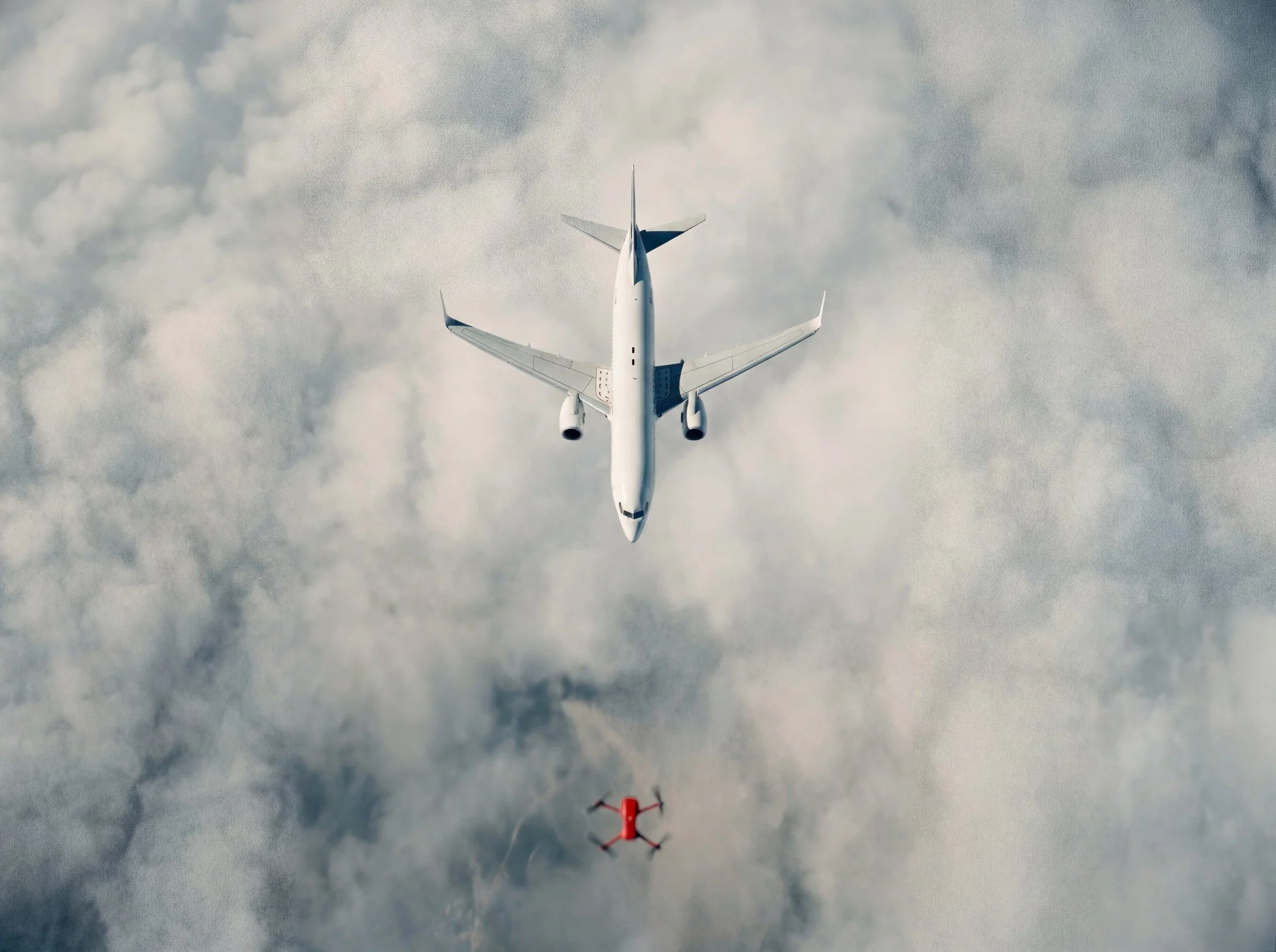
On the morning of April 29, a United Airlines Boeing 737 on its final approach to San Diego International Airport reported a possible drone encounter. The pilot of United Flight 1980 — carrying 48 passengers and 6 crew members — radioed air traffic control and said, "We hit a drone at around 3,000 feet." The drone was described as "very small, red, and shiny."
That's the kind of sentence that stops everything.
Maintenance crews inspected the aircraft after landing and found no damage. United Airlines later issued a clarifying statement, removing the word "strike" and noting that while an encounter was reported, they could not confirm a physical impact. According to the FAA, the crew believed they saw a drone approximately 1,000 feet below them while the aircraft was at roughly 4,000 feet — which would place the object around 3,000 feet. That remains unconfirmed.
Here's the key detail: 3,000 to 4,000 feet is many times higher than where drone pilots are legally permitted to fly. The standard FAA rule requires drones to stay below 400 feet above the ground. Operating an unauthorized drone at that altitude in active approach airspace is a serious federal concern. No arrests have been made and the investigation is ongoing.
Red Raven's Take: Whether or not this was a confirmed drone strike, the reported encounter illustrates exactly why airspace compliance matters. The broader enforcement climate around FAA drone enforcement and World Cup security shows the FAA is moving toward faster drone accountability. If you're a licensed commercial pilot, incidents like this are why your training and airspace discipline matter every single flight. If your drone program doesn't have written protocols around airspace authorization, now is the time to build them.
Read more: United Airlines Pilot Reports Possible Drone Strike Near San Diego — CBS San Francisco | United Airlines Pilot Reports Possible Drone Strike Over San Diego — LA Times
Skydio Announces $3.5 Billion U.S. Drone Expansion
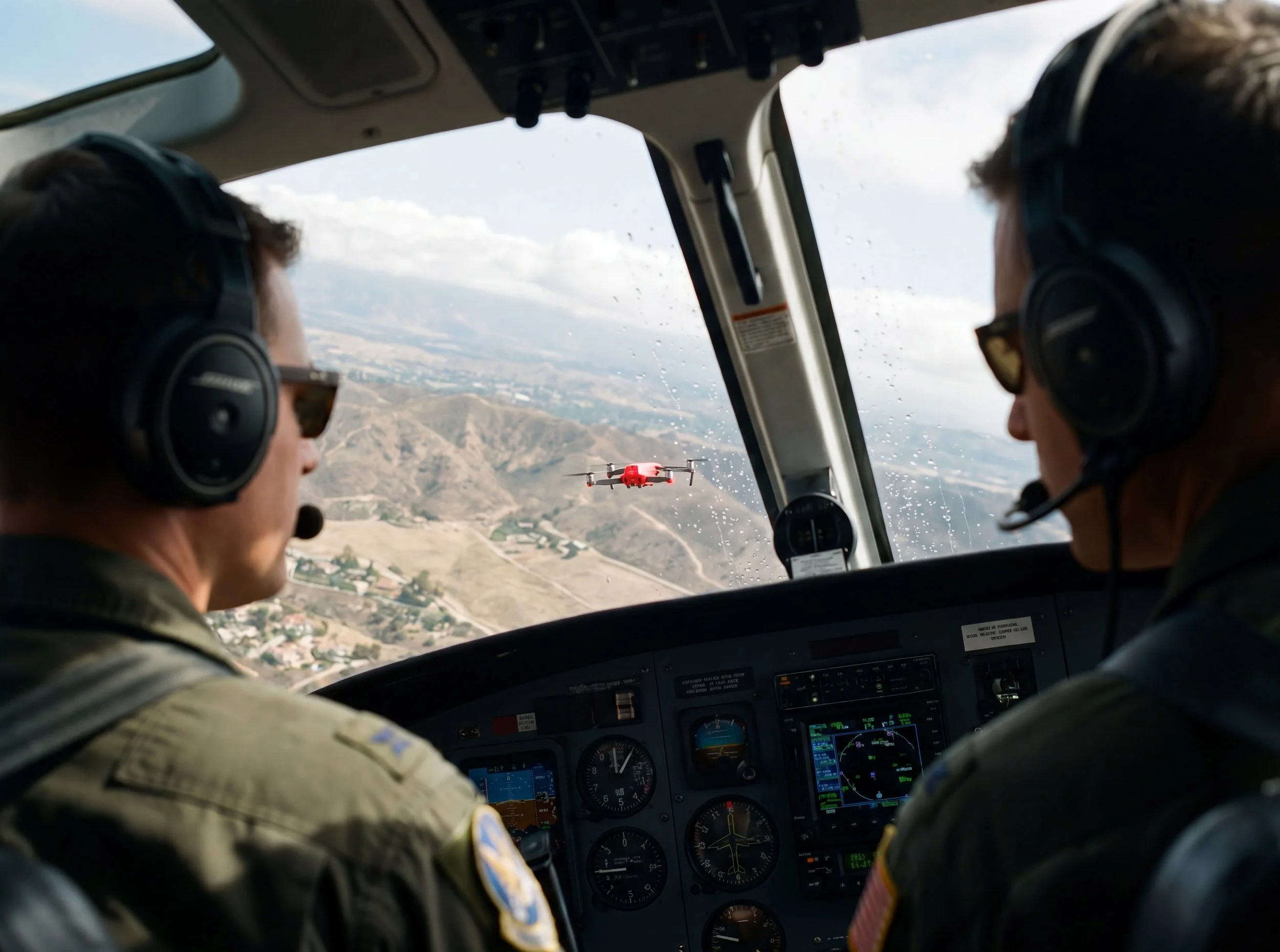
Skydio — the California-based drone manufacturer that is one of the very few American companies building drones at commercial scale — announced on April 24 a $3.5 billion investment in U.S. manufacturing over the next five years.
The plan includes a new production facility five times larger than the company's current space, a new initiative called SkyForge designed to keep drone technology and component production inside the United States, and a push to bring select supplier partners to co-locate manufacturing near Skydio's own operations. The company expects to create more than 2,000 direct jobs and support 3,000 additional positions throughout its U.S. supply chain, with more than $1 billion directed to domestic suppliers.
A new round of financing pushed Skydio's valuation to $4.4 billion. The company says it has already shipped more than 60,000 drones to over 3,800 customers.
Skydio platforms have appeared on Blue UAS-cleared lists used by government buyers — a framework that identifies drone platforms based on security and supply-chain vetting. That designation has become increasingly important as DJI, the dominant global drone manufacturer, faces growing restrictions in the U.S. market.
Red Raven's Take: This is exactly the investment the American drone industry needed to see. For years, the conversation about reducing dependence on foreign-made drones — particularly DJI — has been more talk than action. Skydio putting $3.5 billion behind domestic manufacturing is a serious commitment, and the SkyForge initiative in particular signals a real effort to build a supply chain that doesn't rely on overseas components. For public safety agencies and government programs that have been waiting for domestic alternatives to mature before transitioning away from DJI, Skydio's expansion is a meaningful signal that those alternatives are arriving. If you're evaluating Blue UAS-cleared platforms for your program, this announcement is worth factoring into your timeline.
Read more: Skydio Commits $3.5 Billion to Expand U.S. Manufacturing — PR Newswire | Skydio's $3.5 Billion US Drone Expansion Begins — DroneDJ
Beijing Moves to Restrict Consumer Drone Sales
Starting May 1 — today — Beijing, China has banned drone sales citywide, with limited exceptions for approved institutions and public safety uses. Existing drone owners have three months to register their aircraft with local police, and no individual may keep more than three drones at a single location inside the city's main residential zone.
DJI — the world's largest drone manufacturer, headquartered in Shenzhen, China — said it would comply with the deadline. Reports indicated its Beijing stores were told to clear inventory ahead of May 1, and online platforms reportedly stopped accepting drone shipments to Beijing addresses.
The official reason: security concerns around government buildings, military installations, and sensitive sites throughout the capital.
Red Raven's Take: Most of the news coverage this week focused on what Beijing's ban means for DJI. We want to flip that angle. What this actually shows is that governments everywhere — including China — are concluding that unregistered consumer drones near sensitive locations are a threat they're no longer willing to tolerate. That's the same logic driving the FAA's DETER enforcement program, the DHS counter-UAS guidance we cover below, and the growing push for Remote ID compliance in the U.S. Remote ID is a rule that requires most drones to broadcast their location and identification in real time — like a digital license plate. If your organization flies drones and hasn't fully integrated Remote ID compliance into your operations, this is a good week to revisit that.
Read more: Beijing to Impose Sweeping Drone Sales Ban From May 1 — Caixin Global | Beijing Clamps Down on Drones: Sales Banned Citywide from May 1 — AP News
Fifteen Stolen Agricultural Spray Drones Recovered in New Jersey
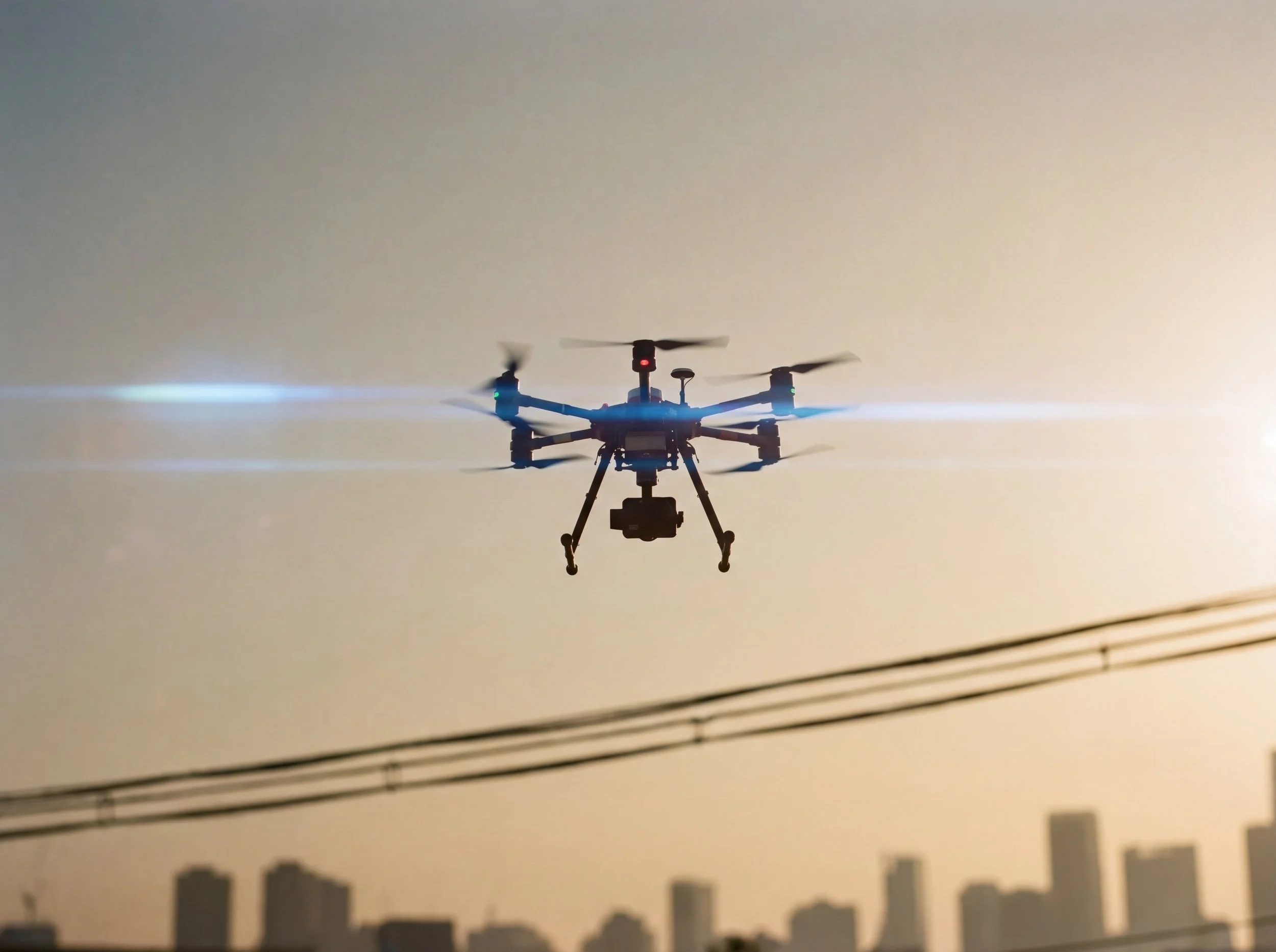
On April 27, New Jersey State Police — working with Homeland Security Investigations and U.S. Customs and Border Protection — recovered 15 stolen agricultural spray drones from a warehouse in Dover, New Jersey. The drones had been taken from a logistics company in Harrison, New Jersey on March 24.
The aircraft are large agricultural spray drones capable of dispersing liquid crop treatments over wide areas at high speed using GPS-guided flight paths. The total value of the stolen equipment was reportedly nearly $870,000. No arrests have been made, and investigators have not publicly identified any suspects.
The reason this story got national attention isn't the dollar amount. It's what these drones are designed to do. A former DHS official speaking to media warned that drones capable of dispersing liquids over wide areas could, in the wrong hands, potentially be used to spread hazardous materials. The involvement of federal agencies — Homeland Security Investigations and Customs and Border Protection — suggests this was taken very seriously, very fast.
Red Raven's Take: Agricultural spray drones are legitimate tools used every day by farmers across the country to apply fertilizers, pesticides, and other crop treatments. They're not inherently dangerous. But this story illustrates something important: high-capability drones are now valuable enough to steal at scale, and their potential for misuse makes them a concern that goes beyond property crime. For anyone managing a drone fleet — whether agricultural equipment, inspection platforms, or public safety aircraft — asset security is a real operational consideration. Where are your drones stored when not in use? Who has access? Are serial numbers documented? These aren't hypothetical questions anymore.
Read more: Stolen Agricultural Drones Recovered at New Jersey Warehouse — 6ABC Philadelphia | Stolen Agricultural Drones Recovered in Dover — DroneXL
DHS Releases Counter-UAS Field Guidance Ahead of Major Events
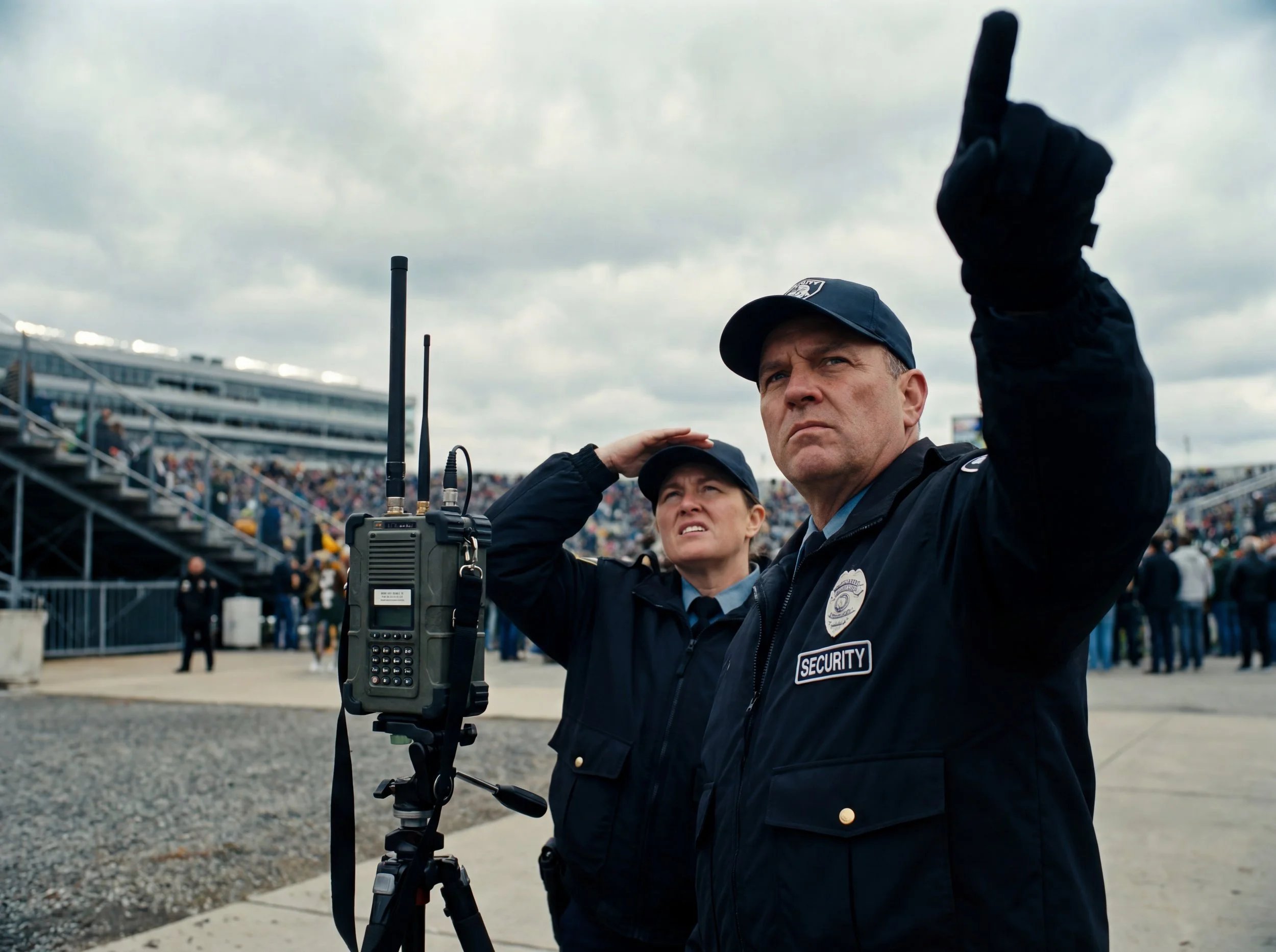
The Department of Homeland Security's National Urban Security Technology Laboratory — known as NUSTL, the federal research arm that tests security technology for first responders — recently published a new guidance document called “C-UAS Equipment Placement Field Guidance for Responders.”
C-UAS stands for Counter Unmanned Aircraft Systems — the equipment and tactics used to detect, track, and stop unauthorized drones. Think radar systems, radio frequency sensors, and cameras positioned around a venue or event. This new document gives state and local agencies a practical field guide for planning counter-UAS equipment placement: how to evaluate sensor locations, how to conduct site surveys, how to build and refine an operational plan.
The timing is not coincidental. U.S. World Cup matches begin June 12 and run through July 19 across 11 American cities. America's 250th birthday celebration is also driving major security planning this summer. FEMA — the Federal Emergency Management Agency — has allocated $250 million in grants to the 11 host states and the National Capital Region to support counter-drone and security operations around these events. NUSTL worked directly with eight of the eleven World Cup host cities to assess their counter-drone sensor placement.
Red Raven's Take: This guidance matters beyond the World Cup. What NUSTL has published is a practical field guide for American first responders navigating counter-drone planning for the first time — and it's going to outlast this summer's events. For public safety agencies building or expanding drone programs, counter-UAS awareness is becoming a required competency. Your agency may be operating drones, but you also need to understand how to operate in environments where counter-drone systems are active. That means knowing how your aircraft will appear to C-UAS sensors, understanding coordination protocols, and making sure your program's SOPs account for the reality that counter-drone infrastructure is being deployed at a growing number of events and venues across the country.
Read more: DHS Issues C-UAS Equipment Placement Field Guidance for First Responders — UAS Vision | Preparing for Major Events: NUSTL Field Guidance for C-UAS Planning — sUAS News
Drone Delivery Gets Serious: Medical Cargo, Not Hype
Drone delivery has been "the future" for so long that it's easy to tune out. This week offers a reason to pay attention again — because what's happening now looks less like a pilot program and more like an industry that's finally arrived.
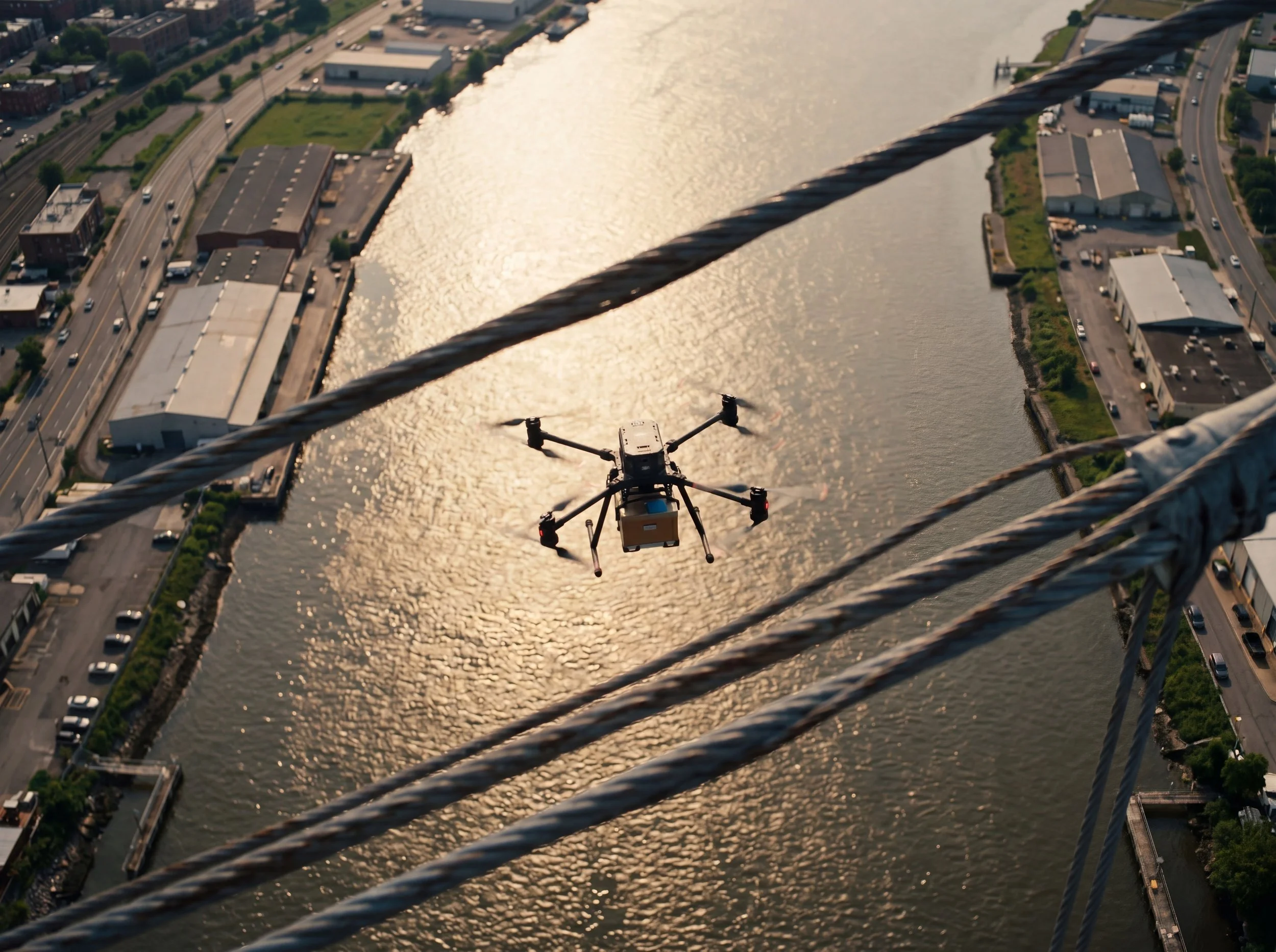
On April 27, the Port Authority of New York and New Jersey and Skyports Drone Services launched a yearlong cargo drone operation over the East River — not test flights, not a demonstration, not a one-off demonstration, but a scheduled yearlong trial designed to carry light medical cargo and other approved payloads. The route runs from lower Manhattan to the Brooklyn Marine Terminal, entirely over water, with each trip taking four minutes versus up to twenty by truck.
The broader picture: Zipline — the drone delivery company that started by delivering blood and vaccines to remote villages in Rwanda and now operates across the U.S. — recently completed its two millionth commercial delivery and raised more than $600 million to expand into Houston and Phoenix. Wing, backed by Google's parent company Alphabet, is on track to expand its drone delivery partnership with Walmart to more than 270 store locations by 2027.
The common thread is BVLOS — Beyond Visual Line of Sight operations. That's the ability to fly a drone farther than you can see it, which is essential for any delivery route longer than a few blocks. Each approved BVLOS program, like the East River trial, builds the regulatory case for broader rules that could eventually unlock drone delivery at meaningful scale.
Red Raven's Take: Drone delivery isn't coming. It's here, and it's carrying the kind of cargo where speed genuinely matters. For anyone running a commercial drone program or evaluating one, the East River trial is worth studying closely — specifically the approval process. The Port Authority didn't just launch this operation. They ran 135 test flights in January, documented a 96% completion rate in winter conditions over open water, and used that data to build the case for a year-long FAA-approved program. That's how you get BVLOS approval. That's how you build program credibility. Data-first program design is exactly the approach we take at Red Raven, and it's what separates programs that get approved from programs that stay grounded.
Read more: NYC Tests Cargo Drones to Cut Traffic and Speed Medical Deliveries — DRONELIFE | Skyports Begins Year-Long East River Medical Drone Run — DroneXL
Ukraine and Russia Push Drone Warfare to New Scale
April 2026 set a grim record. Russia launched 6,804 drones and missiles into Ukraine last month — the most intense single month of aerial attacks in the entire war. The nightly average: 222 drones and four missiles hitting Ukrainian airspace every single night. The largest single attack came on April 15: 703 munitions in one night, including 659 drones and 44 missiles, killing at least 19 people.
Ukraine shot down approximately 88 percent of the incoming drones and 62 percent of the missiles. To put that in perspective: Ukraine intercepted roughly 33,000 Russian drones in March alone. In response, Ukraine has increasingly turned to its own drone capabilities — not just for defense, but for offense deep inside Russian territory, targeting oil infrastructure and military supply lines. The Institute for the Study of War recently assessed that Ukraine's drone superiority is "likely contributing to the stalling of Russian advances."
CNN reported this month that Ukraine is now sending autonomous ground robots alongside drones into frontline positions rather than human soldiers in some of the most dangerous terrain — a glimpse of how rapidly autonomous systems are being absorbed into real combat operations.
Red Raven's Take: The conflict in Ukraine is the world's most advanced real-time laboratory for autonomous drone technology, and everything happening there is informing U.S. defense spending, doctrine, and industrial planning. The $55 billion the Pentagon just committed to its Defense Autonomous Warfare Group — which we covered in last week's briefing — isn't disconnected from these numbers. It's a direct response to them. For public safety agencies and enterprise drone operators: the lessons from Ukraine aren't only about military hardware. They're about the critical role of trained operators, real-time coordination, and program infrastructure in making drone operations effective under pressure. The technology matters less than the system built around it. That principle applies whether you're flying over a battlefield or a fire scene.
Read more: Russia Sets New Record for Drone and Missile Attacks on Ukraine in April — ABC News | 5 Questions About Ukraine's Record of Drone Warfare — Washington Times
What This Week Means
A possible near-miss at 4,000 feet. $3.5 billion going into American drone factories. A citywide ban in Beijing. Stolen chemical-spraying drones. A federal counter-drone field guide. Cargo drones over the East River. And 6,800 drones launched in a single month of war.
Every one of these stories tells you something different about where drones are right now — and none of them suggest the pace is slowing down. If your organization is still treating drone programs as something to figure out later, this week is a good reminder that later is already here.
-
Did a drone actually hit the United Airlines flight near San Diego?
The pilot reported a possible drone encounter, but no physical strike was confirmed. United Airlines removed the word "strike" from its statement, and maintenance crews found no damage to the aircraft. The FAA is investigating the incident.
How high can you legally fly a drone in the U.S.?
The FAA generally requires recreational and commercial drone pilots to fly below 400 feet above ground level. Flying above 400 feet — especially near airports or in active airspace — requires special authorization and may violate federal law.
What is Blue UAS and why does it matter?
Blue UAS is a program that identifies drone platforms cleared for use by U.S. government agencies based on security and supply-chain vetting. As DJI faces growing restrictions, Blue UAS-cleared alternatives like Skydio have become important for government and public safety procurement.
What is counter-UAS (C-UAS) technology?
Counter-UAS (C-UAS) refers to systems and tactics used to detect, track, and stop unauthorized drones. This includes radar, radio frequency sensors, cameras, and other detection equipment typically deployed at events, venues, or sensitive locations.
What is BVLOS drone flight?
BVLOS stands for Beyond Visual Line of Sight — the ability to fly a drone farther than the pilot can directly see it. It requires special FAA approval and is critical for drone delivery operations, infrastructure inspection, and other long-range commercial applications.
What is Remote ID and do I need it for my drone?
Remote ID is an FAA requirement that most drones must broadcast their identification and location in real time — similar to a digital license plate. If you fly a drone weighing more than 0.55 pounds in the U.S., Remote ID compliance is generally required.
How do I get a Part 107 license to fly drones commercially?
To fly drones commercially in the U.S., you need an FAA Part 107 Remote Pilot Certificate. You earn it by passing the FAA's aeronautical knowledge exam at an approved testing center. Red Raven UAS offers an online Part 107 course at redravenuas.com/part107 that includes unlimited practice exams and full paperwork guidance.
Links & Resources
FAA Part 107 Certification Course: https://www.redravenuas.com/part107
UAS Program Development & Consulting: https://www.redravenuas.com/consulting
On-Site UAS Training: https://www.redravenuas.com/training
Red Raven UAS Blog: https://www.redravenuas.com/blog
Red Raven UAS News Feed: https://www.redravenuas.com/news
Red Raven UAS Podcast https://www.redravenuas.com/podcast
About Red Raven UAS
Red Raven UAS helps public safety agencies, government teams, utility operators, energy companies, and infrastructure organizations build drone programs that actually work in the field.
We focus on the parts of a UAS program that matter after the aircraft comes out of the box: pilot training, FAA compliance, SOP development, mission workflows, data handoff, risk management, and long-term program strategy. No hardware sales. No manufacturer hype. No one-size-fits-all curriculum.
Our team brings together decades of real-world operational experience in public safety aviation, commercial drone operations, training, and UAS program development. From initial program planning through on-site instruction, program assessment, and workflow design, Red Raven gives teams the structure they need to deploy drones safely, legally, and effectively.
Explore More