UAS Weekly Briefing — May 15, 2026: FAA Calls Operators “Pilots” at XPONENTIAL, World Cup No Drone Zone Campaign Is Official, and the DJI Ban Enters Its Legal Phase
Four days. Ten thousand attendees. Five hundred and fifty exhibitors. One statement from the FAA that no one in this industry will forget quickly.
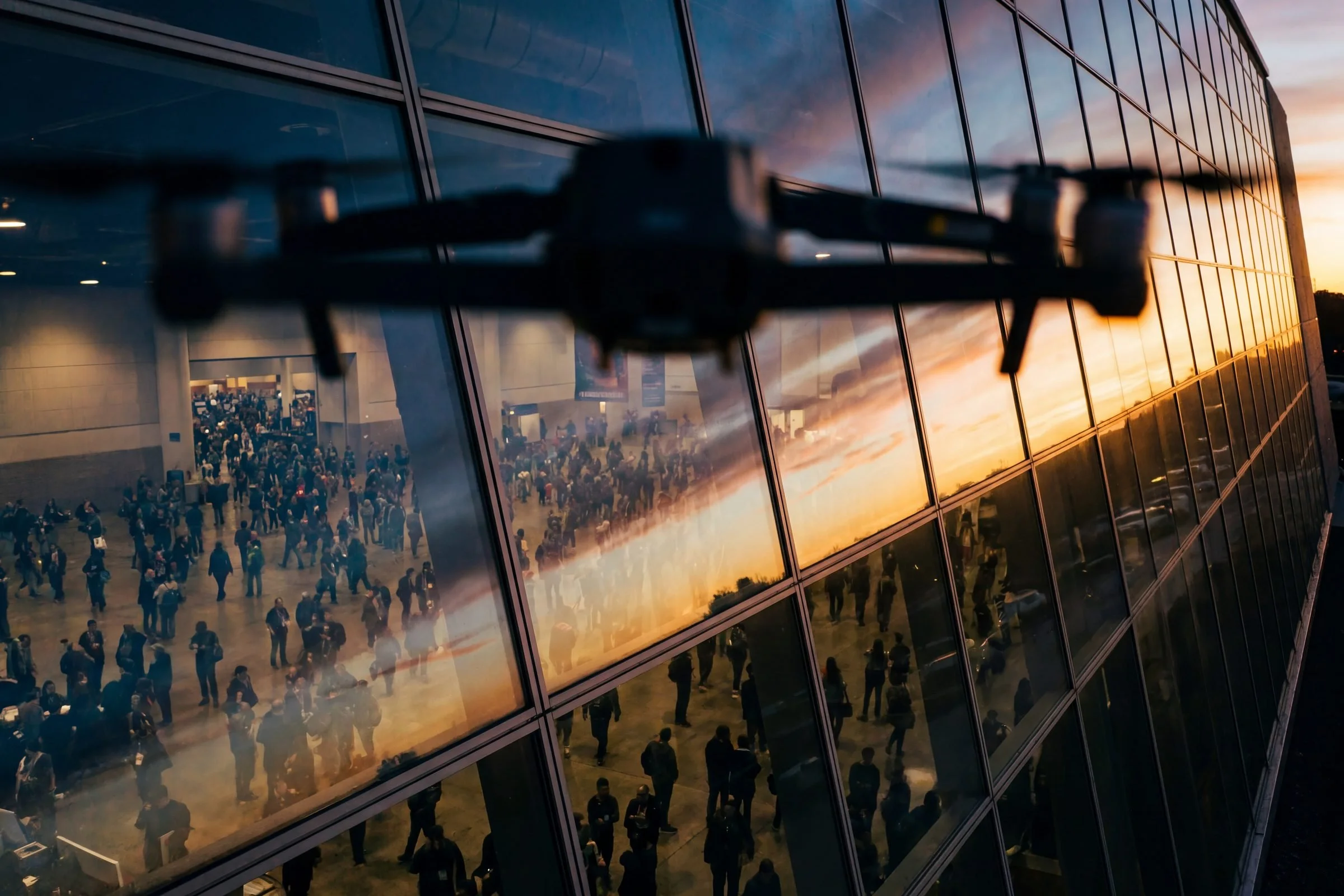
This week, XPONENTIAL 2026 — the largest drone and autonomous systems conference in the world — took over Detroit’s Huntington Place convention center from May 11 through 14. It’s the event where the industry gathers to take stock of where things stand and signal where they’re heading. And this year, the FAA’s top air traffic executive said something that should change how every commercial drone pilot thinks about themselves and their work.
This is your Red Raven UAS Weekly Briefing for May 15, 2026. Nine stories. Here’s what happened and what it means for you.
XPONENTIAL 2026: The FAA Just Called You a Pilot
At XPONENTIAL 2026 this week, the FAA’s Air Traffic Organization Chief Operating Officer stepped on stage and said what drone advocates have been pushing for years: “We don’t see drones as drones, we see drones as aircraft. We don’t see drone operators as drone operators. We see them as pilots.”
That might sound obvious — of course drones are aircraft — but the distinction matters enormously in how the FAA approaches regulation, enforcement, and integration into U.S. airspace. For years, many FAA policies have treated drones as a special edge-case category of flying object that needs to be managed and restricted. The shift toward treating them as aircraft — with operators held to pilot-level standards of training, responsibility, and situational awareness — signals a fundamentally more mature regulatory direction.
The FAA COO also announced that a new radar data-sharing test program would launch within two weeks of the conference. Radar data sharing means ground-based radar systems — the same kind used to track commercial airplanes — will begin sharing real-time flight information with drone operators and air traffic management systems. It’s a foundational step toward letting drones operate safely in the same airspace as traditional aircraft.
Beyond the FAA’s statement, XPONENTIAL made clear that the industry’s center of gravity has shifted. The conference theme wasn’t about new prototype gadgets — it was about scale: manufacturing at scale, building trusted supply chains, and deploying drones in environments where they’re expected to work every single time.

Red Raven’s Take
The FAA calling operators “pilots” isn’t just good optics — it signals that expectations for training, situational awareness, and operational discipline are going up across the board. If your team is flying drones commercially without FAA Part 107 certification — the license required for any drone flight where money changes hands — the standard is rising and now is the time to get ahead of it. Our Part 107 course gets you there fast.
Read more: FAA Air Traffic COO Tells XPONENTIAL: ‘We See Drones As Aircraft, Operators As Pilots’ — DroneXL
The DJI Ban Enters Its Legal Phase — And Operators Get a Firmware Lifeline
Last December, the Federal Communications Commission — the U.S. government agency that regulates communications technology — added DJI and Autel Robotics to its “Covered List.” That list identifies equipment the government has deemed a potential national security risk. Being on it means DJI can no longer get new products authorized for sale in the United States. For the hundreds of thousands of commercial drone pilots, public safety agencies, and enterprise operators who rely on DJI hardware, this has been a significant blow.
This week, the Drone Service Providers Alliance (DSPA) — a trade group representing commercial drone operators — filed a formal challenge to the FCC that cuts to the heart of the ban’s logic. Their argument: if DJI drones are dangerous enough to ban, why are the hundreds of thousands of DJI drones already in service still flying legally every day? “The Commission cannot have it both ways,” the filing reads. “Either these drones are categorically unsafe in all operational contexts, or risk actually varies depending on how, where, and why they’re being used.” A drone flying offline to inspect farmland, the DSPA argues, doesn’t present the same cybersecurity risk as a cloud-connected drone operating near sensitive infrastructure.
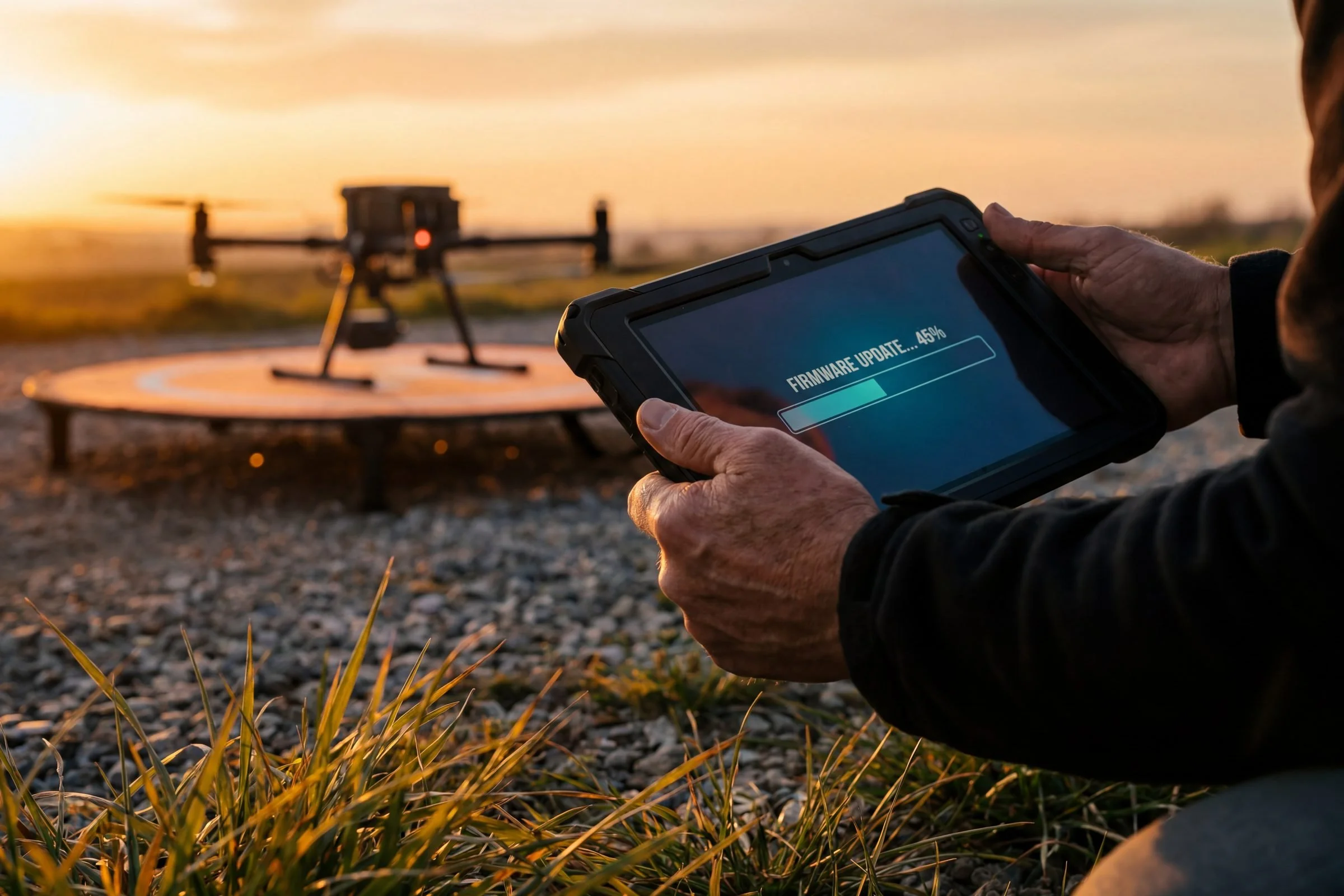
On Friday, May 8, the FCC quietly extended the firmware and software update waiver for already-authorized foreign-made drones, including DJI, through at least January 1, 2029. A firmware update is a software patch that improves performance, fixes bugs, and addresses security issues. Operators now know those safety-critical patches can reach already-authorized hardware for nearly three more years.
Meanwhile, the U.S. Department of Defense filed a classified intelligence brief opposing DJI’s petition for reconsideration, significantly raising the stakes. Three legal tracks are now active: the FCC’s own reconsideration process, a Ninth Circuit federal court appeal, and the broader policy fight over how the Covered List applies to the drone industry.
Red Raven’s Take
For current DJI operators: you can keep flying, and firmware updates are now confirmed through at least January 1, 2029. But buying new DJI hardware through U.S.-authorized channels remains effectively blocked — and with the Pentagon filing classified opposition, resolution is likely years away, not months. Agencies and enterprise teams planning new hardware purchases should be evaluating domestic alternatives now. Our consulting team can help you assess what’s available and what fits your mission profile.
Read more: FCC’s DJI, Autel Ban Ignores How Drones Actually Work — DroneDJ
Russia Fires 800+ Drones in Massive Daytime Attack on Ukraine
On Wednesday, May 13, Russia launched at least 800 drones in a massive daytime attack on Ukraine, hitting about 20 regions across the country. The Associated Press reported that at least six people were killed and dozens were wounded, including children, based on the reporting available at the time.
For context: when the war began, drone attacks were measured in the dozens. Now they’re measured in the hundreds per night. This is what industrial-scale drone warfare looks like, and it’s happening in real time.

Red Raven’s Take
This is the geopolitical context driving U.S. domestic drone policy. Every time drone warfare escalates at this scale, it accelerates the push for American-made alternatives to DJI, tightens supply chain requirements through programs like Drone Dominance, and adds urgency to the FAA’s rulemaking for commercial drone operations at scale. For enterprise operators and public safety agencies building drone programs today, understanding this backdrop explains why hardware procurement decisions are increasingly becoming policy decisions as well.
Read more: Russia Launches Mass Attack Against Ukraine With Hundreds of Drones — Euronews
Pentagon Drone Dominance at XPONENTIAL: The Mission Is Now the Supply Chain
The Pentagon’s Drone Dominance program is a $1.1 billion initiative designed to buy more than 200,000 drones while building a trusted, domestically sourced supply chain for U.S. military and government use. It launched earlier this year with 25 vendors selected to compete in Phase I. At XPONENTIAL 2026 this week, the program’s next direction became clear: the U.S. government is no longer just looking for great drone technology. It wants to know exactly where every component comes from.
Government and industry leaders at XPONENTIAL outlined what the next phase looks like: third-party validation of supply chains, documentation of domestic manufacturing footprints, and disqualification risk for vendors who can’t demonstrate that their components are clean. The era of “it flies great and it’s affordable” as the primary procurement criteria for government drone contracts is over.
Red Raven’s Take
For enterprise teams and agencies evaluating drone platforms for government-adjacent programs, the Drone Dominance supply chain standards are becoming the benchmark. If you’re in a procurement process right now, adding questions about a vendor’s Drone Dominance status and domestic manufacturing footprint to your evaluation is no longer just due diligence — it may soon be a contractual requirement. Domestic drone manufacturers are the long-term play for any program with government ties.
FAA World Cup No Drone Zone Campaign Is Official — Fines Up to $100,000, Drone Confiscation Risk
The FIFA World Cup 2026 — the largest soccer tournament on earth — kicks off June 11 and runs through July 19 across the United States, Canada, and Mexico, featuring 104 matches across 16 host cities. Before your next flight this summer, you need to know if you’re near one of them.
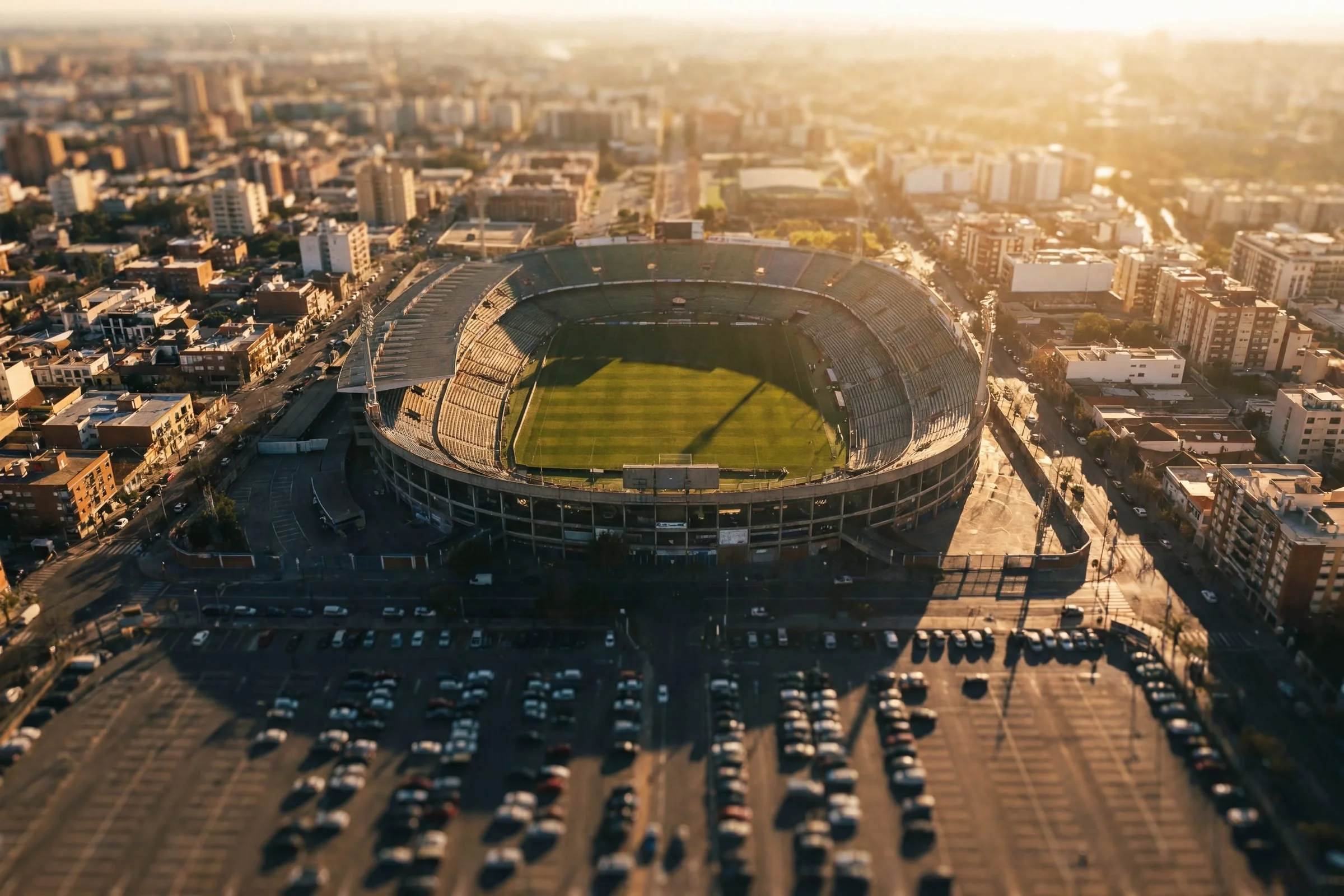
The FAA has officially launched its No Drone Zone campaign for U.S. World Cup venues and fan festivals. During each match window — and for a set time before and after — the FAA will issue TFRs, or Temporary Flight Restrictions, around U.S. match venues and fan festivals. A TFR is essentially a temporary no-fly zone the FAA puts in place for a specific event or situation. Even if you hold a valid commercial drone pilot certificate (called an FAA Part 107 Remote Pilot Certificate) and normally have airspace authorization, an active TFR overrides all of that. If a TFR is active, you do not fly. Period.
The penalties for violations are severe: operators may face civil fines up to $75,000, criminal fines upward of $100,000, and drone confiscation if they operate illegally in restricted airspace during World Cup events. U.S. host cities include Atlanta, Dallas, Houston, Kansas City, Los Angeles, Miami, New York/New Jersey, Philadelphia, San Francisco Bay Area, and Seattle.
How to check before you fly: The FAA’s free B4UFLY smartphone app shows active and upcoming TFRs in your area. Make it part of your pre-flight routine for every flight between June 11 and July 19.
Red Raven’s Take
Pull up B4UFLY before any flight from June 11 through July 19 if you’re within range of any U.S. host city or fan festival — no exceptions. TFRs for events like the World Cup can activate hours before game time and extend well beyond the stadium perimeter. Flying into an active TFR isn’t a paperwork violation you sort out later. Federal and local authorities will be coordinating enforcement on site. This is the one you do not want to be the example case for.
Read more: FAA’s No Drone Zone Push Caps a Year of Counter-Drone Buildup for World Cup 2026 — DroneXL
Project ULTRA Moves Forward: A Framework for Shared Airspace Operations
Also highlighted around XPONENTIAL this week: Project ULTRA, an existing Department of Defense-backed effort that continues to move forward on one of the hardest technical and regulatory challenges in modern aviation — making drones a routine part of shared airspace alongside traditional aircraft.
Right now, drones and commercial aircraft largely operate in separate domains. Most drones are restricted to flying below 400 feet above the ground and away from airports, while commercial planes operate much higher and in tightly managed corridors. But as drones get used for delivery, infrastructure inspection, emergency response, and other commercial applications, they’ll increasingly need to operate in shared corridors, at greater altitudes, and in urban environments where traditional aviation already flies.
Project ULTRA is a framework that integrates drones, counter-UAS systems (technology that detects and identifies drones), and traditional aircraft operations into a single coordinated system — so that agencies, air traffic controllers, and drone operators all see the same picture at the same time.
Red Raven’s Take
For operators and agencies building programs around BVLOS operations — Beyond Visual Line of Sight, meaning flights where the drone travels far enough away that the pilot can no longer see it directly — Project ULTRA is the type of systemic infrastructure that makes this work at scale. Drone delivery routes, long-range utility inspection, emergency response drones flying miles from an incident command post: all of these depend on exactly the integrated airspace framework ULTRA is designed to create. Watch this program.
Read more: Project ULTRA Aims to Normalize Drone Operations in Shared Airspace — DroneLife
DJI Drops a Spring Firmware Wave — Consumer and Enterprise Updates
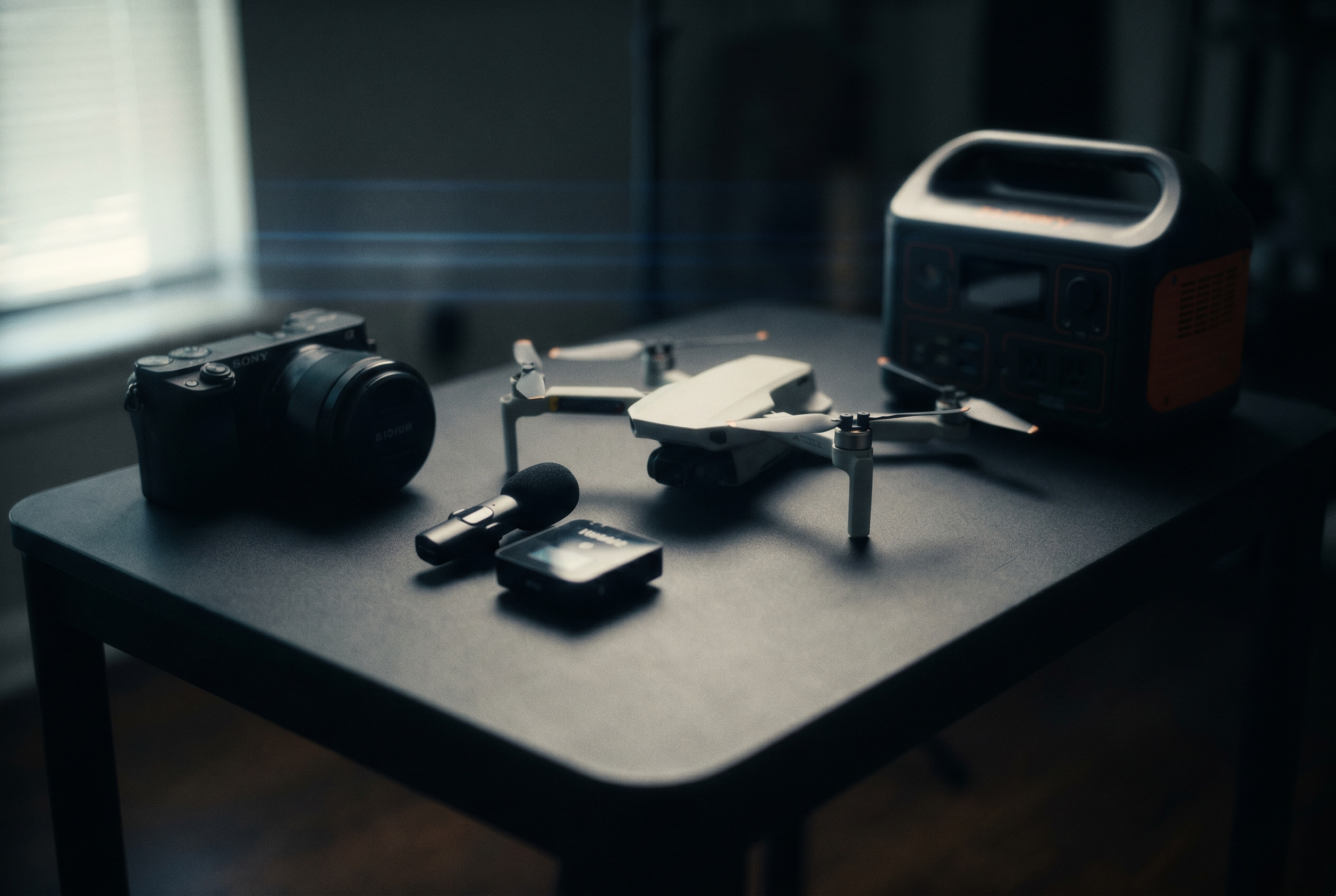
On May 11, DJI released a coordinated round of firmware updates — software patches that improve performance and fix safety issues — for several of its most widely flown platforms. For consumer and prosumer pilots, updates rolled out for the DJI Mavic 4 Pro (DJI’s flagship triple-camera drone), the DJI Mini 5 Pro (a compact, lightweight drone popular for its portability and capability), and the DJI Air 3S. The DJI RC Pro 2 remote controller and DJI Fly app version 1.21.2 were also updated, focused on bug fixes and overall stability.
On the enterprise side — drones used for professional inspection, public safety, and large-scale commercial operations — DJI released firmware v17.01.05.06 for the DJI Dock 3 (an automated drone charging and launch station that allows drones to operate without a human physically on site for each flight) and the DJI Matrice 4D Series. This update adds the ability to toggle the landing pad indicator light on and off, giving enterprise operators more control during automated missions.
Red Raven’s Take
If you’re flying any of these platforms, check for the update before your next flight. Firmware updates often address battery management, flight stability, and sensor calibration — safety-critical functions, not just feature additions. DJI stages updates in waves, so if yours isn’t showing yet, check again in 24–48 hours. Enterprise operators running Dock 3 automated missions: the new landing pad indicator control is a practical safety addition for night and low-visibility operations.
Read more: DJI Rolls Out Fresh Firmware Updates for Mavic, Mini, Air Drones — DroneDJ
Wing and Papa John’s Launch Drone Delivery Pilot — AI Is Building the New Commerce Infrastructure
Wing — the drone delivery subsidiary of Alphabet, Google’s parent company — launched a delivery pilot this week with Papa John’s in the Charlotte, North Carolina area. The deliveries use a model Wing calls “agentic commerce”: AI systems handle the ordering, routing, and logistics coordination automatically, and the drone executes the final delivery. No human has to intervene at each step. The AI agent manages the transaction from order placement to doorstep.
For anyone tracking where drone delivery is heading, the real story here isn’t the pizza — it’s the model. What Wing and Papa John’s are demonstrating is that drone delivery is moving from novelty to infrastructure. A logistics layer that retailers can plug into, just as they plug into UPS or DoorDash today.
Red Raven’s Take
Drone delivery is no longer a tech demo — it’s becoming a commercial logistics vertical. For enterprise operators and agencies exploring drones for cargo movement, medical supply delivery, or last-mile distribution, the regulatory pathways Wing is navigating — FAA waivers, airspace authorization, and BVLOS approval — are the same ones any commercial operator will need to understand for advanced drone applications. What Wing builds now becomes the playbook others follow.
Drone Threats Are Escalating. America’s Airspace Intelligence Isn’t Keeping Pace.
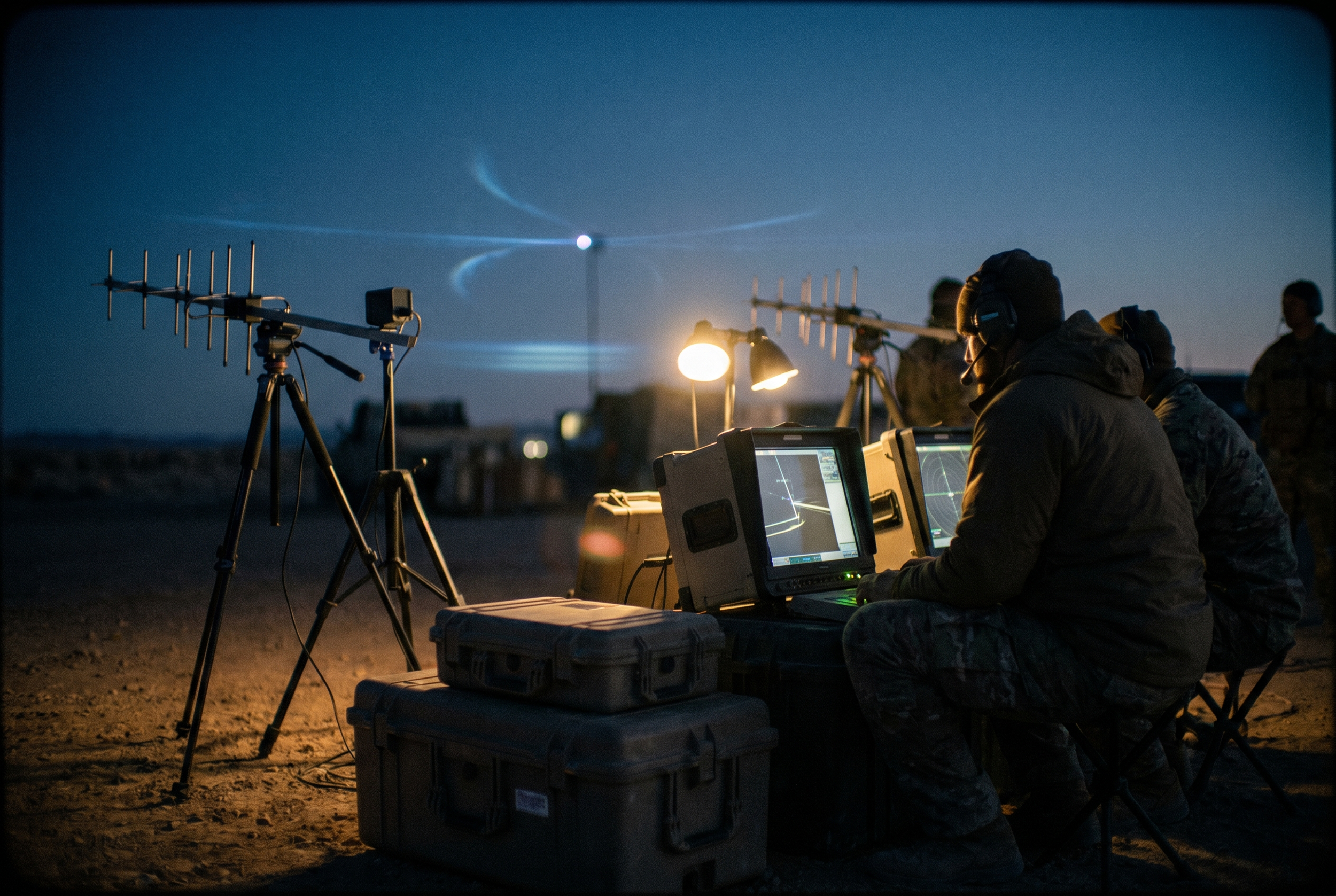
A Federal News Network analysis published this week raises a pointed question about a growing gap in U.S. airspace security: as drones become more capable, more autonomous, and harder to detect, is the government’s ability to identify and respond to drone threats actually keeping up?
The short answer, according to the analysis, is no. Detection systems designed for slower, simpler drones are struggling to track smaller, faster, and more autonomous platforms. The gap between what threat drones can do today and what U.S. detection infrastructure can reliably identify is widening — at exactly the same time the Russia-Ukraine conflict is demonstrating, at scale, how dangerous that gap can be.
Red Raven’s Take
For public safety agencies and government program managers building drone programs, this is the case for treating counter-drone awareness as a program-design question — not an afterthought. Understanding what a threat drone looks like, how your agency would detect one, and what your operational response looks like in a contested airspace environment should be built into your UAS program’s Standard Operating Procedures from day one. If you’re building or expanding a program and haven’t addressed counter-drone in your SOPs, let’s talk.
-
What was the biggest announcement at XPONENTIAL 2026?
The FAA’s Air Traffic Organization COO declared that the agency sees drones as aircraft and operators as pilots — a significant policy signal. The FAA also announced a radar data-sharing test program launching within two weeks of the conference.
Can I still fly my DJI drone in the United States?
Yes. Existing DJI drones remain legal to fly. The FCC ban prevents new DJI products from being authorized for sale, but does not ground existing fleets. Firmware updates are also confirmed through at least January 1, 2029.
What is the FCC Covered List and why does it matter for drone pilots?
The Covered List identifies communications equipment the U.S. government has designated a national security risk. Products on the list cannot receive FCC authorization for sale in the U.S. DJI and Autel were added in December 2025, blocking new product sales domestically.
Where are the no-fly zones during the 2026 FIFA World Cup?
All World Cup stadiums in U.S. host cities — Atlanta, Dallas, Houston, Kansas City, Los Angeles, Miami, New York/New Jersey, Philadelphia, San Francisco Bay Area, and Seattle — are No Drone Zones from June 11 through July 19. Use the free FAA B4UFLY app to check for active Temporary Flight Restrictions before every flight near these cities this summer.
What is Project ULTRA?
Project ULTRA is an existing airspace integration effort that aims to integrate drones, counter-drone detection systems, and traditional aircraft into a coordinated airspace framework — normalizing drone operations rather than treating every flight as a special exception.
What is the Pentagon’s Drone Dominance program?
Drone Dominance is a $1.1 billion DoD initiative to procure over 200,000 drones while building a trusted domestic supply chain. As of XPONENTIAL 2026, the program is focused on verifying that every component in a qualifying drone is domestically sourced and verifiable.
Which DJI drones received firmware updates in May 2026?
Firmware updates dropped May 11 for the Mavic 4 Pro, Mini 5 Pro, Air 3S, RC Pro 2 remote, and DJI Fly app v1.21.2. Enterprise updates for the DJI Dock 3 and Matrice 4D Series were released May 8.
How does the Russia-Ukraine drone war affect U.S. drone policy?
The scale of drone warfare in Ukraine — now hundreds of drones per night — is driving urgency around domestic drone manufacturing, counter-drone technology, and programs like Drone Dominance. It is a real-world proof of concept for industrial-scale drone operations that U.S. policymakers are watching closely.
Links & Resources
Part 107 Course: https://www.redravenuas.com/part107
Consulting & Program Development: https://www.redravenuas.com/consulting
On-Site Training: https://www.redravenuas.com/training
Weekly Briefing Archive: https://www.redravenuas.com/news
Podcast: https://www.redravenuas.com/podcast
DJI Drone Ban Update: https://www.redravenuas.com/blog/fcc-drone-ban-update
How to Build a Public Safety Drone Program: https://www.redravenuas.com/blog/build-public-safety-drone-program-guide
About Red Raven UAS
Red Raven UAS was founded by public safety and drone industry veterans who understood the gap between having drones and knowing how to deploy them effectively. Our team brings together decades of real-world operational experience — including building one of the nation’s first major public safety drone programs — and deep expertise in the commercial UAS sector across energy, utilities, and infrastructure.
We work with utility operators, energy companies, infrastructure organizations, and public safety agencies to build drone programs designed around their specific assets, workflows, and operational requirements — not a generic course deck. No hardware sales. No one-size-fits-all curriculum. Just field-tested instruction and independent program development guidance from people who have actually built and operated UAS programs at scale.
From initial program assessment and ROI modeling through pilot training, SOP development, and data workflow design, Red Raven delivers the full program infrastructure teams need to deploy drones effectively — and keep them performing. Start with Part 107 or talk to our consulting team.
Explore More