FCC Drone Ban Update: What the 2026 Rules Mean for UAS Programs
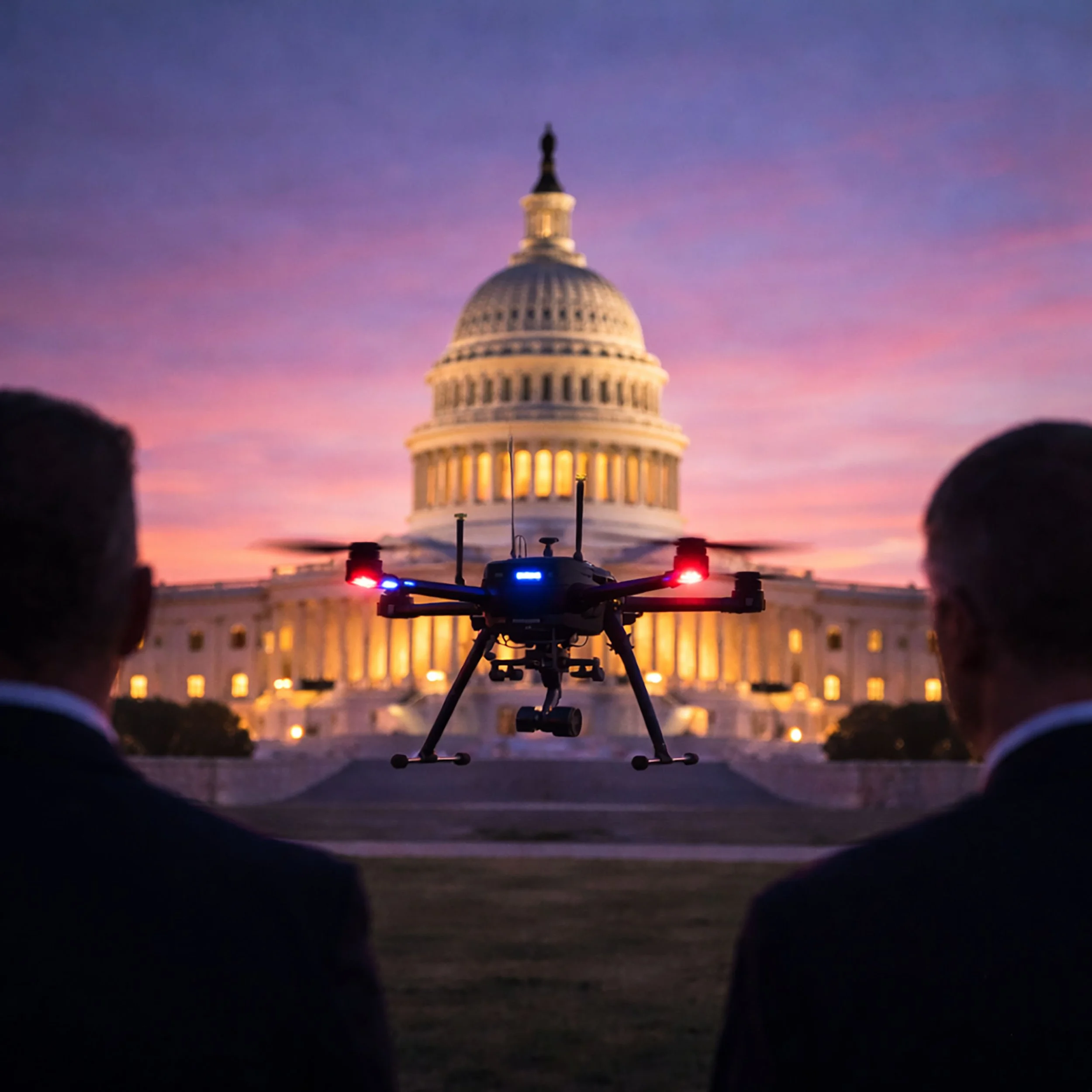
The headlines made it sound like the sky just fell on the drone industry.
It didn’t.
But on December 22, 2025, the FCC made a move that changed the future pipeline of drone hardware in the United States—especially for drones and key components made outside the U.S. If you manage a fleet, run a program, or are preparing to buy a serious UAS platform, this is a planning issue.
At Red Raven UAS, our job is to cut through the noise and get to a practical answer: What changed, what did not, and what should your program do next?
Last updated: August 10, 2026. The FCC’s December 22, 2025 Covered List action remains in force, but the agency has since added exemptions, implemented a Conditional Approval process, allowed certain software and firmware updates for existing authorized equipment, and opened new proceedings that could affect some previously authorized drones. This update separates current rules from proposals that have not yet been adopted.
What happened (in plain English)
On December 22, 2025, the FCC added foreign-produced UAS and UAS critical components to its Covered List. That category is broader than a single-brand action. It can affect foreign-produced UAS hardware that requires FCC authorization unless a current exclusion or Conditional Approval applies.
What the Covered List actually does
Covered radiofrequency equipment generally cannot receive a new FCC equipment authorization. Because most wireless devices need that authorization before commercial importation, marketing, or sale, the action blocks the normal U.S. market-entry path for new covered models.
The action did not itself cancel existing authorizations, ground previously purchased drones, or change FAA Part 107. Models already authorized by the FCC may generally continue to be imported, marketed, sold, and used under current rules—subject to any separate FAA, procurement, grant, or other legal requirements.
What this is NOT
This is not an FAA flight ban.
This is not a rule that automatically grounds your current fleet.
This is not a change to Part 107.
The December 22 FCC action did not itself ground previously purchased drones. Continued operation still depends on FAA, Remote ID, airspace, organizational, procurement, grant, and other applicable requirements.
What is allowed now—and what is blocked
As of August 10, 2026, newly introduced foreign-produced UAS and critical components generally cannot receive new FCC authorization unless an exclusion applies. Current exclusions include equipment on the DCMA Blue UAS Cleared List through January 1, 2028; equipment qualifying as a domestic end product under the Buy American Standard through January 1, 2028; devices granted an individual Conditional Approval; and a narrowly defined class of toy drones.
These exclusions are product- and status-specific. A drone’s existing FCC authorization does not by itself establish Blue UAS status, FAA operational legality, or eligibility under a particular grant or procurement policy.
The critical-components issue
The FCC’s definition of UAS critical components is broad. It expressly includes data-transmission devices, communications systems, flight controllers, ground-control stations and controllers, navigation systems, sensors and cameras, batteries and battery-management systems, motors, and associated software.
That does not mean every passive replacement part independently requires FCC certification. It does mean operators should not assume that batteries or other components are outside the rule. Fleet reviews should track model numbers, FCC IDs, authorization status, manufacturer, and the current Covered List—not rely on part type alone.
Is there an exception pathway?
The exception pathway is now active. The Department of War or Department of Homeland Security may grant a Conditional Approval after reviewing a manufacturer’s security, ownership, supply-chain, and domestic-production plans. Multiple UAS and components have already received these approvals. They are not buyer-specific workarounds, and they can be terminated if an applicant violates its onshoring plan, fails updated vetting, or materially misrepresents its submission.
What the software-support waiver allows
Existing authorized fleets are not necessarily frozen in place. Under an FCC waiver, foreign-produced UAS and critical components authorized before the December 22, 2025 listing may continue receiving qualifying Class I and analogous Class II software or firmware updates until at least January 1, 2029. The waiver covers changes intended to maintain functionality, patch vulnerabilities, and preserve operating-system compatibility. It is not blanket permission for every hardware or software modification.
What could change next
Two FCC proceedings could narrow the existing-model rule, but neither is final as of August 10, 2026. One targets previously authorized equipment associated with nine named entities. The other proposes restrictions on certain foreign-produced “military-grade” UAS, including systems with thermal imaging, LiDAR, docking stations, swarming capability, aerosol-dispensing capability, defense-article integration, or takeoff weights of 55 pounds or more. As proposed, neither action would prohibit continued operation of equipment already purchased.
DJI’s reconsideration proceeding is also still pending. The FCC invited comments through August 28, 2026; the existing Covered List treatment remains operative in the meantime.
What this means depending on who you are
Public safety teams
If you rely on grants or operate under strict procurement standards, build a transition roadmap that treats FCC authorization, Blue UAS status, grant eligibility, and local procurement requirements as separate checks. The immediate question may not be whether an existing aircraft can fly, but what the program can lawfully and supportably buy next.
Utilities, enterprise, and critical infrastructure
Document the authorization and support status of each platform and critical component. Reliability, cybersecurity, supply-chain policy, FAA legality, and FCC authorization are related planning issues, but they are not interchangeable.
Small operators and new pilots
The available market may narrow over time. Before a serious purchase, confirm the model’s authorization and support status instead of relying on brand-level assumptions.
The Red Raven recommendation: treat this like a transition, not a crisis
You do not need to replace everything overnight. You do need to plan around fleet lifecycle, support, and the rules that govern your specific missions.
A practical phased approach is to:
Use platforms whose FCC authorization, FAA operating status, and procurement or grant eligibility match the mission.
Keep previously authorized foreign-made assets only where continued use is permitted by FAA rules, organizational policy, grant terms, and applicable procurement restrictions.
Build a plan that assumes parts availability and replacement cycles may tighten.
Three decisions to make this week
Define your mission tiers. Which missions are sensitive, grant-funded, or subject to additional scrutiny?
Inventory your exposure. Which aircraft and critical components may need replacement in the next 12–24 months?
Set a procurement posture. Are you buying equipment already FCC-authorized and available, or transitioning to platforms that meet the specific FCC, FAA, procurement, and grant requirements governing your program?
If you want help, this is what we do
Red Raven UAS supports teams through this kind of shift:
Fleet transition planning that is mission-driven and budget-aware
Program development covering SOPs, workflows, and procurement-ready structure
Operator training matched to real missions
Part 107 training and certification preparation for teams building from the ground up
FCC Drone Ban FAQ
Is this an FAA drone ban that grounds my current fleet?
No. The December 22, 2025 FCC action did not itself ground previously purchased drones or change Part 107. Continued operation still depends on FAA, Remote ID, airspace, organizational, procurement, grant, and other applicable requirements.
What changed on December 22, 2025?
The FCC added foreign-produced UAS and UAS critical components to its Covered List. Covered radiofrequency equipment generally cannot receive a new FCC equipment authorization, which blocks the normal market-entry path for new covered models unless an exclusion or Conditional Approval applies.
What exclusions are currently available?
Current exclusions include equipment on the DCMA Blue UAS Cleared List through January 1, 2028; qualifying Buy American domestic end products through January 1, 2028; devices with an individual Conditional Approval; and a narrowly defined class of toy drones.
What about models that were already FCC-authorized?
Models already authorized by the FCC may generally continue to be imported, marketed, sold, and used under current rules, subject to separate FAA, procurement, grant, and other requirements. Two pending FCC proposals could narrow this treatment for certain equipment, but neither is final as of August 10, 2026.
Are batteries and battery-management systems covered?
They are expressly included in the FCC’s definition of UAS critical components. That does not mean every passive replacement part independently requires certification, but programs should not assume batteries are outside the rule.
How does Conditional Approval work?
The Department of War or Department of Homeland Security may grant Conditional Approval after reviewing a manufacturer’s security, ownership, supply-chain, and domestic-production plans. The process is active, approvals have been issued, and an approval can be terminated if its conditions are not maintained.
Can existing authorized fleets still receive software or firmware updates?
Under an FCC waiver, qualifying Class I and analogous Class II updates for foreign-produced UAS and critical components authorized before December 22, 2025 may continue until at least January 1, 2029. The waiver is not blanket approval for every change.
What FCC proposals are still pending?
One proceeding targets previously authorized equipment associated with nine named entities. Another proposes restrictions on certain foreign-produced military-grade UAS. Neither is final as of August 10, 2026, and as proposed neither would prohibit continued operation of equipment already purchased.
What should a program verify before buying or deploying a drone?
Check FCC authorization, FAA operational legality, Blue UAS status, grant eligibility, and procurement requirements separately. One status does not automatically establish the others.
Official sources
About Red Raven UAS
Red Raven UAS was founded by public safety and drone industry veterans to solve a real problem: agencies and enterprise teams buying drones with no clear plan, no trained pilots, and no compliant program to back them up. We provide vendor-neutral consulting to design and build your drone program, customized on-site training for your team and mission, and FAA Part 107 certification to keep your pilots legal and ready. No hardware sales. No generic courses. Just field-tested expertise built for the real world.
Explore More