How to Build a Public Safety Drone Program: The Complete Guide for Fire and Law Enforcement
You’ve seen the headline.
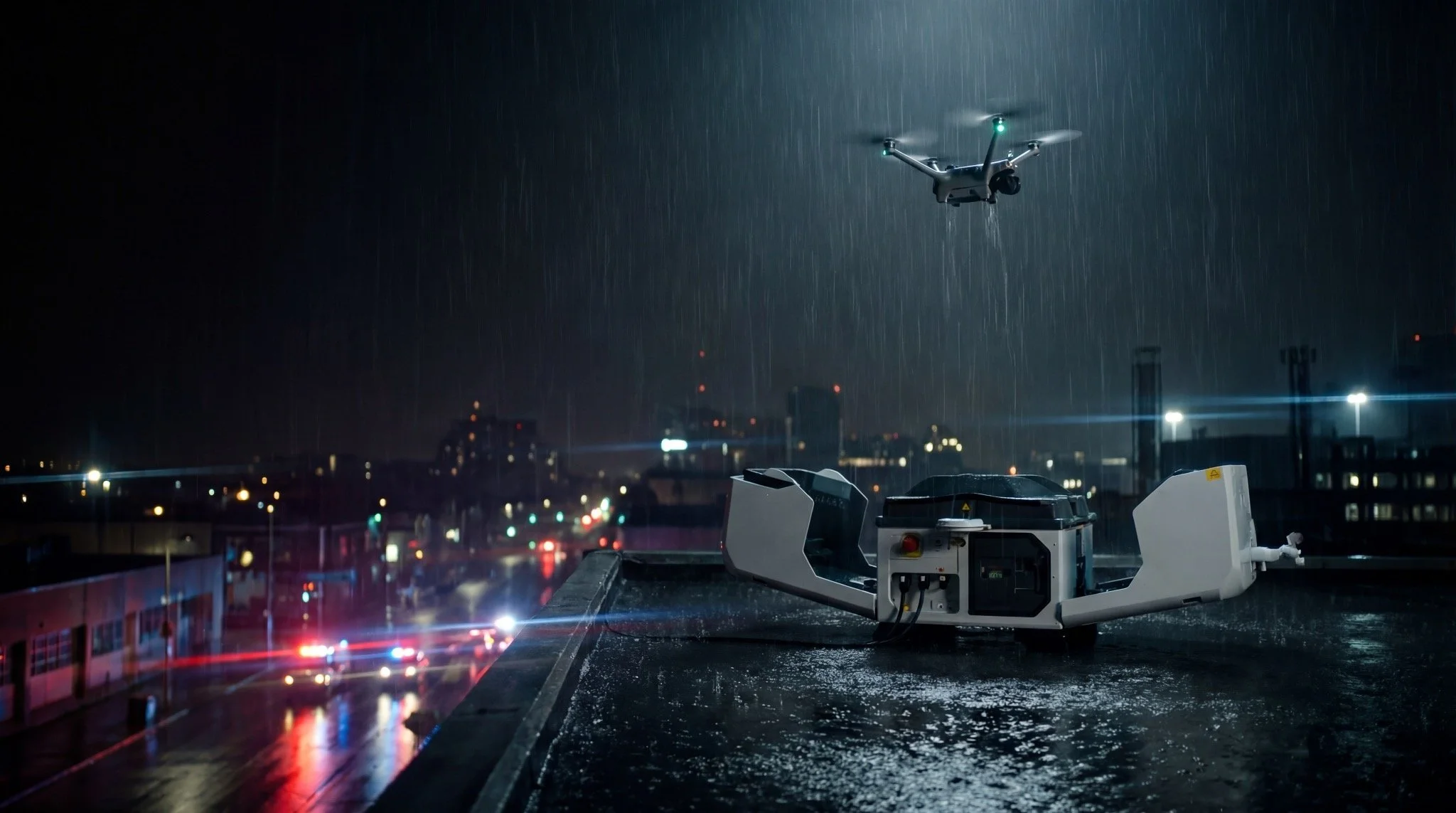
A suspect fled on foot through a neighborhood at night. Patrol units lost him within two blocks. A drone was launched. Twelve minutes later, the subject was in custody — located hiding behind a dumpster three streets over. No officers injured. No prolonged manhunt. The story made the local news at 11.
What didn’t make the news was the two years of planning, budget fights, community meetings, training hours, and policy writing that made that twelve-minute outcome possible.
That’s what this guide is about.
Whether you’re a fire chief trying to get eyes on a wildland interface fire before it jumps a ridge, a police commander looking to reduce foot pursuits, or a city manager being asked to approve a drone program you don’t fully understand yet — this is written for you.
No jargon. No manufacturer hype. Just an honest, field-tested roadmap from program concept to operational deployment.
We’ll cover everything: justifying the cost, earning public trust, navigating the legal landscape, selecting hardware and software, training your people, writing your SOPs, and sustaining the program long after the ribbon-cutting is over.
Part 1: The Case for Drones in Public Safety

Let’s start with the question every chief eventually has to answer in front of a city council or county board:
“Why do we need this?”
The honest answer isn’t because drones are cool technology. It’s because the problems public safety agencies face every day — missing persons, structure fires, barricaded subjects, traffic accidents, wildland fires, hazmat scenes — are fundamentally problems of information.
Who is where. What is happening. Where is it going.
And drones provide that information faster, safer, and cheaper than almost any other tool available.
What Drones Actually Change on Scene
In law enforcement, a drone over a foot pursuit gives the incident commander a real-time aerial picture of where the suspect is, where they’re going, and where officers should stage — without putting more units into a running foot chase. It reduces injuries to both officers and suspects. It reduces the likelihood of a dangerous encounter in the wrong location. It compresses time.
In fire operations, a drone with a thermal camera can identify hot spots invisible to ground crews, locate victims in smoke-obscured structures, and give incident commanders an overhead picture of fire behavior that used to require requesting a helicopter — an asset that costs thousands of dollars per flight hour and isn’t always available.
For search and rescue, the numbers are stark. A traditional ground search team covers roughly 0.5 to 1 acre per hour per team member. A single drone with a thermal camera can cover 100 acres in that same hour. In a missing child case or a lost hiker in deteriorating weather, that difference is the difference between a rescue and a recovery.
The Real Cost of Not Having a Drone Program
This framing matters: it’s not just about what drones cost. It’s about what the absence of drones costs.
Helicopter deployments average $1,500 to $3,000 per flight hour. Extended searches consume massive overtime budgets. Incidents where a drone could have provided immediate situational awareness instead escalate because commanders are making decisions with incomplete information.
A well-structured drone program — including hardware, training, and operations — typically runs between $15,000 and $50,000 in the first year for a small to medium department. A single avoided helicopter deployment can offset a significant portion of that cost. And that calculation doesn’t include the incidents where better situational awareness prevents an injury, a lawsuit, or a tragedy.
Part 2: The Public Trust Problem — And How to Solve It
Here’s a truth that catches a lot of agencies off guard:
A technically perfect drone program can be shut down by a single bad city council meeting.
Public opposition to law enforcement drones is real, and it’s largely driven by a mental image that doesn’t match reality. People picture a fleet of drones constantly patrolling neighborhoods, recording everything, watching everyone. Surveillance state imagery. It makes for compelling opposition testimony.
The Reality Most People Never Hear
Here is what actually happens in most cities that have an active public safety drone program: most residents have no idea the program exists.
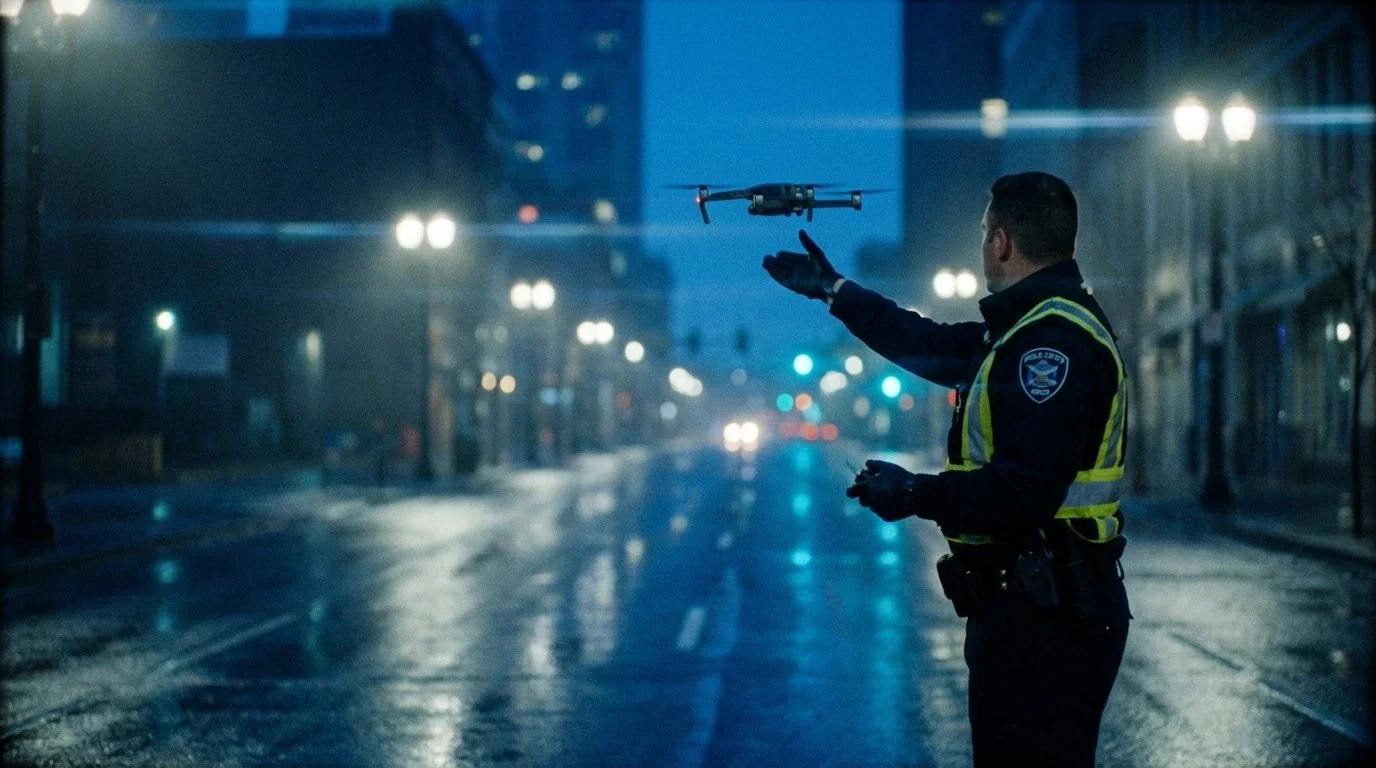
The drone sits in a case — or in an automated docking station — and deploys for a specific incident, for a specific reason, and lands when the call is resolved. The average deployment might be 15 to 20 minutes. Nobody on the ground looks up. Nobody knows it happened.
The first time most residents find out their city has drones is when the local news runs a story about a missing elderly resident who was found in 18 minutes thanks to a thermal drone — or when they see body camera footage showing an arrest that was made because an aerial view tracked a suspect through backyards.
The public reaction in those moments is almost universally positive. Because the outcome is real, concrete, and human.
That’s not spin. That’s the actual experience of departments across the country. The opposition is loudest before deployment. Once the community sees the tool working — finding the lost child, spotting the fire spreading toward a neighborhood — the conversation changes.
Building Trust Before You Launch
The departments that navigate this best treat community engagement as a program requirement, not an afterthought. Before the first operational flight, they have done the following:
Published a clear, plain-language drone use policy that specifies exactly what the drones will be used for, what they will not be used for, what data is collected, how long it is retained, and who can authorize a deployment.
Addressed facial recognition and mass surveillance directly — proactively, not reactively. Most public safety drones do not have facial recognition capability and are not used for neighborhood surveillance. If you don’t say that clearly, the public will assume the worst.
Briefed city council and community leaders before the program is publicly announced — not after. Elected officials who are surprised are elected officials who become opponents.
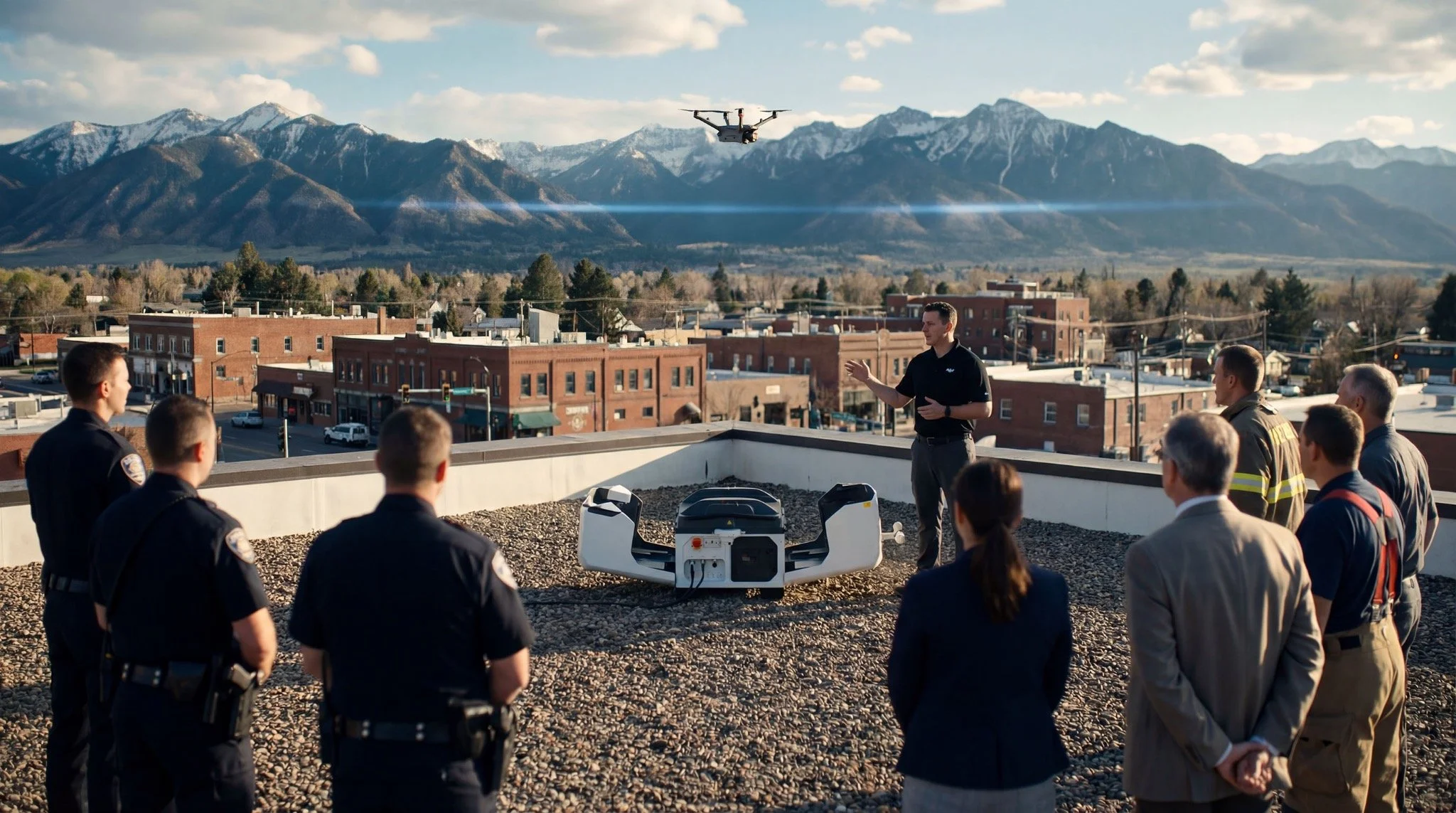
Held at least one public demonstration where residents can see the equipment, talk to the pilots, and ask questions. People fear what they don’t understand. Familiarity is the most effective tool you have.
Established an oversight mechanism — whether that’s a civilian review process, mandatory deployment logging, or regular public reporting on drone use. Accountability structures build trust.
Your Communications Strategy Matters as Much as Your SOPs
Once operational, the departments that maintain public trust are intentional about letting their success stories get out.
When a drone-assisted arrest happens, the public information officer is briefed. When a search and rescue deployment saves time, it gets mentioned in the next council update. You’re not bragging — you’re demonstrating accountability and value simultaneously.
The narrative you want to own is simple:
Your drone goes up when someone needs help, it comes back down when the job is done, and what it sees is managed under clear policy with appropriate oversight.
Part 3: Justifying the Budget — ROI, Cost Savings, and Grant Funding

Every drone program lives or dies in a budget meeting. This section gives you the tools to win that meeting.
The Direct Cost Comparison
The most powerful number in your budget presentation is the cost per flight hour comparison between a drone and a helicopter.
A law enforcement or fire department helicopter costs $750 to $3,000 per flight hour when you factor in fuel, maintenance, crew, and insurance.
A drone costs approximately $10 to $50 per flight hour when amortized across the life of the equipment.
For a department that currently requests helicopter support even a few times per month, the math is obvious.
Even for departments that don’t currently have helicopter access, the comparison holds: the drone provides a capability that simply didn’t exist before, at a cost that most departmental budgets can absorb.
The Harder-to-Quantify Savings
These don’t show up as line items but they matter enormously to the people who sign off on budgets:
Reduced officer overtime on extended searches and surveillance operations.
Reduced workers’ compensation exposure by keeping officers out of high-risk search patterns and foot pursuits in unknown terrain.
Reduced liability from incidents that escalate due to information gaps.
Reduced mutual aid costs for agencies that rely on neighboring aviation assets.
Grant Funding: You May Not Have to Pay for All of This Yourself
Many agencies can offset startup costs through grants and regional funding, but what’s eligible depends on the program year, your state’s priorities, and procurement/compliance rules. Common funding pathways include:
FEMA Homeland Security Grant Program (HSGP) pass-through funds
(often administered through SHSP / UASI, depending on your region and eligibility)DOJ / BJA Byrne Justice Assistance Grant (JAG)
(often used for law enforcement technology/training; UAS funding may require additional approvals and documentation)FEMA Assistance to Firefighters Grant (AFG)
(primarily for fire/EMS equipment and training; UAS eligibility and competitiveness can vary by year and justification)State and regional emergency management funding
(county OEM programs, regional task forces, mutual aid/interoperability budgets, shared-capability initiatives)Local government funding
(city/county public safety technology modernization, innovation funds, or capital budgets)
A strong application ties the request to clear operational outcomes (faster location times, improved scene safety, reduced overtime), and includes training, policy/SOP development, and compliance planning—not just hardware.
Part 4: Program Sizing — Small, Medium, and Large Programs

Not every department needs a full Drone as First Responder (DFR) infrastructure on day one. One of the most common mistakes agencies make is letting the complexity of a fully scaled program intimidate them out of starting.
The right program is the one that fits your department’s current capacity, budget, and mission set — with room to grow.
Small Program (Getting Started)
Profile: Limited budgets, part-time pilots, defined use cases — typically search and rescue, scene documentation, and major incident support.
1 to 2 trained Part 107 pilots (often existing personnel as a collateral duty)
1 to 2 drone platforms — typically a thermal-capable multirotor and a backup unit
Manual deployment — pilots respond with equipment when activated
Basic SOPs covering pre-flight, deployment, and data handling
Estimated startup cost: $15,000 to $35,000 including training and equipment
This is the right starting point for most small to medium departments. It delivers immediate operational capability without requiring new hires or major infrastructure changes. It also builds the internal experience that justifies scaling up.
Medium Program (Operational Unit)
Profile: Enough deployment frequency to justify a dedicated unit structure and more consistent availability.
4 to 8 trained pilots across shifts for reasonable availability
3 to 6 platforms covering multiple use cases (thermal, zoom optics, potential fixed-wing for extended area search)
Unit coordinator or program manager (may still be collateral duty)
Integration with dispatch for faster activation
Formal fleet management software and deployment logging
Estimated annual operating cost: $40,000 to $100,000
Large Program (Full Integration)
Profile: Larger agencies or regional programs with high call volume and infrastructure to support advanced capabilities including DFR.
Dedicated UAS unit with full-time program manager
10+ trained pilots with shift coverage and specialization
Multiple platform types including DFR-capable automated docking stations
CAD-integrated dispatch with automated deployment triggers
Formal mutual aid agreements and regional coordination
Estimated annual operating cost: $150,000+ depending on fleet size and DFR infrastructure
Part 5: The Current Political and Regulatory Landscape

The regulatory environment around drones in public safety is moving fast right now — and some of the changes have major implications for procurement decisions you make today. Here’s what you need to understand.
The Chinese Drone Ban — What It Actually Means
For years, DJI dominated the public safety drone market. Their hardware was reliable, their cameras were excellent, and the price point made sense for government budgets. But the landscape has changed significantly.
The National Defense Authorization Act (NDAA) has increasingly restricted the use of Chinese-manufactured drones by federal agencies and entities that receive federal funding — which includes most public safety departments through the grant programs we discussed earlier. The FCC has also taken steps to restrict new equipment authorizations for foreign-produced drone components.
The practical implication is straightforward: if your program is grant-funded, or if you anticipate ever being grant-funded, you need to be building on NDAA-compliant hardware from the start. Buying non-compliant equipment today and replacing it in two years wastes money and disrupts your pilots’ proficiency on a platform.
The Blue UAS List — Your Procurement Guide
The Department of Defense has published what’s called the Blue UAS list — a cleared list of drone systems that meet NDAA compliance requirements. This is your starting point for hardware selection if federal funding is any part of your program. The list evolves as more manufacturers go through the clearance process.
Remote ID — The License Plate of the Sky
Remote ID is now fully mandatory for virtually all drone operations. Think of it like a license plate for drones — your aircraft broadcasts its identity and location in real time.
For public safety operations, this is largely a non-issue since you’re operating transparently, but your equipment must be compliant and your pilots need to understand the requirements, including how FAA-Recognized Identification Areas (FRIAs) work.
Local Ordinances and Surveillance Restrictions
Several cities and counties have passed local drone surveillance ordinances that restrict how law enforcement can use aerial assets. These range from reasonable oversight requirements to more restrictive measures that can complicate operations.
If your jurisdiction doesn’t have one of these ordinances yet, it might — and getting ahead of it with a proactive, transparent use policy is far better than being reactive when advocacy groups show up at a council meeting with a draft ordinance of their own.
Part 6: Drone as First Responder (DFR) — The Future of Emergency Response
If there’s a single area of innovation in public safety aviation that is changing what’s possible, it’s Drone as First Responder — and it’s worth spending serious time here because this is where the next five years of the industry is heading.
What DFR Actually Is
A Drone as First Responder program deploys a drone automatically — or near-automatically — in response to a 911 call, often arriving on scene before any patrol unit or apparatus.
The drone is stored in an automated docking station, charged and ready at all times. When a qualifying call comes in, dispatch triggers the drone, it launches autonomously, flies to the scene, and begins streaming live video back to dispatch and responding units before they arrive.
The Chula Vista Police Department in California was the pioneer. Their program, launched in 2018, became the proof of concept for the entire industry. Within the first few years of operation, their drone was arriving on scene before officers in roughly half of all deployments — giving responding units live intelligence before they stepped out of their vehicles.
What DFR Requires
DFR is not a plug-and-play solution. It requires infrastructure, regulatory approvals, and operational discipline that go significantly beyond a standard drone program:
BVLOS waiver or COA
Automated docking infrastructure
CAD integration
Reliable high-bandwidth connectivity
Remote pilot monitoring
Is DFR Right for Your Department Now?
Honestly, DFR is not the right starting point for most departments. The regulatory pathway is complex, the infrastructure investment is significant, and without operational maturity, a DFR program won’t perform the way you need it to.
The right path for most agencies is to build a strong foundational program first. Two to three years of conventional operations creates the credibility and regulatory relationship with the FAA that makes a DFR application achievable.
Think of DFR as where you’re building toward, not where you start.
Part 7: Legal Framework and Required Waivers

One of the most common questions we get from agencies is: “What do we actually need to fly legally?” The answer depends on what you’re flying, where, and how.
Part 107 — The Foundation
FAA Part 107 is the federal regulation that governs commercial and public drone operations. Every pilot operating a drone for your agency needs a Part 107 Remote Pilot Certificate — this is the baseline, non-negotiable requirement.
Part 107 allows you to fly during daylight or civil twilight, up to 400 feet above ground level, within visual line of sight, and with restrictions on flying over people and moving vehicles.
Certificate of Authorization (COA) — The Government Operator Pathway
Government agencies — including law enforcement and fire departments — have the option to operate under a Certificate of Authorization (COA) instead of or in addition to Part 107.
Applying for a COA requires demonstrating your operational safety case to the FAA — your SOPs, your pilot qualifications, your maintenance procedures, and your risk mitigation strategies.
Common Waivers and Authorizations You’ll Need
Night operations — No longer require a waiver under Part 107, but pilots must have anti-collision lighting visible for 3 statute miles and must have completed the required aeronautical knowledge training.
Operations over people — Requires either a Category 1–4 compliant aircraft or a waiver.
BVLOS (Beyond Visual Line of Sight) — Required for DFR and extended-range operations. Obtained through a Part 107 waiver or a COA.
Controlled airspace authorization — Operations near airports require FAA authorization, often via LAANC.
Part 8: Hardware Selection — Choosing the Right Tools for the Mission
The drone that’s right for your program depends entirely on your mission profile. This isn’t about buying the most expensive equipment or the most well-known brand. It’s about matching the tool to the task — and making sure what you buy is compliant, supportable, and something your pilots can actually master.
The Mission-First Approach to Platform Selection
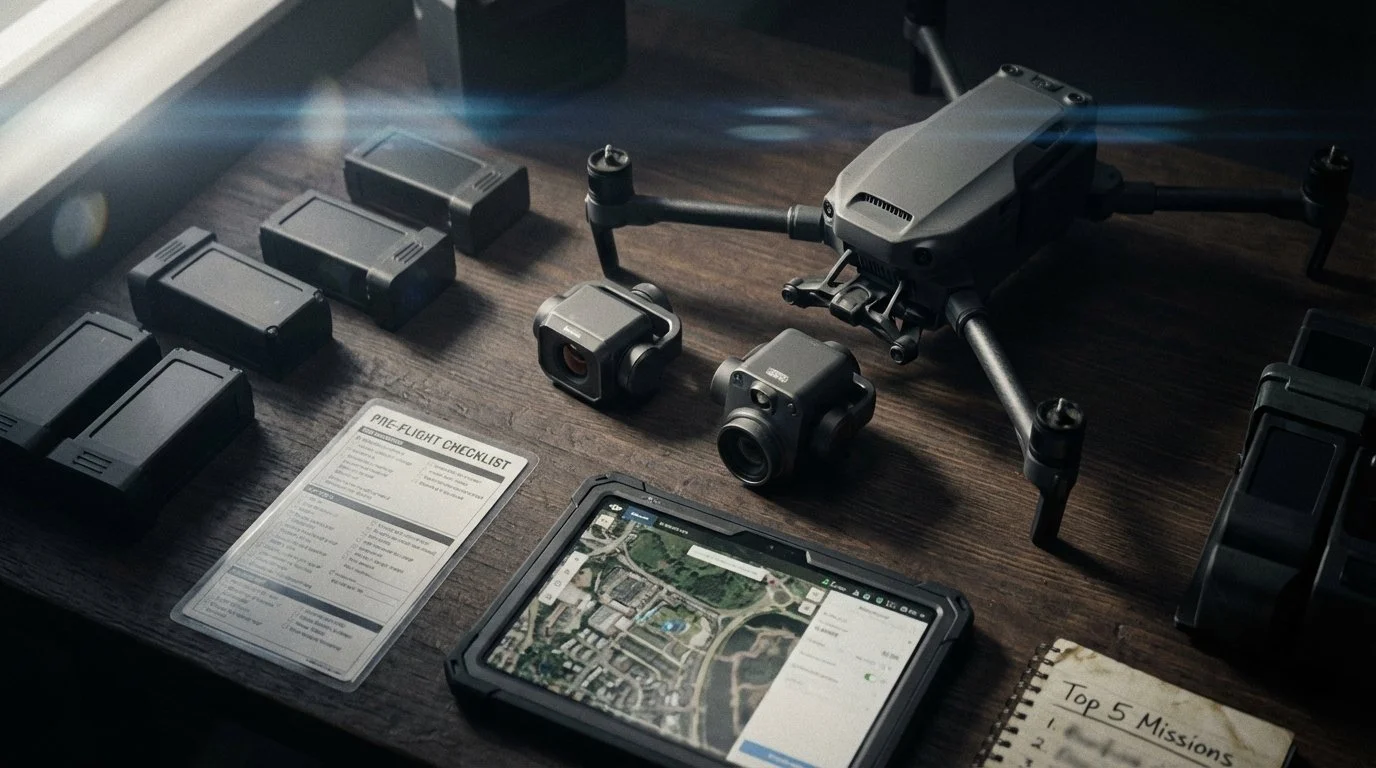
Before looking at any specific aircraft, define your top five deployment scenarios.
Different missions require different capabilities. A thermal camera is non-negotiable for nighttime search. A high-zoom optical camera matters for incident documentation. Extended flight time matters for search and rescue. Wind resistance matters for fire operations near convective columns.
Build your platform selection around your actual mission needs, not around a manufacturer’s marketing.
NDAA-Compliant Options for Public Safety
Given the procurement landscape, primary hardware candidates from cleared frameworks include:
Skydio X10
Autel EVO series variants (as applicable by procurement requirements)
Parrot Anafi USA
Check the current cleared lists and procurement guidance before finalizing any purchase.
Part 9: Software and Data Integration
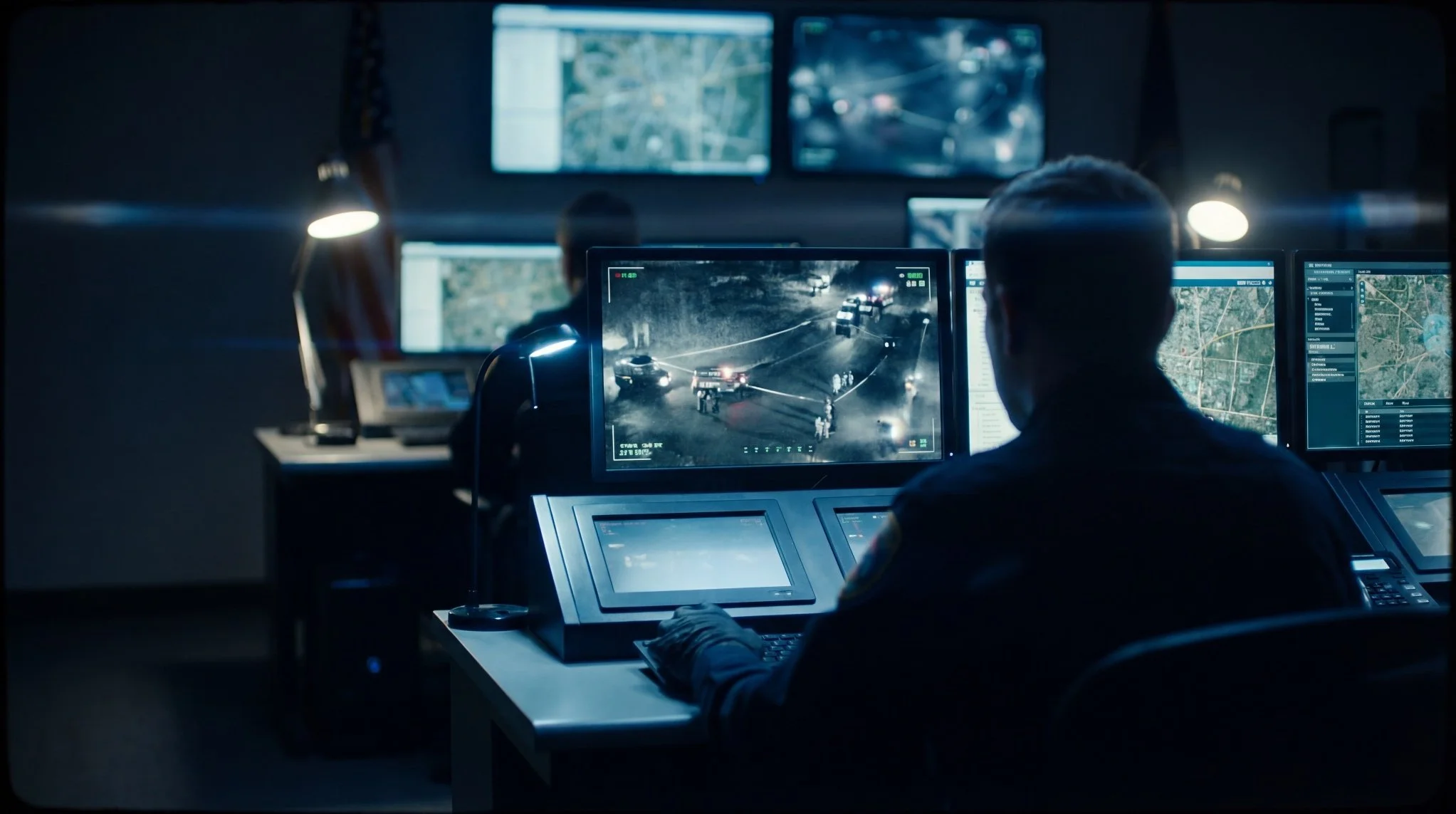
The drone itself is only part of the capability. How you manage flights, handle data, and integrate with existing agency systems determines whether your program actually improves operations — or just adds complexity.
Fleet Management and Flight Logging
From day one, every flight should be logged — aircraft, pilot, location, duration, purpose, and anomalies. This data is what justifies your program’s continued existence at budget time.
Situational Awareness and Command Integration
When the incident commander can see what the drone sees in real time, decisions improve.
Data Retention, Evidence Management, and Cybersecurity
Your drone footage is potentially evidence. Define before your first flight: where footage is stored, for how long, who can access it, how it’s tagged and documented, and how it’s released in response to public records requests.
Cybersecurity is an emerging concern. Your drone system — aircraft, controller, ground software, storage — is a networked system with attack surfaces. Secure operational practices should be part of your compliance posture.
Part 10: Staffing and Team Structure
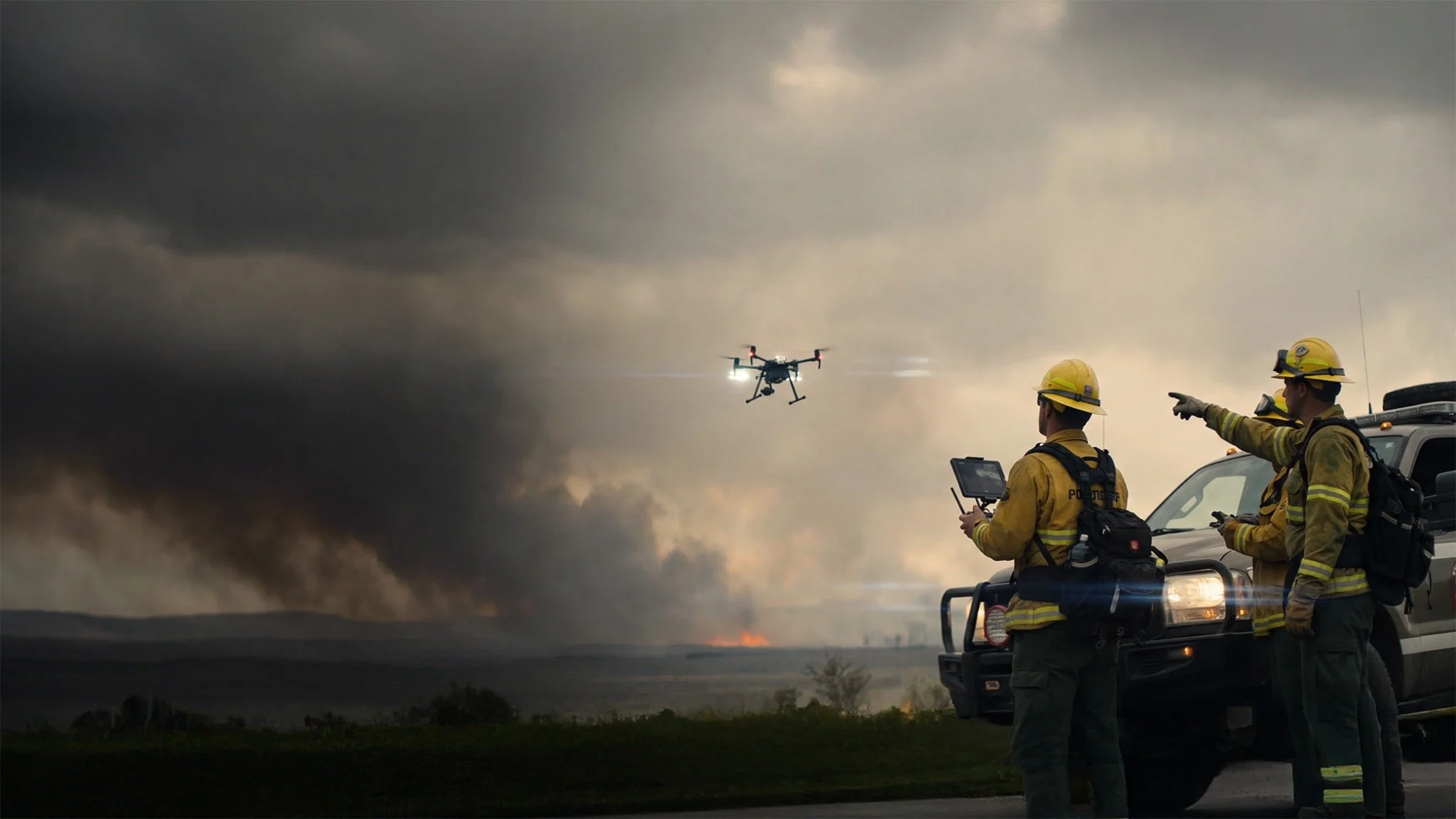
Who flies your drones matters as much as what you fly. Building the right team structure from the start prevents the most common failure mode: the program that depends entirely on one or two enthusiastic volunteers and collapses when those people transfer, retire, or burn out.
The Program Manager Role
Every successful drone program has a designated program manager — someone who owns the overall health of the program: training records, maintenance schedules, policy updates, FAA compliance, grant reporting, and the relationship between the drone unit and command staff.
The program manager doesn’t need to be the best pilot. They need to be organized, detail-oriented, and comfortable navigating regulatory requirements.
Pilot Selection Criteria
Beyond Part 107, look for candidates with situational awareness, calm under pressure, and the ability to manage a complex tool while tracking an evolving incident.
Willingness to train consistently matters enormously. A drone pilot who doesn’t practice between deployments is a liability.
A Note on Union Considerations
In unionized departments, introducing new duties can create labor relations complications. Getting union leadership involved early, framing the program as a safety and effectiveness tool, and ensuring pilot duties come with appropriate recognition goes a long way toward avoiding friction.
Part 11: Training Requirements
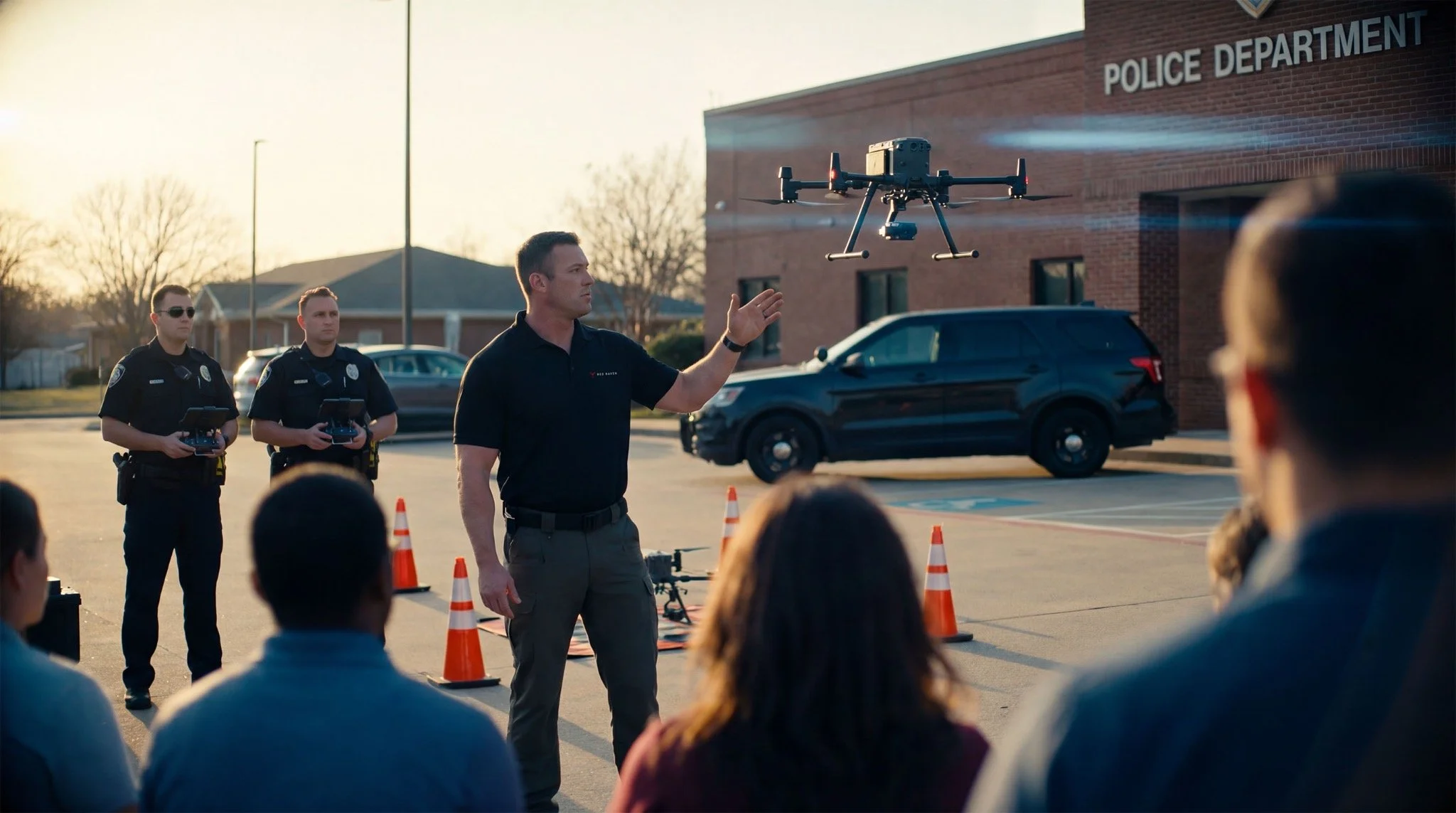
Part 107 certification is the floor, not the ceiling.
A pilot who can pass the FAA knowledge exam is legally qualified to fly — but a pilot who is operationally ready to deploy on an active incident scene is something different.
Initial Certification — Part 107
All pilots must pass the FAA Part 107 Aeronautical Knowledge Test and obtain their Remote Pilot Certificate before any operational deployment. This is non-negotiable.
Platform-Specific Training
After certification, every pilot needs hands-on training specific to the aircraft they’ll fly on calls: normal ops, payload operation, emergency procedures, and night operations. Document the training and require a practical assessment before clearing a pilot for deployment.
Scenario-Based Training — The Most Important Step
Foot pursuit scenarios. Structure fire assessment. Night search for a missing person. Perimeter establishment.
Running realistic scenarios in training — with a debrief — builds decision-making patterns that determine performance under pressure.
Recurrency and Ongoing Training
Part 107 recertification is required every 24 months (online), but operational currency requires more than a biennial course. Establish minimum hours, regular training evolutions, and a currency check process for pilots returning after time away.
Part 12: Standard Operating Procedures (SOPs)
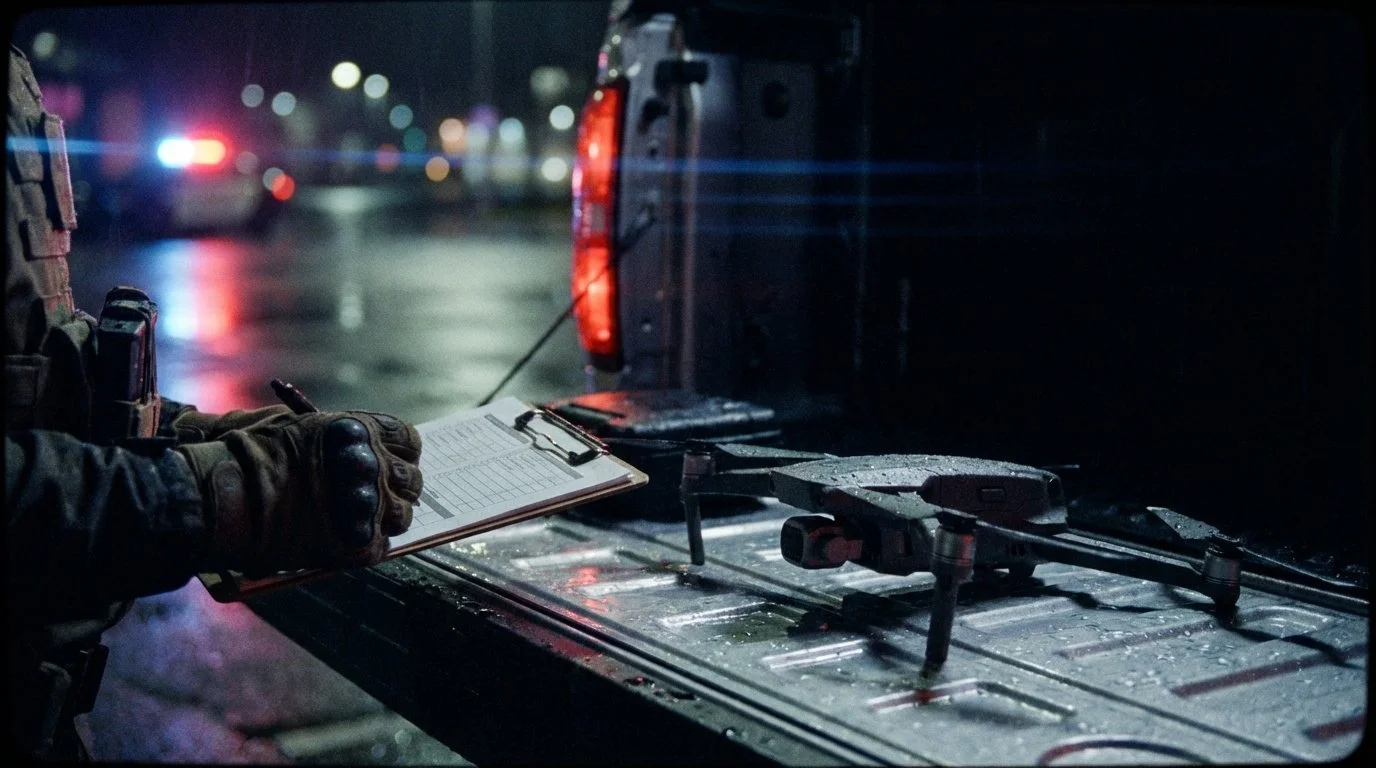
Your SOPs turn good intentions into consistent operations.
Pre-Flight SOP
Use a standardized pre-flight checklist: aircraft inspection, battery verification, calibration as required, airspace and weather check, flight plan, intended altitude, and comms check with incident command.
Operational SOP
Define communication protocols, altitude management, deconfliction, battery thresholds, and emergency procedures. Pilots should know exactly what triggers return-to-launch vs a controlled landing, and who can extend operations.
Post-Flight SOP
Log the flight, document footage, manage batteries correctly, inspect the aircraft, and note any anomalies for maintenance review.
Use of Force Policy Integration (Law Enforcement)
The drone program should be explicitly addressed in the agency’s use of force policy — not because drones are use-of-force tools, but because unclear policy creates avoidable legal and political exposure.
Part 13: Maintenance and Airworthiness

Maintenance discipline is the unglamorous backbone of a safe and reliable program.
Inspection Schedule
Establish pre-flight, post-flight, and periodic inspections using the manufacturer’s schedule as a baseline.
Battery Management — The Most Common Failure Point
Implement battery tracking: serial number, cycle count, and capacity checks. Establish retirement thresholds.
Firmware and Software Updates
Review release notes, test updates on a non-operational unit if possible, and avoid updates right before high-profile deployments.
Part 14: Measuring Success and Reporting to Leadership

A drone program that can’t demonstrate its value won’t survive budget cycles. Build your measurement framework from day one.
Key Performance Indicators to Track
Total deployments and flight hours by month and year
Deployment type (SAR, perimeter, documentation, fire support, etc.)
Response time from activation to airborne
Successful outcomes attributable to drone deployment
Estimated helicopter deployments avoided and cost savings
Officer overtime reduction on incidents where drone deployed
Equipment availability rate
The Annual Program Review
Once a year, present a formal program review: KPI data, 2–3 case studies, issues encountered, and recommendations for the next year.
Where Do You Start?
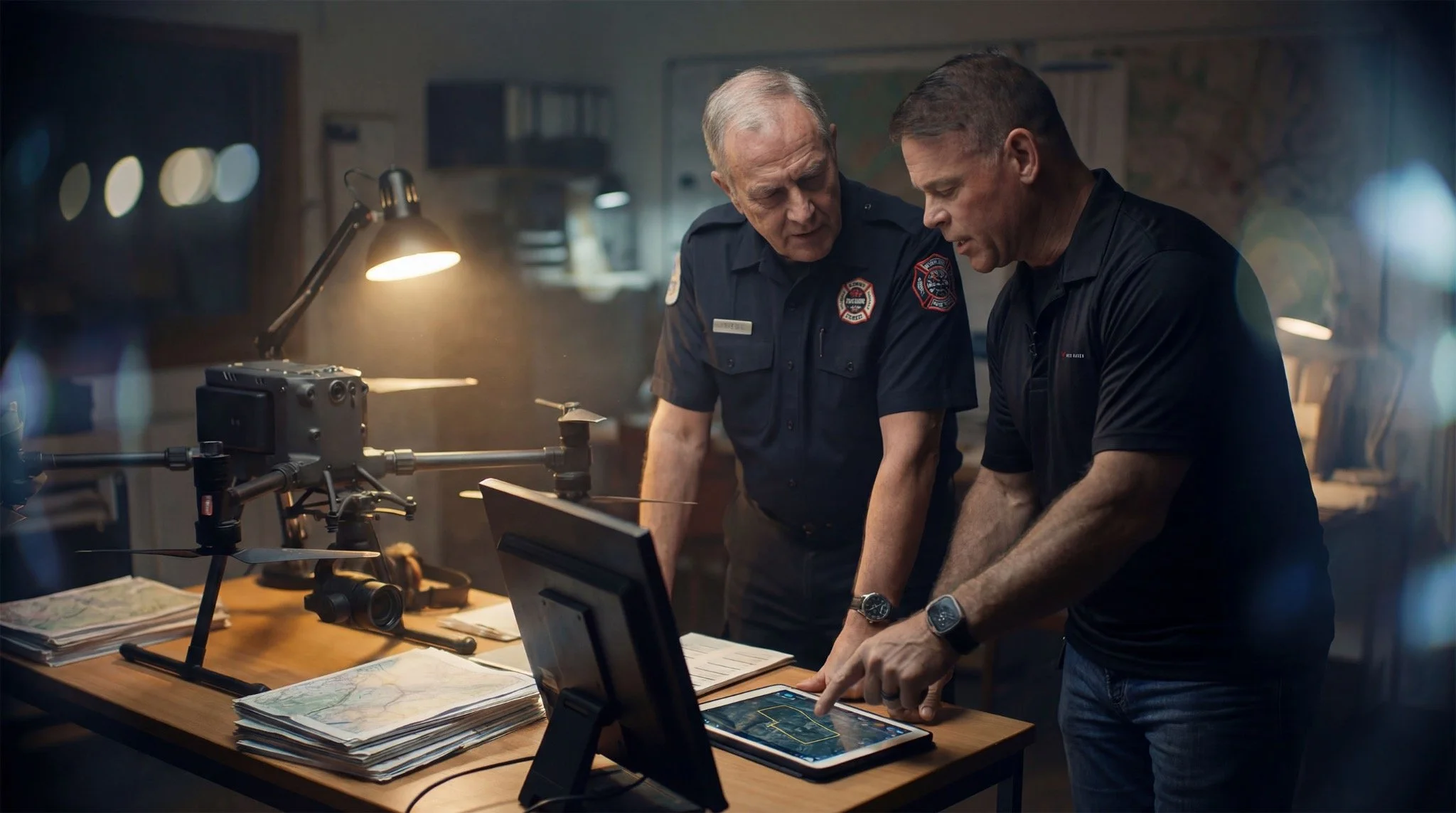
If you’ve read this far, you’re serious about building something that works — not just buying equipment and figuring it out as you go. That’s the right instinct.
The departments whose programs succeed are the ones that treat this as a discipline: planned, trained, documented, and continuously improved.
The good news is you don’t have to figure this out alone. The regulatory pathways, while complex, are navigable with the right guidance. And the case for funding — through grants, internal justification, and the math of a single avoided helicopter deployment — is stronger than many chiefs realize before they run the numbers.
Start where you are.
A small program done well beats an ambitious program done poorly every time.
Define your top three use cases. Identify your first two pilots. Get them certified. Buy the right equipment for your missions. Write your SOPs before your first flight. Earn your community’s trust. And build from there.
At Red Raven UAS, this is what we do. We work with law enforcement agencies, fire departments, utilities, and government organizations at every stage of this process — from the first budget conversation to full operational deployment.
Whether you need training for your pilots, help developing your program from the ground up, or an outside perspective on a program that’s already running, we’re here.
Public Safety Drone Program FAQ
What is a public safety drone program?
A public safety drone program is an agency-run UAS capability used for mission-specific incidents like search and rescue, fire operations, traffic collisions, barricaded subjects, missing persons, and scene documentation. The goal is faster, safer situational awareness with clear policy, training, and oversight.
Do public safety drone pilots need FAA Part 107?
Often, yes. Many agencies train pilots under FAA Part 107 because it’s the most straightforward path for routine operations and standardization. Some public aircraft operations may also be flown under public COA processes depending on mission and agency structure.
How much does it cost to start a public safety drone program?
Many small-to-mid departments can launch a solid first-year program in the $15,000–$50,000 range depending on aircraft, sensors (like thermal), training, policy/SOP development, and software. Costs scale with fleet size, staffing, and advanced capabilities like DFR.
What equipment should a department buy first?
Start with a reliable platform that fits your most common missions. For many agencies, that means a thermal-capable multirotor plus a backup aircraft, along with batteries, lighting, cases, basic mapping/documentation workflows, and a simple fleet management/logging approach.
How do you build public trust for a law enforcement drone program?
Publish a clear, plain-language policy that defines approved uses, prohibited uses, who can authorize flights, what data is collected, and how long it’s retained. Pair that with public briefings or demos, deployment logging, and periodic reporting so the community sees accountability.
What should be included in a drone policy and SOPs?
At minimum: mission types, authorization process, pilot requirements, training standards, preflight checklists, night operations guidance, privacy/data retention, evidence handling, deployment logs, maintenance, incident reporting, and an oversight or audit mechanism.
How many pilots do we need to staff the program?
It depends on call volume and coverage goals. Small programs may start with 1–2 trained pilots, while agencies seeking broader availability typically build a roster across shifts (often 4–8 pilots) with a coordinator/program manager to keep it sustainable.
Can grants pay for drones and training?
Sometimes. Agencies commonly pursue regional/state emergency management funding and various grant pathways, but eligibility changes by year and program. Strong applications tie the request to operational outcomes (time saved, safety, reduced overtime) and include training, SOPs, and compliance— not just hardware.
Do we need Drone as First Responder (DFR) to get started?
No. Many agencies start with manual deployments and build experience, policy maturity, and community trust first. DFR can be a later phase once the program is stable, funded, and operationally proven.
About Red Raven UAS
Red Raven UAS was founded by public safety and drone industry veterans to solve a real problem: agencies and enterprise teams buying drones with no clear plan, no trained pilots, and no compliant program to back them up. We provide vendor-neutral consulting to design and build your drone program, customized on-site training for your team and mission, and FAA Part 107 certification to keep your pilots legal and ready. No hardware sales. No generic courses. Just field-tested expertise built for the real world.
Explore More