Drone Training for Fire Departments: What Mission-Ready Actually Means
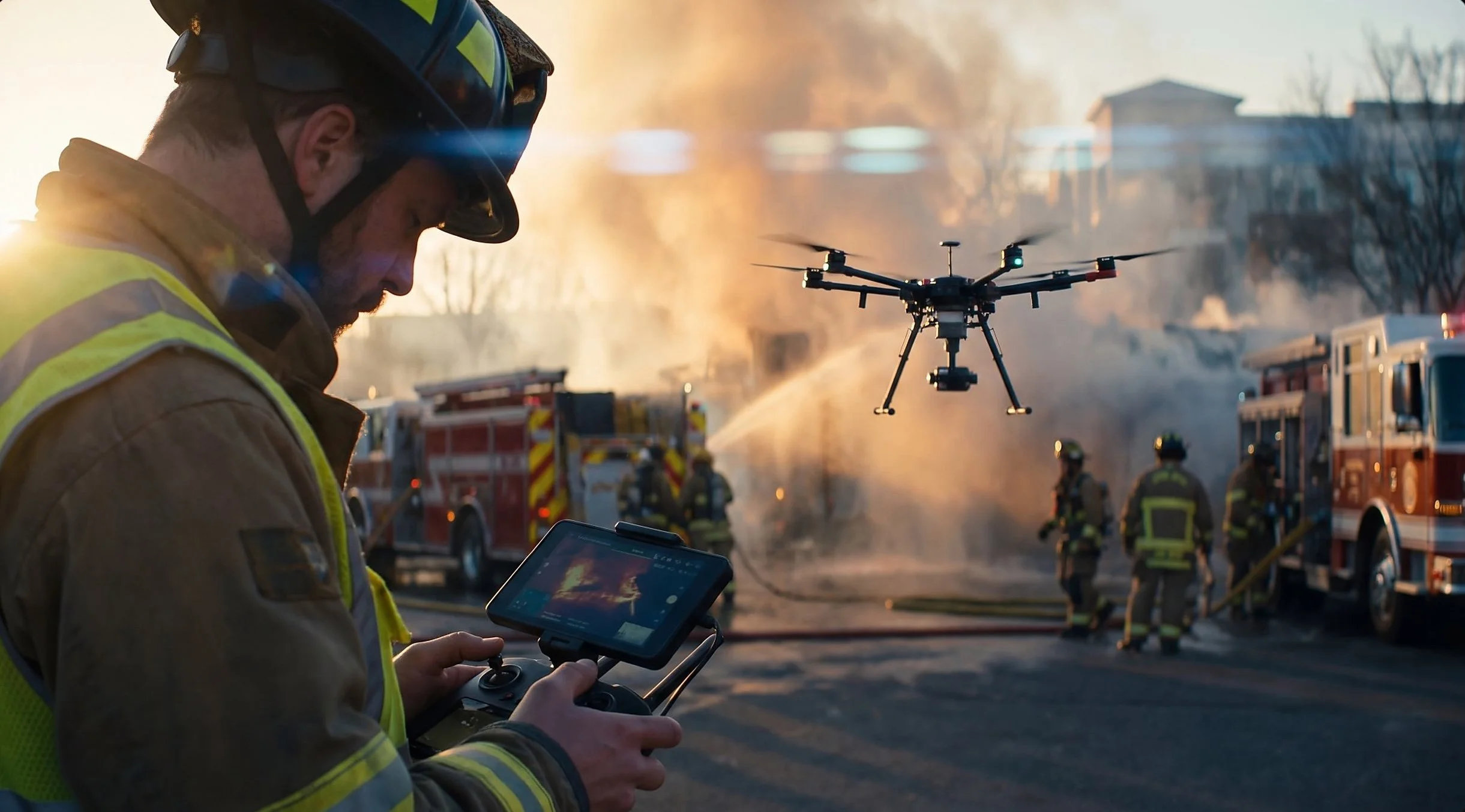
There's a moment that happens in every fire department drone program.
The equipment arrives. The pilots pass their Part 107 exams. Leadership does a press release. Somebody posts a photo of the new drone on the department's Facebook page.
And then the first real call comes in.
And something goes wrong. Not catastrophically — but wrong enough to shake confidence. The pilot hesitates on a thermal read. The incident commander doesn't trust what they're seeing on the screen. The drone returns with footage that's technically fine but operationally useless. Nobody knows exactly what role the drone played, or should have played, in the incident action plan.
This happens. More often than most departments talk about publicly.
It happens not because the pilots aren't capable, and not because the equipment isn't good enough. It happens because there's a difference between being certified and being mission-ready. And most drone training programs — the online courses, the manufacturer demos, the one-day certifications — don't bridge that gap.
This post is about what actually does.
The Certification Gap
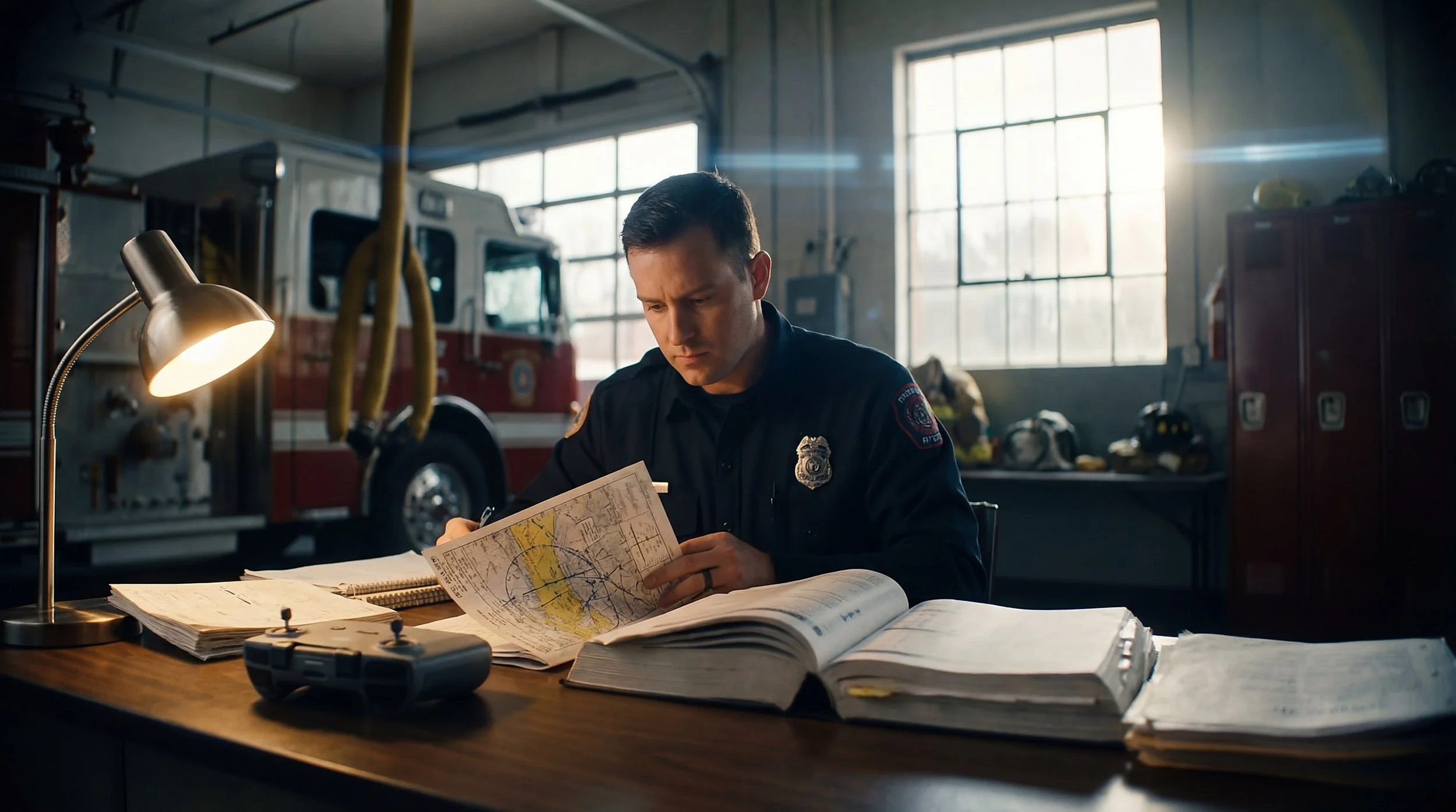
The FAA Part 107 Remote Pilot Certificate is a legal requirement. It tests aeronautical knowledge — airspace, weather, regulations, aircraft performance. It does not test whether a pilot can fly a thermal camera over an active structure fire and give an incident commander accurate, actionable information.
Those are two different things.
Part 107 tells the FAA that a pilot understands the rules of the sky. Mission-readiness tells your department that a pilot can operate effectively in the most stressful, high-consequence, time-compressed environments your crews face.
A firefighter who just completed their EMT course isn't immediately ready to run a code in a crowded ER. Same principle. The credential is the floor, not the ceiling.
The gap between the two — between legally qualified and operationally capable — is where most fire department drone programs live when they launch. The ones that close that gap fastest are the ones that invest in training that looks like their actual missions.
What "Mission-Ready" Actually Means for Fire
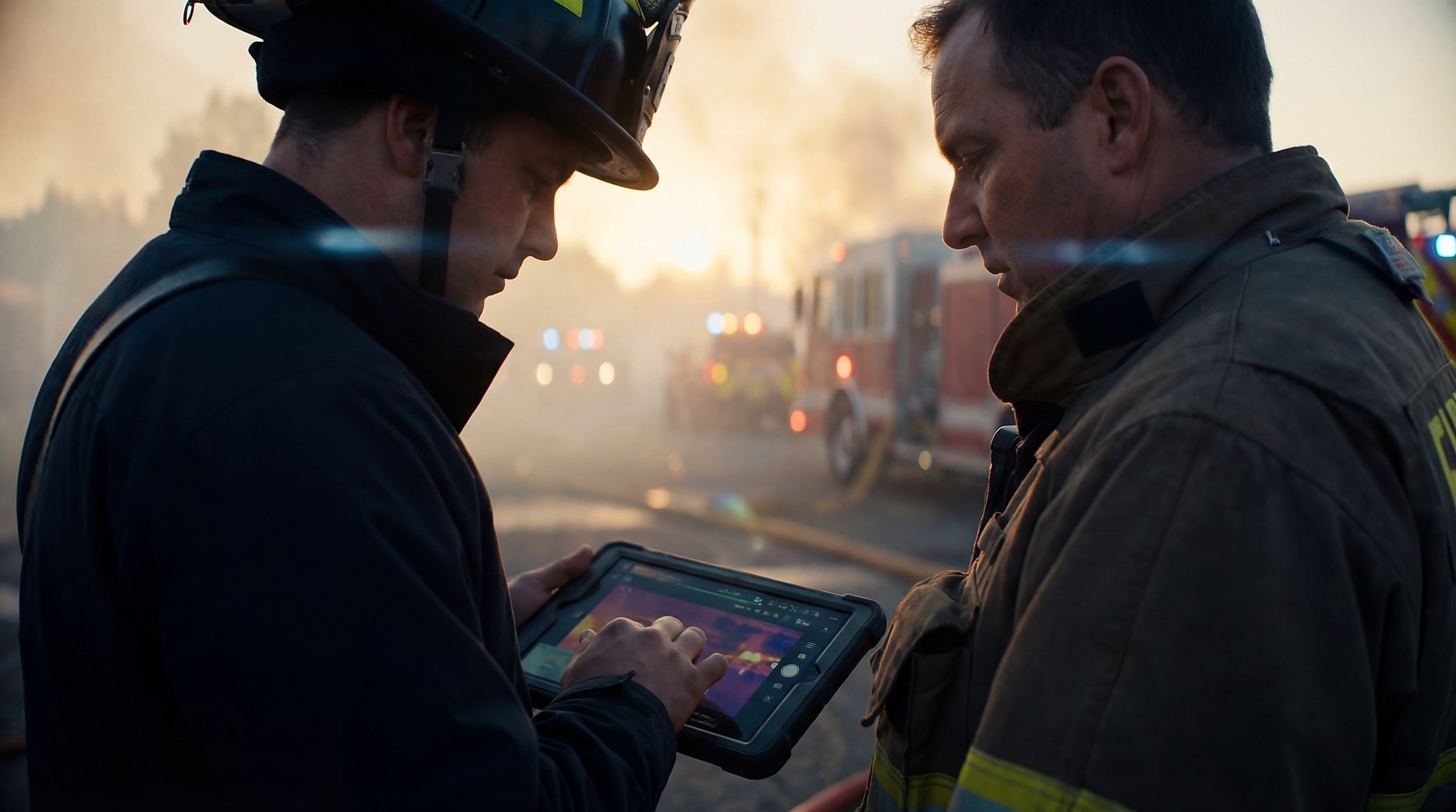
Mission-readiness for a fire department drone program isn't a single standard. It depends on what you fly, where you fly it, and what your crews need from the air.
But there are core capabilities that every fire department UAS operator needs to develop before they're ready to deploy on active incidents.
Thermal Camera Interpretation
The thermal camera is the single most valuable tool a fire department drone carries. It finds victims in smoke-obscured structures, identifies hot spots invisible to ground crews, and shows fire behavior in ways that completely change how commanders allocate resources.
It is also deeply counterintuitive until you've spent time with it.
Pilots who haven't trained specifically on thermal interpretation misread images in ways that matter. They call a wall "clear" when there's a void space retaining heat. They identify a hotspot as surface when it's sub-surface and spreading. They miss a thermal signature in a wooded search area because they don't know what they're looking for.
Mission-ready thermal operation requires dedicated training: recognizing the signatures of victim location, structural compromise, fire behavior, and hazmat indicators in actual operational conditions — not a classroom diagram.
Crew Resource Management
In fire operations, the drone pilot is part of a crew. The feed goes to incident command, to division supervisors, to safety officers. The information the pilot communicates — and how they communicate it — directly affects decisions that affect lives.
A pilot who can't use aviation phraseology clearly, can't give a calm and accurate verbal description of what they're seeing while simultaneously managing the aircraft, and can't integrate into an incident command structure isn't operationally ready.
This is rarely covered in standard drone training. It requires practice — specifically, scenario-based practice with an actual incident command structure in the loop.
Emergency Procedures
Things go wrong in the field. Communication links drop. GPS degrades. Batteries behave unexpectedly in high-heat environments. Motors throw warnings.
A pilot who has only ever practiced normal operations in ideal conditions will freeze or make a bad decision when something unexpected happens on a real incident. That bad decision might mean losing an expensive aircraft. It might mean something worse.
Emergency procedure training — lost link protocols, GPS failure management, controlled landings in non-ideal locations — needs to be drilled until the responses are automatic. Under pressure, people default to their training.
Night Operations
The calls that benefit most from drones are often the calls that happen at night. Search and rescue. Structure fires in the early morning hours. Wildfire perimeter monitoring after dark.
Night operations under Part 107 require anti-collision lighting visible for three statute miles. But legal compliance is not the same as operational competence. Flying over a dark incident scene, integrating the thermal feed with visual orientation, communicating clearly about what you're seeing — all of it is harder at night.
Pilots need night hours before they're ready for night missions.
Why Generic Training Doesn't Work
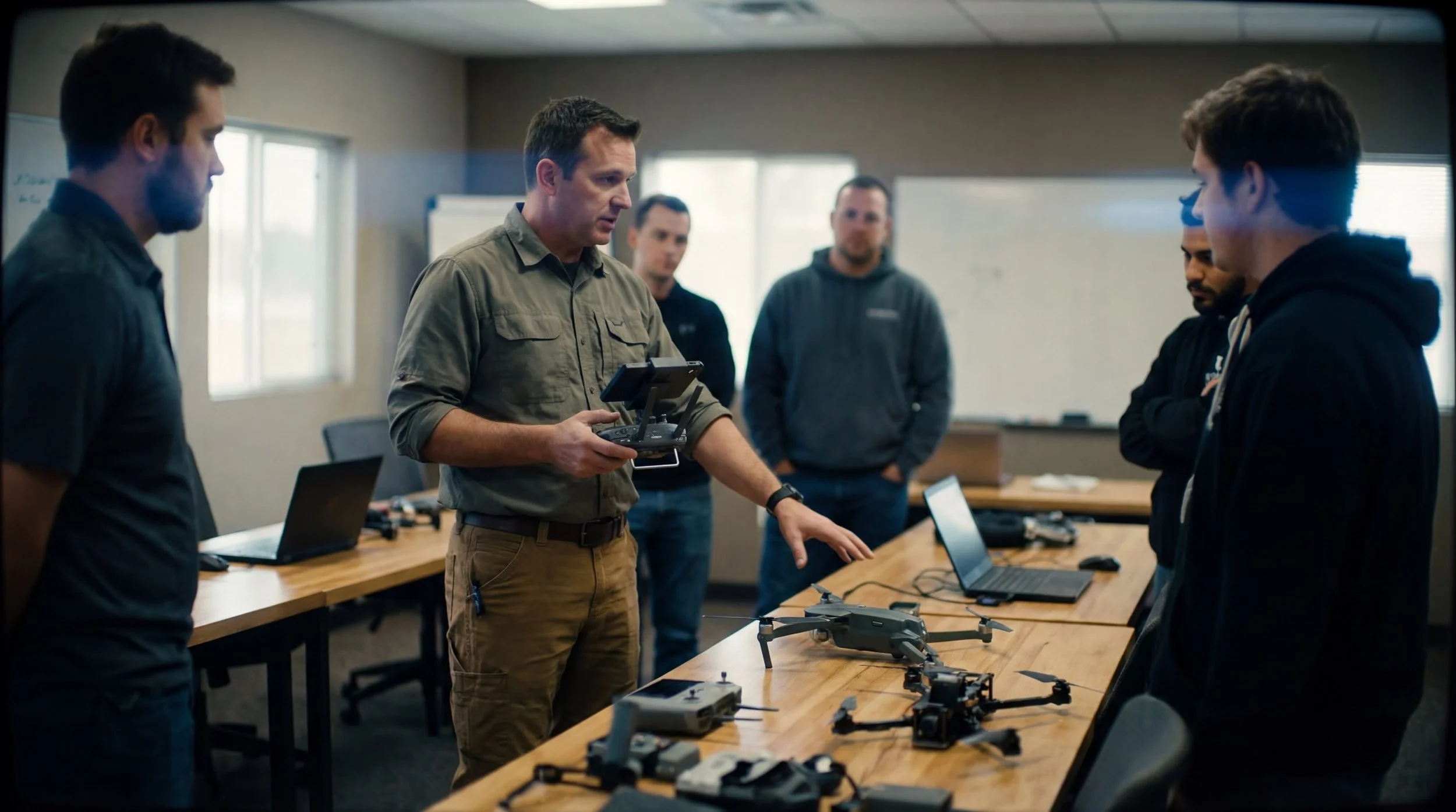
There's no shortage of drone training options. Online courses, manufacturer certification programs, weekend bootcamps. Most of them produce pilots who can fly the aircraft.
None of them produce pilots who are ready to support a structure fire in your jurisdiction, with your equipment, in coordination with your incident command system.
The reason is simple. Generic training is built around general competency. Mission-ready training is built around specific operational context.
Your department doesn't fly generic missions. You fly calls in your jurisdiction — with your terrain, your structures, your common incident types, your mutual aid partners, your radio protocols. The training that prepares your pilots for those calls needs to be built around those calls.
A wildland interface department in the Western United States has completely different training needs than an urban structural fire department in the Northeast. A department that primarily uses drones for scene documentation has different needs than one building a full Drone as First Responder capability.
One-size-fits-all training fits nobody particularly well.
What Effective Fire Department Drone Training Looks Like
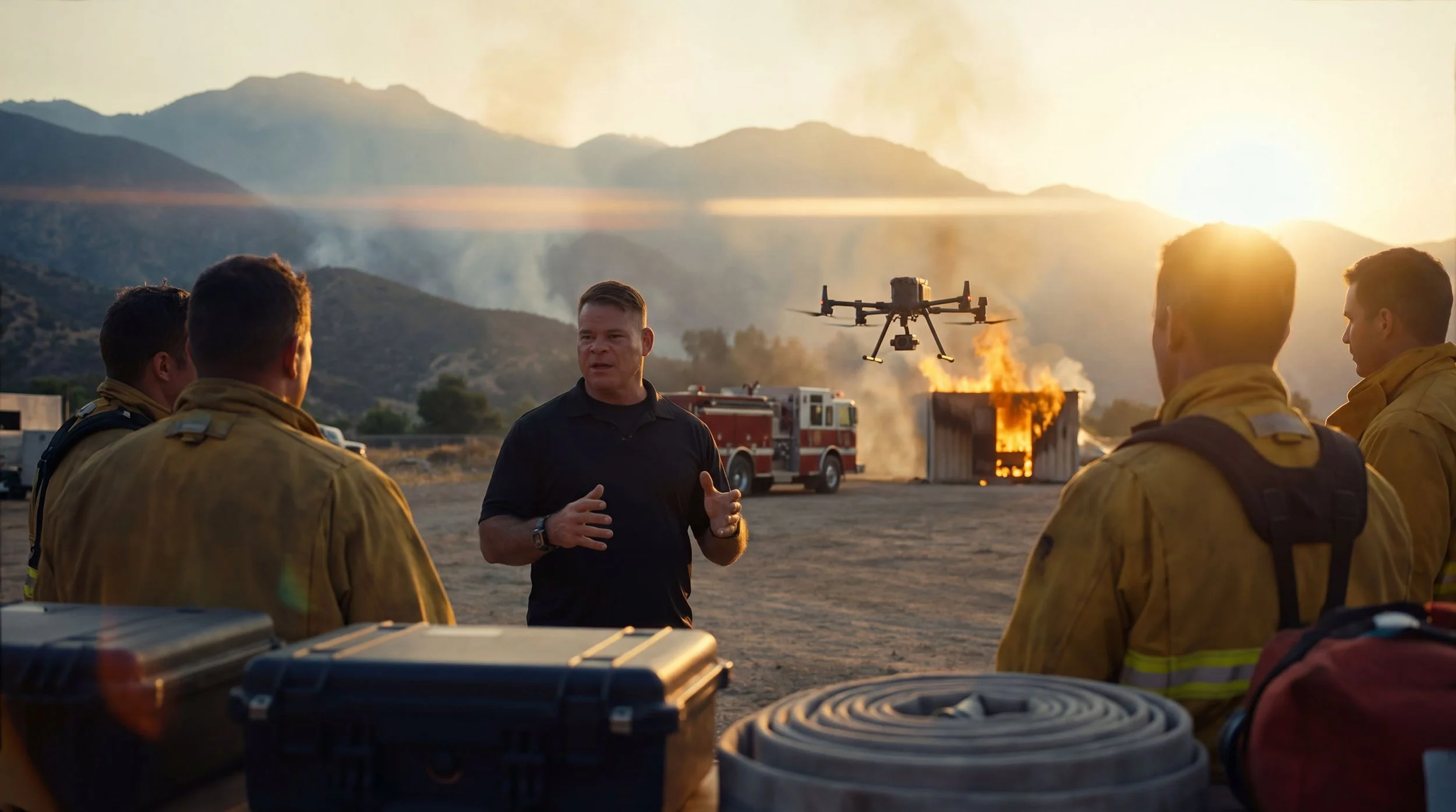
The best fire department drone training programs share a common structure. They don't all look exactly the same — they're built around each department's specific context — but the core elements are consistent.
It Starts With Your Mission Profile
Before a training curriculum is designed, the department's actual use cases need to be mapped. What are your top five call types? What environments do you operate in? What does your incident command structure look like? Do you have full alarm dispatch capability? What aircraft and sensors are you flying?
The answers to those questions determine what the training needs to cover and how.
It Happens On Your Ground
Generic training at a facility an hour away from your jurisdiction produces pilots who are proficient in that facility. What you need are pilots who are proficient on your ground, with your equipment, in the conditions your crews actually face.
The most effective training is delivered where your crews work. That means your department, your training ground, your incident types — with instructors who adapt the curriculum to your environment, not the other way around. Learn more about our on-site training approach.
When Red Raven trains a fire department, we’re not running them through a standardized course deck. We’re building their training around their department, their aircraft, their terrain, and the specific capabilities they need to develop.
It Uses Real Scenarios
Scenario-based training is the bridge between skill development and operational readiness.
Running a structured fire overwatch scenario — with a simulated incident command structure, real radio communication, thermal camera integration, and a debrief afterward — does something that no amount of classroom instruction can replicate. It builds the decision-making patterns that determine how a pilot performs when it counts.
Effective scenarios include:
Structural fire overwatch. The drone deploys on a working structure fire. The pilot provides thermal intelligence to incident command: fire location, extension risk, roof integrity assessment, victim search. Command makes resource decisions based on that feed.
Night search for a missing person. Ground crews have lost a victim's trail. The drone deploys with thermal, systematically covering the search grid, communicating clearly with search teams on what it sees and what it doesn't.
Hazmat plume monitoring. A spill has occurred. The drone provides safe standoff assessment: container identification, plume direction, affected area boundary. Ground crews get the information they need without unnecessary exposure.
Post-fire investigation support. The fire is out. The drone captures a comprehensive aerial record of the scene for the investigation team, following protocols that preserve evidence integrity.
Each scenario is run. Debriefed. Run again. Specific errors are identified and corrected before they become habits.
It Integrates the Whole Team
The drone pilot is not the only member of your crew who needs to understand what drones can do on an incident.
Incident commanders who have never worked with a drone don't know how to integrate the information they're receiving. They don't know what questions to ask. They don't know how to task the drone effectively or what its limitations are.
Company officers who have never seen drone footage from a fire scene don't know how to interpret what they're looking at or how to use it in their sector.
Effective training includes your IC cadre, your safety officers, your company officers — not just the pilots. The whole team needs to speak the same operational language for the capability to work on a real incident.
Building Training Into Your Program From the Start
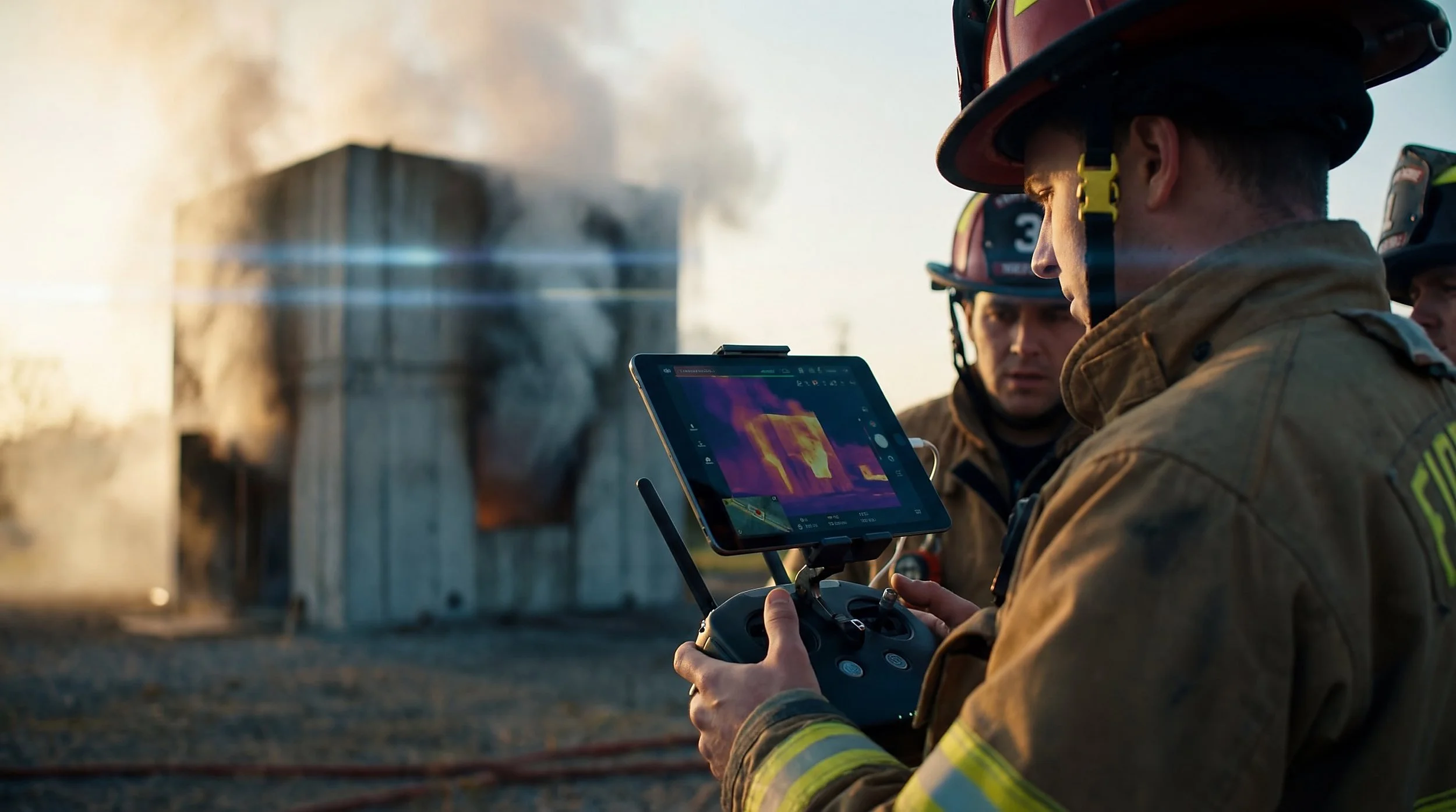
One of the most common mistakes in fire department drone programs is treating training as a one-time event rather than an ongoing requirement.
Initial training gets pilots to a baseline. Maintaining currency keeps them there. And developing advanced capabilities — DFR integration, multi-aircraft operations, complex airspace management — requires a long-term training trajectory.
Before your program launches, define:
Minimum currency requirements. How many flight hours per month is a pilot required to log to maintain operational status? What happens when someone goes below that threshold?
Recurrent training events. How often does the unit train together as a unit? Quarterly? Monthly? What does that training cover?
Proficiency assessments. How do you validate that a pilot who's been away from the program is ready to return to operational status?
Development pathways. What's the training pathway for pilots who want to take on additional responsibilities — night operations qualification, thermal certification, eventual DFR operator status?
Answering these questions before you launch means your program has a training culture built in, not bolted on later.
A Note on Instructor Qualifications
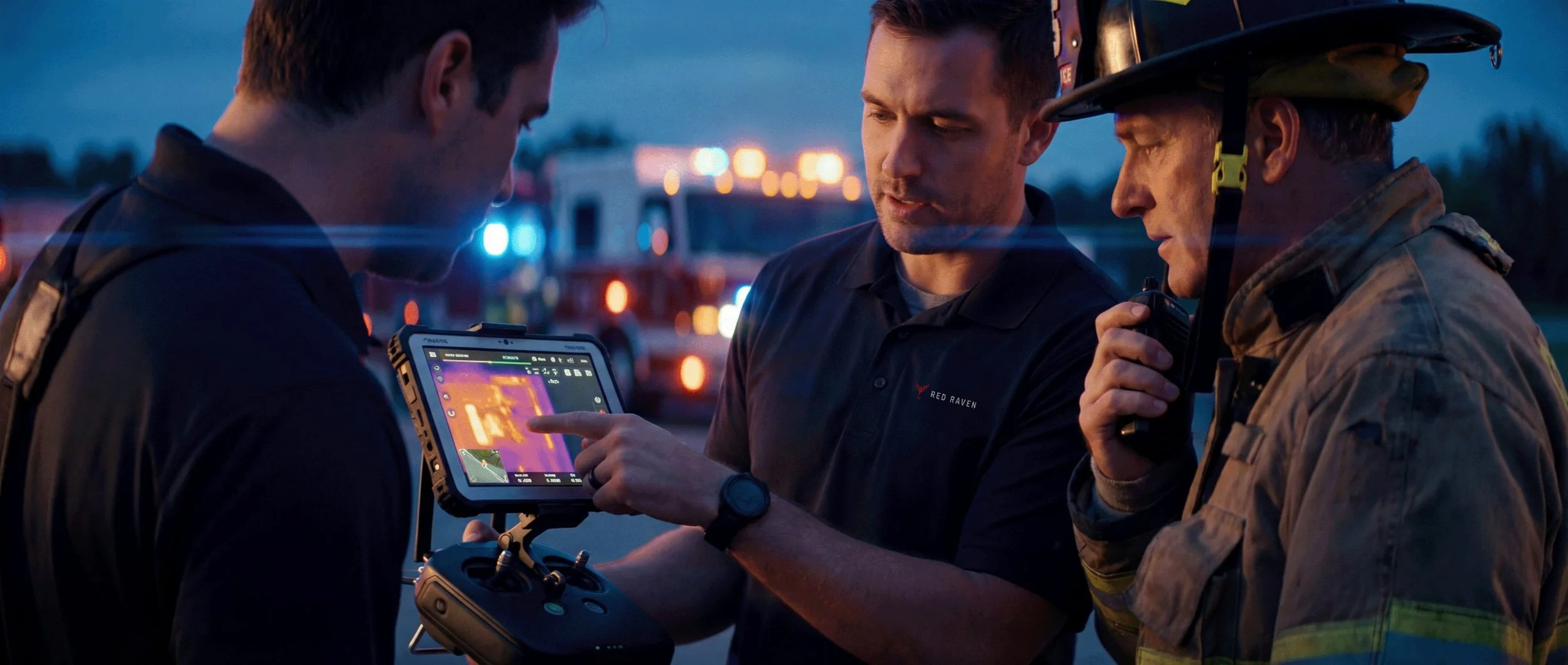
Not every drone instructor has operational fire experience. Most don't.
There's a meaningful difference between an instructor who has flown drones commercially and understands Part 107, and one who has spent decades on the fireground — who has actually used a drone to find a victim in a smoke-obscured structure, monitor fire behavior on a wildland incident, and brief incident command on what the thermal feed is showing in real time.
When you're building training that is supposed to prepare pilots for real fire operations, the instruction needs to come from someone who understands what incident command actually needs from the drone feed — not just what's technically correct from an aviation perspective.
The scenarios need to be realistic. The debrief needs to come from someone who has made the same decisions under the same pressure your crews will face.
Getting Started
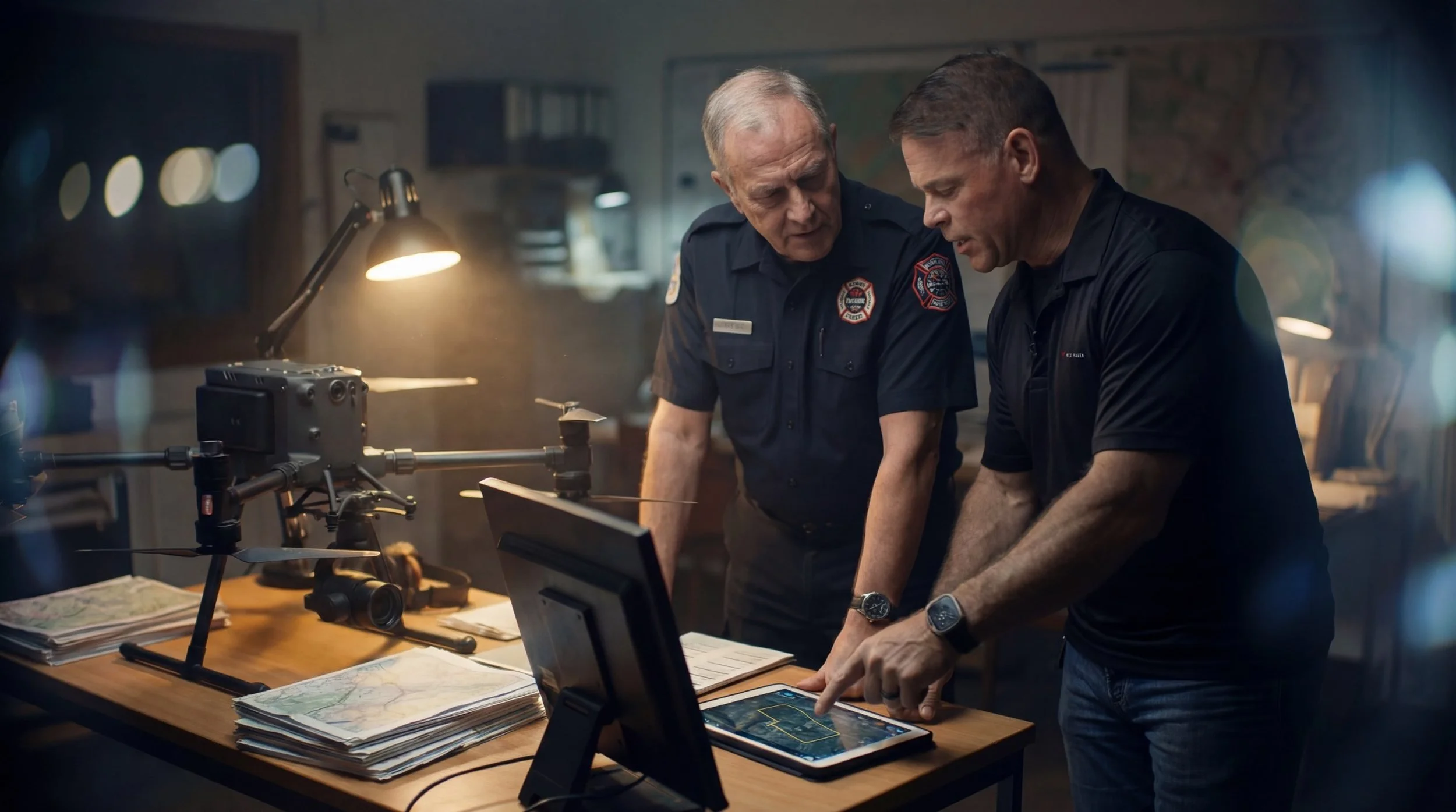
If your department is setting up a drone program, or if you have a program that's been operational for a while and the training culture isn't where it needs to be, the path forward is the same.
Define your mission profile. Build your training around it. Get instruction from people who understand your operational context. Train your whole team, not just your pilots. Build currency requirements and recurring training into the program structure from the beginning.
None of this is complicated. All of it requires intention.
Mission-readiness doesn't happen by accident. It happens because a department decided that having the equipment wasn't enough — that the point was to be able to use it when it matters.
At Red Raven UAS, this is what we do. If your department is ready to build the kind of training that actually closes the gap between certified and mission-ready, we'd like to talk.
Ready to build a mission-ready drone program?
At Red Raven UAS, we deliver customized on-site drone training built specifically for fire departments — from engine-based programs to full DFR integration.
Mission-Specific: We don't teach generic flight skills — we train your team on the exact scenarios they'll face on a real fireground.
Whole Team: We train pilots, incident commanders, safety officers, and company officers — because mission-readiness requires everyone speaking the same operational language.
Field-Tested: Every curriculum is built by instructors who have been on the fireground — not just in a classroom.
Don't let your drone sit in a case — let's get your team mission-ready.
Links & Resources
On-Site Drone Training for Fire Departments: https://www.redravenuas.com/training
UAS Program Development & Drone Consulting: https://www.redravenuas.com/consulting
How to Build a Public Safety Drone Program: https://www.redravenuas.com/blog/build-public-safety-drone-program-guide
Drones in Firefighting — Red Raven UAS Podcast: https://www.redravenuas.com/podcast/drones-in-firefighting
FAA Part 107 Certification Course: https://www.redravenuas.com/part107
Fire Department Drone Training FAQ
Do fire department drone pilots need FAA Part 107? Most fire departments train their pilots under FAA Part 107, which is the standard federal certification for drone operators. Some agencies also operate under a Public Certificate of Authorization (COA). Regardless of the regulatory pathway, Part 107 is the most common starting point and establishes the baseline aeronautical knowledge all pilots need.
How long does it take to train a fire department drone pilot? Part 107 certification typically takes two to four weeks of dedicated study. Operational mission-readiness — the ability to effectively support real incidents — takes longer and depends on how much scenario-based, mission-specific training the pilot receives after certification. Most departments plan for three to six months from initial certification to full operational deployment.
Can fire departments fly drones at night? Yes. Under FAA Part 107, night operations are permitted with the appropriate anti-collision lighting (visible for three statute miles) and completion of the required aeronautical knowledge training. Night operations are one of the highest-value use cases for fire department drones, particularly for search and rescue and thermal monitoring.
What drones are best for fire department use? The right platform depends on your mission profile. Most fire departments benefit from a thermal-capable multirotor as their primary aircraft. The specific aircraft that's right for your department depends on your common incident types, your operating environment, and your budget. Hardware selection should follow mission definition — not the other way around. Red Raven provides unbiased guidance on platform selection as part of our consulting services.
How much does drone training for a fire department cost? Training costs vary significantly depending on the scope — how many pilots, how many sessions, what the curriculum covers, and whether instruction is delivered on-site at your department or at a facility. On-site, mission-specific training is an investment, but it's the kind that produces operationally ready pilots rather than legally compliant ones. Contact us for a program-specific conversation.
Does the whole department need drone training, or just the pilots? Both. Pilots need operational proficiency. But incident commanders, safety officers, and company officers all need enough understanding of drone capabilities and limitations to integrate aerial intelligence effectively on an incident. The programs that perform best operationally train the whole team — not just the people holding the controller.
About Red Raven UAS
Red Raven UAS was founded by public safety and drone industry veterans who knew firsthand what happens when agencies have drones but not the training to use them effectively. Our Lead Instructor, Derrick Ward, spent 35 years with the LAFD and helped build one of the nation's first major fire department drone programs. At Red Raven, we deliver customized on-site training built around your department, your equipment, and your missions — not a generic course deck. No hardware sales. No one-size-fits-all curriculum. Just field-tested instruction from people who have been on the fireground.
Explore More