UAS Weekly Briefing — March 13, 2026: DFR Goes National, Dallas PD Switches Hardware, and the Pentagon Commits $1.1B to Drones
Every week, Red Raven UAS cuts through the noise to bring you the drone stories that matter — explained in plain English, with context for what they mean for your program, your pilots, and your organization. Whether you're a fire chief, a new pilot studying for your Part 107, or an enterprise team managing a drone fleet, this is your weekly situational awareness.
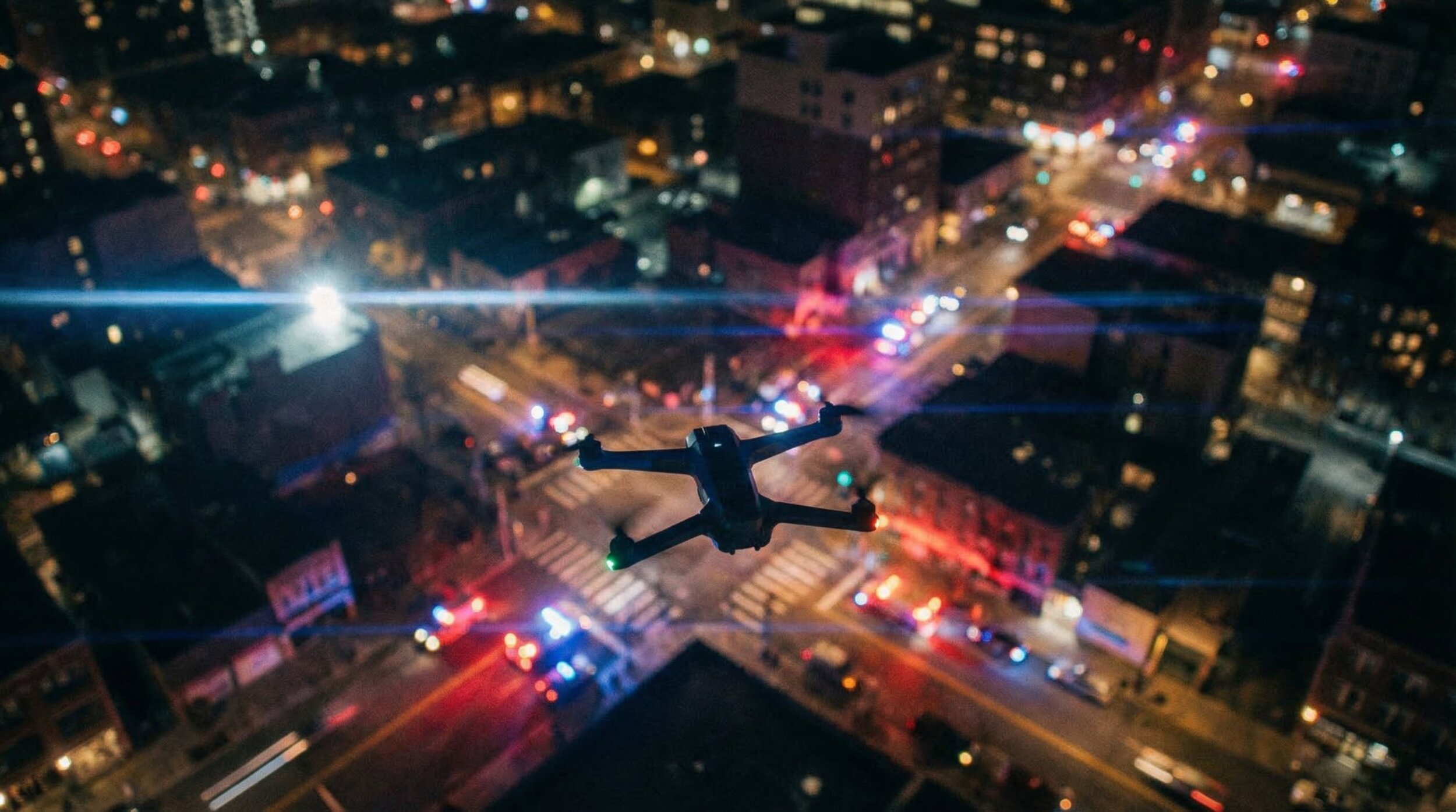
The Big Story This Week: America's Drone Wake-Up Call
The U.S. military is scrambling to catch up on drone defense — and it's changing everything about how drones are bought, built, and regulated in this country.
If you've watched the news this week, you've seen coverage of the ongoing U.S.-Israel military operation against Iran. What might not be obvious is how directly those events are reshaping the commercial drone industry here at home.
Here's the short version: Iran has been launching swarms of cheap, one-way attack drones — each costing as little as $20,000 to produce — against U.S. military bases and allies across the Middle East. The Pentagon, despite being the most well-funded military on earth, has publicly acknowledged it initially struggled to stop them. Defense Secretary Pete Hegseth said this week that "thousands of Iranian missiles and drones have been intercepted," but conceded the threat is not fully contained.
The response has been swift. The Pentagon has committed $1.1 billion to purchase drone systems over the next 18 months, including 30,000 small attack drones. Defense stocks are surging — up 17-29% year to date. And the U.S. has turned to an unlikely source for help: Ukraine, which has spent four years developing low-cost drone interceptors to counter the exact same Iranian aircraft Russia has been using. Ukrainian President Zelensky is actively pushing for a drone production deal with Washington.
Red Raven’s Take: If you manage a drone program, buy drone hardware, or are thinking about getting into the industry — this matters. The military demand surge is accelerating U.S. domestic drone manufacturing, driving investment into compliant hardware alternatives, and reinforcing every procurement restriction that has been tightening around foreign-made drones. The industry is moving fast. Programs built on compliant, U.S.-made or cleared hardware today are the ones that will still be operational and fundable in two years.
Read more: Pentagon's $1.1B drone commitment — Military Times | Trump family invests in drone industry — Military Times
Public Safety Drones Had a Major Week — Here's What Happened
The largest gathering of public safety drone professionals in the country just took place in Virginia — and the announcements that came out of it affect every agency in America.
On March 10, hundreds of law enforcement officers, firefighters, emergency managers, FAA officials, and drone technology providers gathered in Williamsburg, Virginia for the DRONERESPONDERS National Public Safety UAS Conference.
Quick explainer: DRONERESPONDERS is a nonprofit organization — think of them as the national standards and advocacy body for drones in public safety. They don't sell equipment or training. They bring agencies together, develop best practices, and work with the FAA and Congress to make it easier for first responders to use drones legally and effectively. If you're a fire chief or police commander who wants to know what other departments are doing and what the rules are going to look like in two years, DRONERESPONDERS is the organization to follow.
Here's what came out of this week's conference:
DFR Programs Are Going National — With Real Crime Center Integration
The short version: Drones that automatically launch when a 911 call comes in are now being formally integrated with real-time crime centers nationwide.
DRONERESPONDERS announced a national partnership with the National Time Crime Center Association this week. The goal: develop shared best practices for connecting Drone as First Responder (DFR) programs — where drones launch automatically the moment a 911 call is dispatched — with the crime analysis centers that many cities already operate.
This is significant because DFR programs have largely operated in isolation. A drone might arrive at a scene before officers, but the footage wasn't always feeding into the broader intelligence picture. This partnership starts to change that — connecting aerial awareness to the analysts, dispatchers, and command staff who need it most.
Red Raven's take: This is the direction the entire industry is moving. DFR is no longer experimental — it's becoming infrastructure. Agencies that haven't started planning their program are falling behind. The question isn't whether your department will have DFR. It's when, and whether you'll be ready. Read our complete guide to building a public safety drone program.
Read the full story — Commercial UAV News
The FAA Told Fire Chiefs and Police Chiefs What They've Been Waiting to Hear
The short version: The FAA is making it easier for public safety agencies to fly drones — and they said so publicly this week.
FAA Deputy Executive Director Paul Strande opened the DRONERESPONDERS conference with remarks that should matter to every agency building or expanding a drone program. The key message: the FAA is moving away from requiring individual, case-by-case waivers for public safety operations and toward broader regulatory frameworks that give agencies clear, scalable pathways to fly.
He also acknowledged that the FAA has received more than 3,000 public comments on the proposed BVLOS rule — the regulation that would allow drones to fly Beyond Visual Line of Sight, meaning the pilot doesn't have to physically see the drone at all times. This is the rule that makes large-scale DFR and long-range inspection operations possible. The FAA reopened the comment period due to the overwhelming response.
Red Raven's take: This is meaningful progress. For years, public safety agencies have been frustrated by slow waiver processes and unclear rules. The FAA is signaling it understands the urgency. If your agency has been waiting for the regulatory environment to stabilize before launching a program, the direction is clear — start planning now. Email Red Raven. to talk through where your agency stands.
Read the full story — DroneLife
Dallas Police Just Switched From DJI to Skydio for Their DFR Program
The short version: One of the largest police departments in America just made the hardware switch that many agencies are now planning — and the details are instructive.
Dallas PD officially launched a Drone as First Responder program this week using Skydio drones — marking a deliberate move away from DJI products the department had previously relied on. The department's existing fleet included over 130 DJI aircraft across multiple models. The new DFR program will run on Skydio, which is a U.S.-manufactured platform that meets federal procurement compliance requirements.
The practical detail worth noting: Dallas PD set up a specific, criteria-based launch protocol. When a call comes in that meets predefined conditions, the Skydio drone launches, providing aerial intelligence to officers before they arrive on scene.
Red Raven's take: Dallas is one of the most closely watched police departments in the country when it comes to technology adoption. When they make a move like this publicly, other agencies take notice. If you're still running an all-DJI fleet and receiving federal funding, now is the time to have the procurement conversation — not after your next grant cycle. See how Red Raven approaches vendor-neutral drone program consulting.
Read the full story — DroneLife
NASA Is Working to Make Sure Emergency Drones Always Get Through
The short version: As commercial drone deliveries multiply, NASA is researching how to make sure a police drone or fire department drone can always cut to the front of the line in an emergency.
Here's a situation that's coming faster than most people realize: in cities where drone delivery is becoming routine — packages, food, medical supplies — the airspace below 400 feet is going to get crowded. What happens when a fire department needs to launch a drone over a neighborhood where six delivery drones are already operating?
NASA researchers presented new work at the DRONERESPONDERS conference this week addressing exactly this. They're developing systems that allow emergency response drones to automatically receive airspace priority over commercial traffic during active incidents — so a life-safety mission is never stuck waiting behind a pizza delivery.
Testing is currently underway in the Dallas-Fort Worth area, one of the most active commercial drone markets in the country.
Red Raven's take: This is the infrastructure layer that makes DFR viable at scale. Right now, most DFR programs operate in airspace where they're the only drone flying. That won't be true in five years. Agencies planning programs today should be aware that airspace management is going to be as important as the drone hardware itself.
Read the full story — DroneLife
The Hardware List That Controls What Your Agency Can Buy Just Changed Hands
The short version: The official list of government-approved drones shifted to a new federal agency this week — here's why that matters for procurement.
If your agency uses federal funding to purchase drones, you've likely heard of the Blue UAS Cleared List. Think of it as the government's approved shopping list for drone hardware — the platforms that have been vetted for security and cleared for use by agencies that receive federal grants or contracts.
This week, management of that list transferred from the Defense Innovation Unit (DIU) to the Defense Contract Management Agency (DCMA). The list itself hasn't changed yet, but the transition signals a shift toward more formal, contract-focused oversight of the cleared hardware program.
Red Raven's take: If you're mid-procurement or planning a hardware purchase for 2026, verify your selected platform's status on the current cleared list before finalizing anything. Management transitions like this can affect timelines, update schedules, and approval processes. When in doubt, buy what's already on the list.
Read the full story — Commercial UAV News
A New Tool Makes It Easier to Train Drone Pilots for Rescue Missions — Without Leaving the Building
The short version: A flight simulator used to train public safety drone pilots now includes a standardized test for one of the most critical skills in emergency response — dropping equipment to someone who needs it.
Drone simulators — software that lets pilots practice flying in a virtual environment before ever touching a real aircraft — have become an important part of public safety training programs. This week, a simulator called Zephyr Drone Simulator (ZDS) added a new training module developed in collaboration with DRONERESPONDERS and the National Institute of Standards and Technology (NIST — the federal agency that develops technical standards for everything from manufacturing to cybersecurity).
The new module tests a specific, high-stakes skill: payload delivery and retrieval. In plain English, that means dropping a flotation device to a drowning victim, delivering medical supplies to an inaccessible location, or lowering equipment to a rescue team. These missions require precision that takes real practice — and until now, there was no standardized way to measure whether a pilot was actually ready to attempt them in the field.
The new standard gives agencies a consistent, measurable benchmark. Train to the standard. Test against the standard. Know your pilots are ready before the mission depends on it.
Red Raven's take: Simulation-based training is an underutilized tool in most public safety drone programs. The investment is low, the training volume is high, and pilots can practice emergency scenarios safely without the risk of damaging equipment or the stress of real-world consequences. We expect to see more standardized simulation requirements as DFR programs mature.
Read the full story — Commercial UAV News
A New Platform Helps Agencies Track Every Flight — And Prove Their Program Is Working
The short version: A drone fleet management company just launched a dedicated program for public safety agencies, helping them track flights, prove compliance, and show the public exactly how their drones are being used.
One of the biggest challenges for any public safety drone program isn't the flying — it's the paperwork. Tracking which pilot flew which drone, when, where, for how long, and for what purpose. Managing FAA registrations and waiver expirations. Generating reports for budget meetings. Maintaining a public record of operations to build community trust.
AirData, a platform already used by over 444,000 pilots worldwide including the Chula Vista Police Department and the Las Vegas Metropolitan Police Department, announced a dedicated Public Safety Program this week. The program is available in 60 regions and offers self-serve onboarding that the company says gets agencies operational in minutes.
The platform automatically captures flight data without any changes to existing equipment or workflows, and generates a public transparency portal — a searchable record of drone operations that agencies can share with their communities.
Red Raven's take: Accountability and transparency are two of the most important factors in maintaining public trust for a drone program. An agency that can show its community exactly when and why its drones flew — and prove the data — is an agency that wins the political support to keep flying. Tools like this belong in every program's infrastructure stack from day one.
Read the full story — DroneLife
Yes, a Drone Will Deliver Your Grubhub Order in New Jersey This Week
The short version: Drone food delivery is launching in New Jersey — and there's a public demonstration you can watch this Sunday.
Grubhub and a drone delivery company called Dexa are launching New Jersey's first drone-powered food delivery program, operating out of Green Brook. The Dexa DE-2020 drone is fully automated — it flies to a delivery address, lowers the order to the ground on a cable, and returns to base without a human pilot controlling it in real time.
A public demonstration is scheduled for March 16 at 12 PM and 4 PM ET in Green Brook — with a rain date of March 17 at the same times.
This makes Dexa one of only four U.S. companies currently building and flying their own drones for delivery services.
Red Raven's take: Consumer drone delivery is the most visible proof point that this technology works — and every successful delivery in New Jersey is one more data point that moves public opinion and regulatory confidence forward. For anyone thinking about getting into the commercial drone industry, this is what the demand side of the market looks like. Food delivery. Package delivery. Medical supply delivery. The infrastructure is being built right now, and it all starts with a Part 107 certificate. Ready to get certified? Our Part 107 online course gets you there in 1-2 weeks.
Read the full story — DroneLife
An AI Warning About Drones That Every Pilot Should Read
The short version: The CEO of one of the world's leading AI companies warned this week that artificial intelligence could allow a single person to command hundreds of drones simultaneously — and it's already happened in combat.
Dario Amodei, CEO of Anthropic (the company behind Claude AI), publicly warned this week that AI systems could soon allow one operator to control a swarm of drones with minimal human oversight. His comments came after footage emerged from January showing China's People's Liberation Army demonstrating exactly that — a single operator directing 200 fixed-wing drones simultaneously.
This isn't science fiction. The technology exists. The question now is how governments, militaries, and regulatory bodies respond to it.
Red Raven's take: For commercial and public safety operators, this story is a reminder that the drone industry is moving faster than most people realize. The airspace rules, the training standards, and the program frameworks being built today are being built for a world that already includes autonomous swarming. Staying current on where the technology is headed is part of operating professionally and responsibly. It's also why the regulatory work coming out of the FAA and organizations like DRONERESPONDERS matters so much right now.
That's the Briefing for the Week of March 14, 2026
The Red Raven UAS Weekly Briefing publishes every Friday. If you found this useful, share it with your team, your chief, or anyone who should be paying attention to what's happening in the drone industry.
Have a story tip or want to discuss what any of this means for your program? Contact us here.
Weekly Briefing FAQ
What is DRONERESPONDERS? DRONERESPONDERS is a global nonprofit organization that advances the use of drones in public safety. They develop best practices, run the annual National Public Safety UAS Conference, and work with the FAA and Congress to make it easier for law enforcement, fire departments, and emergency managers to operate drone programs legally and effectively.
What is the Blue UAS Cleared List? The Blue UAS Cleared List is the U.S. government's approved list of drone hardware that has been vetted for security and cleared for purchase by agencies using federal funding. If your department receives federal grants for equipment, the drones you buy generally need to be on this list.
What is BVLOS? BVLOS stands for Beyond Visual Line of Sight — it means flying a drone beyond the point where the pilot can see it with their own eyes. Most commercial drone operations today require the pilot to keep the drone in sight at all times. BVLOS operations, like long-range inspections and fully automated DFR programs, require special FAA authorization.
What is a Drone as First Responder (DFR) program? A DFR program automatically launches a drone the moment a 911 call is dispatched — often before any ground unit arrives on scene. The drone provides live aerial video to dispatchers and responding officers, giving them situational awareness before they arrive. DFR programs typically use automated docking stations mounted on rooftops in high-call-volume areas.
Does my agency need to switch away from DJI drones? If your agency uses federal grant funding to purchase equipment, you are increasingly required to buy from the Blue UAS Cleared List — which does not currently include most DJI products. Agencies operating on local-only budgets have more flexibility, but the trend toward compliance requirements is accelerating. Now is the time to plan your transition, not react to it.
Is your agency ready for what's coming?
At Red Raven UAS, we help public safety agencies, utilities, and enterprise teams stay ahead of it all with vendor-neutral consulting, customized on-site training, and FAA Part 107 certification.
Program Development: We help you design and build a compliant drone program from the ground up
On-Site Training: We train your pilots for the exact missions they'll fly — not generic flight skills
Vendor-Neutral: We don't sell hardware. We help you make smart decisions based on your mission
Don't let the pace of change leave your program behind — let's build your roadmap.
About Red Raven UAS
Red Raven UAS was founded by public safety and drone industry veterans to solve a real problem: agencies and enterprise teams buying drones with no clear plan, no trained pilots, and no compliant program to back them up. We provide vendor-neutral consulting to design and build your drone program, customized on-site training for your team and mission, and FAA Part 107 certification to keep your pilots legal and ready. No hardware sales. No generic courses. Just field-tested expertise built for the real world.
Explore More