UAS Weekly Briefing — March 20, 2026: FAA Launches DiSCVR, FCC Drone Ban Exemptions, and Beginner Drones Hit Record Lows

This week the FAA gave law enforcement a brand-new tool to track drone pilots in real time. The FCC cleared the first non-Chinese drones for import under the new drone ban. And if you've been waiting for a good deal on a starter drone, your window just opened.
Here's everything that happened in the drone world this week — and what it means for you, whether you're a Part 107 pilot, a public safety operator, or someone who's been thinking about getting into drones.
FAA Launches DiSCVR — Real-Time Drone Pilot Tracking for Law Enforcement
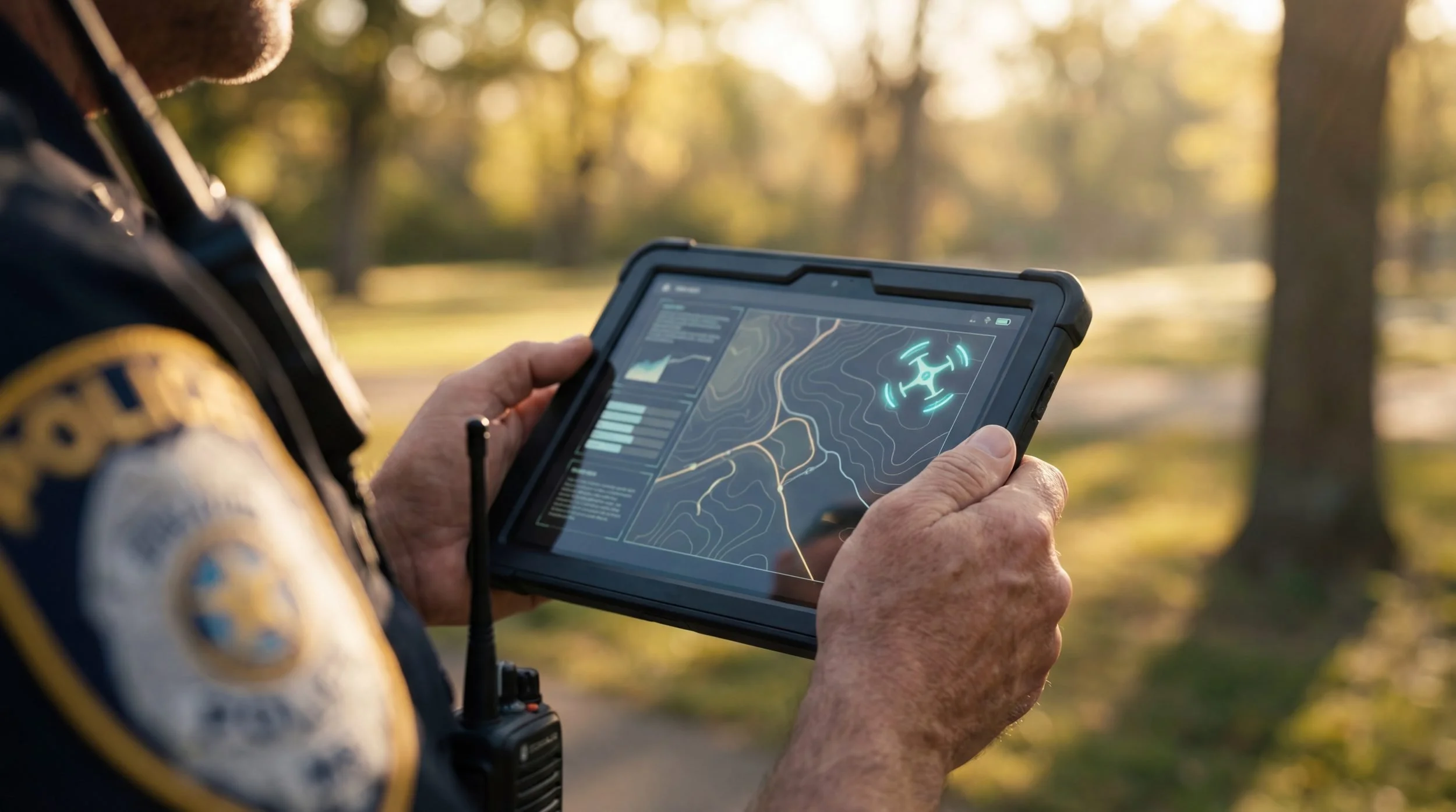
The FAA has rolled out a new tool called DiSCVR, short for Drone Information for Safety, Compliance, Verification, and Reporting. It gives authorized law enforcement and public safety users a faster way to connect a drone’s Remote ID broadcast with FAA registration and authorization records, helping them determine whether a flight appears compliant or suspicious. FAA privacy documentation shows DiSCVR is tied to FAA DroneZone and LAANC data, and current reporting says access is being coordinated through DHS fusion centers.
Here’s the important clarification: not every drone sold in the U.S. is required to have Remote ID. The FAA says Remote ID applies to drones that are required to be registered or are registered, which includes most Part 107 aircraft and many recreational drones, but not every sub-250 gram recreational drone. The FAA also recognizes exceptions such as operations in a FRIA, and it still allows compliance through either a Standard Remote ID drone or an approved Remote ID broadcast module.
What DiSCVR changes is the speed of enforcement. Before this, officers could often see a Remote ID signal without having a quick way to match it to the operator and their authorization status. Now, authorized users can move much faster from seeing a drone in the air to checking whether it is properly registered and whether the operation appears authorized. For compliant pilots, that means documentation and registration accuracy matter more than ever.
Red Raven’s Take: This is enforcement catching up to the rules already on the books. If you fly under Part 107, make sure your registration is current, your Remote ID setup is correct, and your authorizations are in order. For recreational pilots, this is another reminder that “I didn’t know” is becoming a weaker excuse as identification tools get better.
Read more: FAA Drone Tracking API — DroneDJ | FAA Launches DiSCVR API — sUAS News
The Government Just Approved the First Non-Chinese Drones for Import
This week, the FCC approved the first four drones to receive Conditional Approval under its new Covered List process: the SiFly Q12, Mobilicom SkyHopper Series, ScoutDI Scout 137, and Verge X1. Those approvals are currently listed through December 31, 2026.
The key nuance here is that this policy is broader than just Chinese drones. In December 2025, the FCC added foreign-produced UAS and UAS critical components to the Covered List on a going-forward basis. In January 2026, that framework was narrowed with carve-outs for equipment on the Blue UAS Cleared List, products that qualify as domestic end products under the Buy American standard, and systems that receive Conditional Approval. This week’s action is the first real batch of those conditional approvals.
What this means in practice is that the market is starting to sort into three buckets: equipment already in use, equipment that clearly fits inside an exemption pathway, and equipment that may face a much harder road for future authorization. For agencies and enterprise operators, replacement planning just became a more strategic decision. It is no longer only about specs, price, and mission fit. It is also about whether the platform will remain supportable and procurable under the current FCC framework.
Red Raven’s Take: If your program has been relying on DJI, Autel, or other foreign-made platforms, this is the story to watch. Existing aircraft are not suddenly grounded, but future purchasing decisions are getting more complicated. Agencies need to think beyond the next airframe and start thinking about long-term compliance, support, and fleet continuity.
Read more: US drone ban has a growing exemption list — DroneDJ
Amazon Prime Air Wants to Scale Drone Delivery in Florida — And the FAA Just Opened the Door to Public Comment
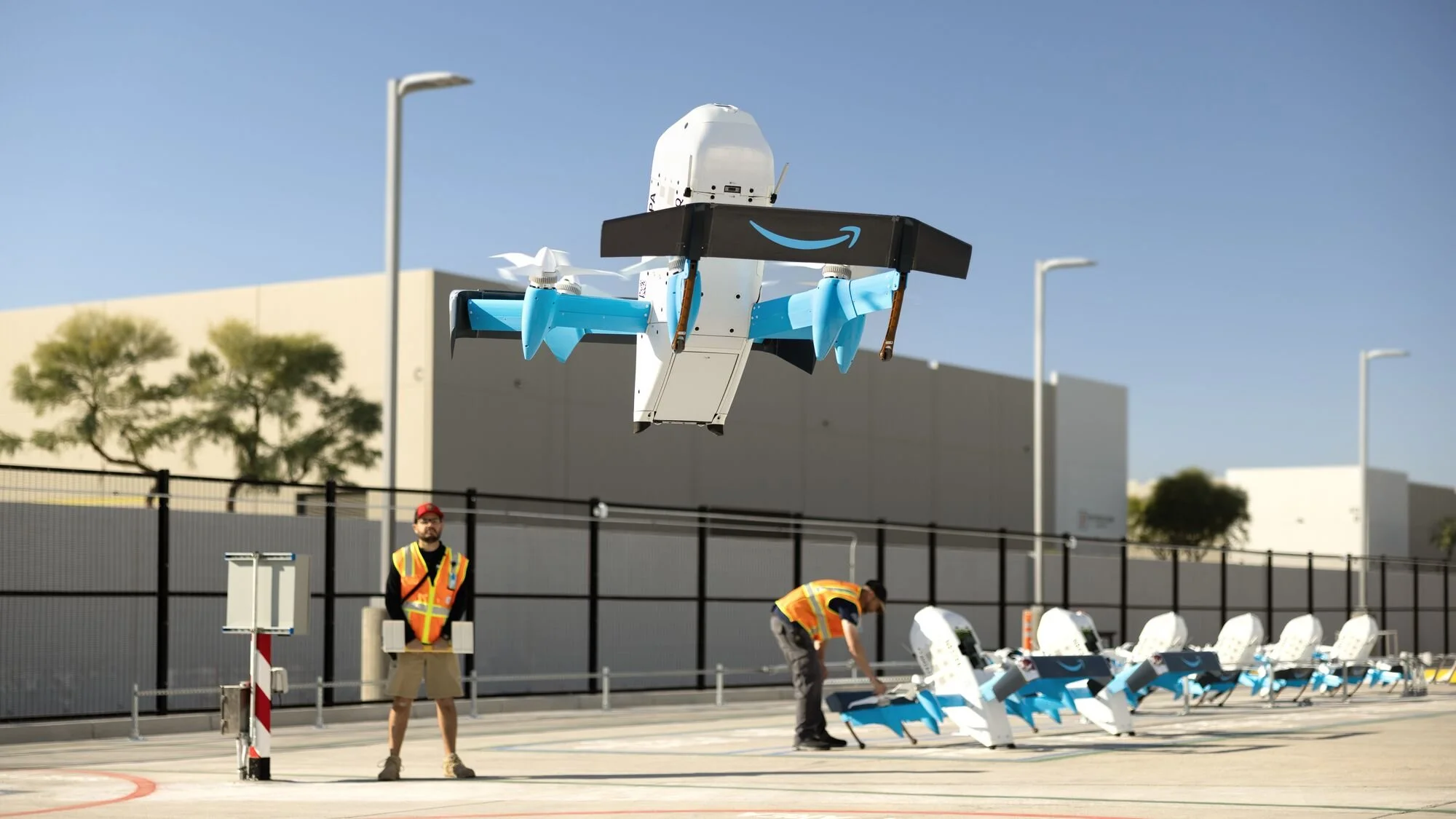
Source: Amazon / About Amazon
Amazon Prime Air is pushing toward a much bigger drone-delivery footprint in the U.S. The FAA has opened a new public comment period for Amazon’s proposed expansion into Florida, where the company wants approval to launch package delivery operations from six new Prime Air Drone Delivery Centers located next to existing Amazon warehouse sites across the state.
Under the proposal, Amazon would use its MK30 drone, an electric aircraft with a maximum takeoff weight of 83.2 pounds, a 7.5-mile maximum operating range, and a potential operating area of 174 square miles around each site. The filing says operations could run from 6:00 a.m. to 10:30 p.m., with Amazon proposing up to 1,000 delivery flights per operating day, seven days a week, or roughly 365,000 annual delivery operations from each center.
This is not final approval yet. What the FAA opened on March 10, 2026 is a Draft Environmental Assessment, which means the agency is still collecting public input before deciding whether the expansion can move forward. The comment window stays open until April 8, 2026, making this one of the clearest signs this month that large-scale drone delivery in the U.S. is still moving from pilot project to real infrastructure.
Red Raven’s Take: This is the kind of story commercial operators should pay attention to. Not because most readers are trying to compete with Amazon, but because every expansion like this helps normalize heavier, more frequent, more operationally ambitious drone flights in U.S. airspace. The delivery piece gets the headlines. The bigger takeaway is that the regulatory and environmental groundwork for scaled drone operations is still being built in public, one approval at a time.
Read More: Draft Environmental Assessment for Amazon Prime Air Package Delivery Operations in Florida
AirData Launches Dedicated Public Safety Program
AirData — one of the largest drone fleet management platforms in the world, with over 444,000 pilots across 232 countries — announced a brand-new program built specifically for public safety agencies. That means law enforcement, fire departments, and emergency response teams.
AirData says its platform is already trusted by more than 444,000 pilots across 232 countries, and its new public safety program is aimed directly at law enforcement, fire, and emergency response teams. The platform supports 178 drone models and flight applications, automates documentation for Part 107 and COA programs, and supports dock-based DFR deployments.
The new public safety program supports 178 different drone models and automatically generates compliance documentation for Part 107 operations and COA programs (a COA is a Certificate of Waiver or Authorization — it's a special FAA approval that lets agencies fly in ways that standard rules don't normally allow, like flying at night over populated areas or beyond the pilot's direct line of sight).
Red Raven's Take: This is a big deal for any agency running — or thinking about starting — a drone program. Fleet management and compliance documentation are two of the biggest headaches in public safety drone programs. Having a purpose-built platform that handles both means less paperwork and more flying. The 70% year-over-year growth stat also confirms what we've been seeing firsthand: public safety drone adoption is accelerating fast. If your department hasn't started exploring a program yet, the window to be an early mover is closing.
Source: Airdata
Ondas/Sentrycs Deploys Counter-Drone Security at World Economic Forum in Davos
Ondas Inc.'s subsidiary Sentrycs provided live airspace protection at the 2026 World Economic Forum in Davos, Switzerland. That's one of the biggest, highest-profile gatherings of world leaders, CEOs, and heads of state on the planet.
Counter-UAS systems at events like this work by creating a protected bubble over the venue. They detect any drones entering the area, identify whether they're authorized, and if they're not, they can disrupt the drone's communication link or GPS signal to force it to land or return home. Think of it as an invisible shield over the airspace.
This wasn't a test or a demo — it was a real-world deployment protecting real people at a real event. And it's a clear sign of where the industry is heading: counter-drone systems are becoming standard security infrastructure for major events and high-value locations.
Red Raven's Take: Davos is about as high-stakes as it gets for airspace security. The fact that counter-UAS is now standard at events like this tells you everything about where the industry is heading. For public safety teams and event security planners, this is the new normal. If you're responsible for protecting any kind of large gathering or critical facility, counter-drone should already be on your radar — pun intended.
Read more: Ondas Sentrycs at World Economic Forum 2026 — sUAS News
Best Beginner Drones Just Got Cheaper — DJI Mini 4K and Neo Hit Record Lows
Let's end with some good news for anyone who's been thinking about getting into drones but hasn't pulled the trigger yet.
Two of the best starter drones on the market just hit their lowest prices ever. The DJI Mini 4K — which normally retails for $299 — dropped to $209 for the base unit. The Fly More Combo (which includes extra batteries, a carrying case, and spare propellers — essentially everything you need to actually fly without running out of juice after one flight) dropped from over $440 to $309.
Even cheaper: the DJI Neo — a tiny, palm-sized drone that's perfect for learning the basics and having fun without worrying about crashing an expensive piece of equipment — hit $150 with an Amazon coupon. That deal expires March 25, so if you're interested, don't wait.
Both of these drones are under 250 grams, which means they fall below the FAA's registration threshold. You can fly them recreationally without registering (though you still need to follow all other FAA rules). They shoot stabilized 4K video, have built-in safety features like automatic return-to-home, and they're small enough to toss in a backpack.
We genuinely recommend these as great starter drones. They're perfect for new pilots who want to learn, for gifts, or for anyone who just wants a compact fun drone where crashing it won't be the end of the world. And here's the thing — once you start flying, you're going to want to do more with it. That's the natural path toward getting your Part 107 certification and unlocking everything drones can really do.
Red Raven's Take: We tell people all the time: the best drone is the one that gets you flying. At $150-$209, these prices remove the biggest barrier to entry. If you've got a friend or family member who's been "drone curious," forward them this article. And if you're already flying recreationally and wondering what's next, check out our Part 107 course— it's $129, it's in plain English, and it comes with a pass guarantee. Going from a $150 drone to a licensed commercial pilot is a shorter path than most people realize.
Read more: DJI Mini 4K Price Drop — DroneDJ | DJI Neo Hits Lowest Price — DroneDJ
The Bottom Line This Week
The theme this week is clear: the drone industry is maturing fast. Enforcement is getting real with DiSCVR. The supply chain is shifting with the first drone ban exemptions. Public safety adoption is accelerating. Counter-drone is scaling globally. And entry-level prices are making it easier than ever for new people to get into the hobby.
Whether you're a seasoned Part 107 pilot, a public safety operator building a program, or someone who just unwrapped their first drone this weekend, there's something in this week's news that affects you. Stay informed, stay compliant, and keep flying.
Bookmark our Briefing Room for weekly updates, and subscribe to the podcast to hear us break down these stories every week.
Frequently Asked Questions
What is DiSCVR and how does it affect drone pilots?
DiSCVR is the FAA’s new tool for authorized law enforcement and public safety users. It helps them connect a drone’s Remote ID broadcast with FAA registration, waiver, and authorization records more quickly. For compliant pilots, the takeaway is simple: make sure your registration, authorizations, and Remote ID setup are current and accurate.
What is Remote ID and do I need it?
Remote ID is like a digital license plate for your drone. The FAA says drones that are required to be registered — or are registered — must comply with the rule. You can comply by flying a Standard Remote ID drone, using an approved Remote ID broadcast module, or flying in an FAA-Recognized Identification Area (FRIA), if applicable. If you fly without required compliance, you can face fines and certificate action.
Which drones are exempt from the Chinese drone ban?
As of March 2026, the FCC has granted Conditional Approval to four systems: the SiFly Q12, Mobilicom SkyHopper Series, ScoutDI Scout 137, and Verge X1. The broader FCC policy affects future authorization of certain foreign-made UAS and critical components, but it does not ban all foreign drones already in the U.S.
Can I still fly my DJI drone after the ban?
Yes. FCC guidance says consumers can continue using drones they previously purchased, and previously authorized device models are not automatically barred from continued sale or use. What has changed is the path for future authorizations and approvals, which makes long-term purchasing decisions more complicated.
What is a Drone as First Responder (DFR) program?
DFR is a model where a drone launches automatically from a docking station when a 911 call comes in, arriving on scene before human responders do. It gives dispatchers and officers real-time aerial video of the situation before anyone physically arrives. About half of the public safety agencies on AirData's platform are already running DFR deployments.
What is counter-drone technology?
Counter-drone (also called counter-UAS) systems are designed to detect, track, and if necessary neutralize unauthorized drones. They can jam a drone's radio signal, disrupt its GPS, or even physically capture it. These systems are used to protect airports, military bases, stadiums, government buildings, and high-profile events like the World Economic Forum.
Are the DJI Mini 4K and DJI Neo good starter drones?
Yes, both are excellent choices for beginners. They're lightweight (under 250 grams, so no FAA registration required for recreational use), affordable, and have built-in safety features. The Mini 4K is the better camera drone, while the Neo is a fun, ultra-compact option for learning to fly.
How do I get started with Part 107 certification?
Part 107 is the FAA's commercial drone pilot license. You need it to fly for any business or professional purpose. Red Raven's Part 107 Online Course covers everything from airspace and weather to regulations and test prep, in plain English, with a pass guarantee. Most people get certified in two to four weeks of study.
Links & Resources
Part 107 Online Course: https://www.redravenuas.com/part107
Red Raven Services: https://www.redravenuas.com/services
Briefing Room (News): https://www.redravenuas.com/news
Podcast: https://www.redravenuas.com/podcast
Understanding Airspace for Part 107: https://www.redravenuas.com/blog/part-107-airspace
DJI Drone Ban Update: https://www.redravenuas.com/blog/fcc-drone-ban-update
How to Build a Public Safety Drone Program: https://www.redravenuas.com/blog/build-public-safety-drone-program-guide
Drone as First Responder (DFR): https://www.redravenuas.com/podcast/drone-as-first-responder
Is your agency ready for what's coming?
At Red Raven UAS, we help public safety agencies, utilities, and enterprise teams stay ahead of it all with vendor-neutral consulting, customized on-site training, and FAA Part 107 certification.
Program Development: We help you design and build a compliant drone program from the ground up
On-Site Training: We train your pilots for the exact missions they'll fly — not generic flight skills
Vendor-Neutral: We don't sell hardware. We help you make smart decisions based on your mission
Don't let the pace of change leave your program behind — let's build your roadmap.
About Red Raven UAS
Red Raven UAS was founded by public safety and drone industry veterans to solve a real problem: agencies and enterprise teams buying drones with no clear plan, no trained pilots, and no compliant program to back them up. We provide vendor-neutral consulting to design and build your drone program, customized on-site training for your team and mission, and FAA Part 107 certification to keep your pilots legal and ready. No hardware sales. No generic courses. Just field-tested expertise built for the real world.
Explore More