UAS Weekly Briefing — May 8, 2026: FAA Targets Critical Infrastructure Airspace, BVLOS Road Map Is Official, and DJI Has Until May 11
The FAA rarely moves quickly. Rulemaking can take years—sometimes a decade. But in the span of a single week, the agency proposed permanent flight restrictions over America’s most sensitive facilities, released the first concrete timeline for letting drones fly miles beyond where pilots can see them, and watched the public comment window close in on the debate over whether the most popular commercial drone brand in the world will remain barred from government purchasing.
Three big regulatory moves. One clear signal: the drone operating environment is shifting faster than it has in years. Here’s what every drone pilot, program manager, and public safety operator needs to know.
The FAA Just Drew Permanent Lines Around America’s Critical Infrastructure
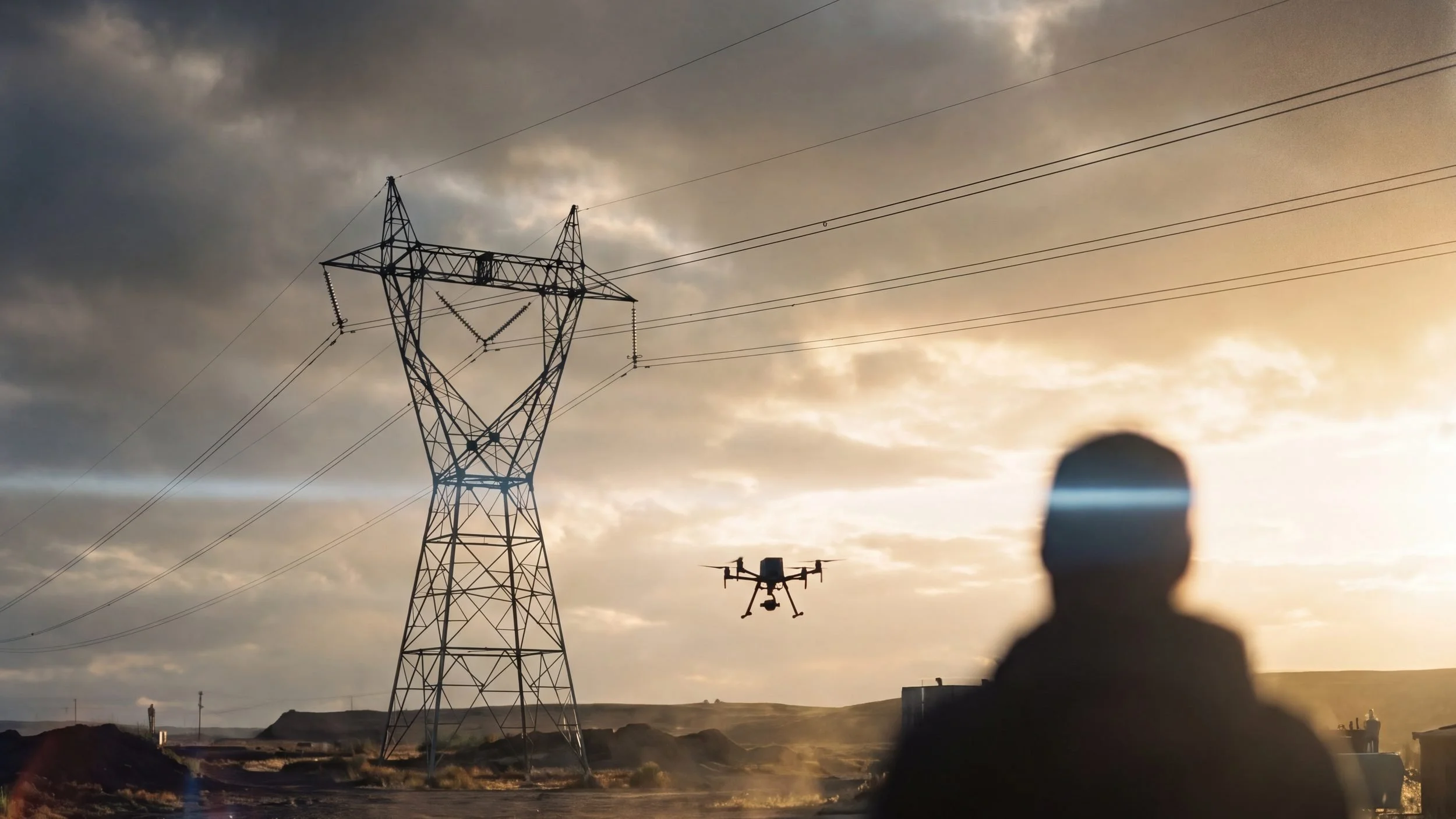
The FAA has proposed a new rule that would allow certain critical infrastructure operators to apply for drone flight restrictions around fixed-site facilities—a category that includes energy production, water and wastewater systems, chemical facilities, dams, transportation systems, communications, emergency services, government facilities, and defense industrial base sites.
The proposed restriction type is called an Unmanned Aircraft Flight Restriction, or UAFR. The FAA says the rule would create two categories: a standard UAFR, which would bar drone operations inside a defined boundary except for operators who have already met safety and security standards, and a special UAFR, which would require express prior approval from both the FAA and the sponsoring agency before operating inside the restricted area.
Here’s why this matters for commercial operators: holding an FAA Part 107 certificate does not override special airspace restrictions. Part 107 is the federal license required to fly drones commercially in the United States. It covers a lot of ground—airspace, weather, regulations, emergency procedures. But it does not automatically authorize you to fly anywhere you want. Restricted zones, controlled airspace, TFRs, and any future UAFRs all require separate compliance checks on top of your Part 107 certification.
For utility companies inspecting power infrastructure, for fire departments responding to industrial incidents, for construction companies working near water treatment facilities—this proposal creates a new compliance layer that could affect routine operations. If a facility receives an approved UAFR, operators would need to confirm whether their mission is allowed before flying in that area.
The good news: the FAA is accepting public comments on this proposal through July 6, 2026. That’s your opportunity to weigh in on how the authorization process should work, how broad the restriction zones should be, and what operational exemptions might make sense for categories like public safety and critical infrastructure maintenance. If your organization is affected by this, filing a comment is a concrete action you can take right now.
Red Raven’s Take: For utilities, public safety agencies, and infrastructure teams flying drones near power plants, water treatment facilities, or refineries—this proposal changes your pre-flight checklist. If any of your regular operating areas could fall within a future UAFR, you’ll need to build restriction checks and authorization planning into your mission workflow, the same way you already plan around controlled airspace, TFRs, and other special-use areas. Map your routine flight corridors against sensitive facilities now. And if your operations would be significantly affected, filing a public comment with the FAA before July 6 is the one concrete action available to you.
Read more: FAA Proposed Rule: Restricting Drones Near Critical Infrastructure Sites
BVLOS Has an Official Road Map—and the Framework Is Called Part 108
For the past several years, the drone industry has been waiting for one thing above almost everything else: a clear, legal path to fly drones beyond where the pilot can see them.
Right now, every commercial drone flight under FAA Part 107 must remain within visual line of sight—meaning the pilot, or a designated visual observer standing nearby, must be able to see the drone with their own eyes at all times. No binoculars. No camera feeds as a substitute. You have to actually see it. That single requirement eliminates the majority of the commercial use cases that would make drones truly transformative: long-distance pipeline and powerline inspection, package delivery across miles of terrain, wildfire perimeter monitoring, offshore infrastructure inspection.
This week, the FAA published its drone normalization strategy—a formal agency document that lays out how drones will be integrated into the U.S. national airspace on a broader scale. The centerpiece is the official path toward a finalized rule set for BVLOS operations. BVLOS stands for Beyond Visual Line of Sight: flying a drone so far away that the pilot can no longer see it directly. The proposed regulatory framework governing these operations is called Part 108.
Think of it this way: Part 107 is the rulebook for flying drones you can see. Part 108 will be the rulebook for flying drones you can’t. And for the first time, that rulebook has an official road map.
To operate under Part 108, pilots and their aircraft will likely need to meet enhanced requirements. A key one: Standard Remote ID. Remote ID is essentially a digital license plate for drones—built into the drone’s software at the factory, it broadcasts your drone’s registration number, location, altitude, speed, and direction in real time. The FAA, law enforcement, and air traffic control can all receive that broadcast. If you’re flying a commercial drone purchased after September 2023, there’s a very high probability it already has Remote ID built in. Part 108 would build on that foundation.
This week’s publication isn’t the final rule—it’s the road map. There will be a formal rulemaking process, public comment periods, and likely a phased rollout. But for operators and program managers who have been planning around BVLOS capabilities, having an official framework to build toward is a significant milestone.
Red Raven’s Take: If your program is built around visual line of sight operations, this is your advance notice to start thinking longer range. Part 108 won’t arrive overnight—the formal rulemaking process takes time—but the areas to watch are clear: Remote ID, enhanced pilot qualifications, and data logging infrastructure. Start building toward those standards today so the transition doesn’t require you to rebuild from scratch when the rule lands. The programs that will sail through Part 108 compliance are the ones that treated it as a destination, not a surprise.
Read more: FAA Drone Normalization Strategy and BVLOS Regulatory Road Map — FAA.gov
The DJI Clock Is Ticking—FCC Replies Are Due May 11
If your organization uses DJI drones—and statistically, there’s a high probability it does—this one deserves your attention before May 11.
DJI is the world’s largest manufacturer of consumer and commercial drones. Its platforms are used by fire departments, law enforcement agencies, utilities, search and rescue teams, construction companies, and millions of recreational pilots. They’re also made in China.
The FCC—the Federal Communications Commission, the U.S. agency responsible for regulating communications equipment and technology—maintains what it calls the Covered List: a designation for communications equipment and services that the agency determines pose national security risks. In December 2025, the FCC added certain foreign-made unmanned aircraft systems and UAS critical components to that framework, a move that affects DJI’s ability to obtain FCC authorization for new products in the U.S. market.
DJI filed a petition asking the FCC to reconsider that action. The FCC opened ET Docket No. 26-22 for DJI’s petition, and the corrected deadline for replies is May 11, 2026. After that date, the commission will continue reviewing whether to maintain, modify, or reconsider the action.
What’s at stake: existing DJI drones are not suddenly illegal to own or fly because of this proceeding. The bigger issue is future access. If DJI remains covered without meaningful modification, new DJI aircraft, components, and related equipment could continue facing serious barriers to FCC authorization, import, and sale in the United States. For public safety departments, utility teams, mapping firms, agricultural operators, and small businesses that rely on DJI’s price point, payload ecosystem, and software integrations, that creates a real procurement and operational planning challenge.
If this issue directly affects your agency, business, or flight operations, the concrete action available right now is to file a respectful, fact-based comment with the FCC before May 11. Go to fcc.gov/ecfs/filings/express, enter proceeding number 26-22, and select In the Matter of SZ DJI Technology Co., Ltd. Tell the FCC who you are, how you use DJI equipment, what missions would be affected, whether alternative platforms meet your operational needs, and what the cost or capability impact would be if future DJI equipment is unavailable. Comments are public record, so do not include private addresses, phone numbers, confidential client details, or anything you would not want publicly searchable.
For a full breakdown of where the DJI policy situation stands, read our in-depth coverage: The DJI Drone Ban—What You Need to Know.
Red Raven’s Take: If your agency or business depends on DJI equipment, you need a clear-eyed procurement strategy right now. That means knowing which aircraft and payloads you use, what missions they support, what replacement options actually meet those mission requirements, and what the budget impact would be if future DJI equipment is unavailable. Then put that information into the FCC record. A short, specific comment from a fire department, utility inspector, SAR team, construction mapper, farmer, or small business operator is more useful than a generic form complaint. The FCC needs to hear how this affects real operations.
Read more: FCC Covered List Review: DJI Public Comment Deadline Is May 11 — DroneDJ
Why the Wireless Industry Is Pushing the FCC for Dedicated Drone Spectrum
Here’s a question that doesn’t get asked enough: how does a drone flying miles away from its pilot stay connected?
When a drone operates BVLOS—far beyond where the pilot can see it—it needs a reliable, always-on data link back to the ground station. That connection carries flight control commands, video feeds, sensor data, and telemetry. If it drops or degrades, the pilot loses situational awareness. In some scenarios, the aircraft might execute a pre-programmed failsafe. In others, the mission ends.
Today, most commercial drones use dedicated short-range radio frequencies. They work well at close range—the distances where current Part 107 operations happen. They become unreliable at the distances BVLOS makes commercially interesting: miles, not hundreds of meters.
The solution the industry is converging on: cellular networks. The same LTE and 5G infrastructure that carries phone calls and streaming video is capable, in principle, of supporting drone command-and-control data links. Carriers including AT&T and Verizon have run BVLOS drone connectivity trials using their existing infrastructure.
This week, the wireless industry’s major trade association filed comments with the FCC arguing for dedicated spectrum allocations for drone operations. Spectrum refers to specific radio frequencies assigned to specific uses. Think of it like highway lanes: general wireless traffic and drone control signals both need lanes, and right now they’re sharing. The wireless industry’s argument is that dedicated drone spectrum would reduce interference, improve reliability, and create a predictable technical foundation for BVLOS at scale.
For commercial operators and enterprise program managers, the practical implication is this: the infrastructure decisions being made right now in FCC proceedings will shape what hardware, connectivity providers, and operational architectures become standard once Part 108 takes effect. The companies that have connected systems and spectrum-aware flight management software are positioning themselves early.
Red Raven’s Take: For enterprise program managers evaluating long-range operations, the spectrum conversation happening at the FCC right now is the infrastructure decision underneath the aircraft decision. When you’re evaluating BVLOS-capable platforms and command-and-control systems over the next 12–18 months, ask vendors specifically what their cellular connectivity architecture looks like and which frequency bands their systems operate on. That answer will tell you a lot about how well their platform will perform in a Part 108 regulatory environment—before the rule is final and the stakes are real.
A Small Government Agency Just Made the Case for Practical Drone Adoption
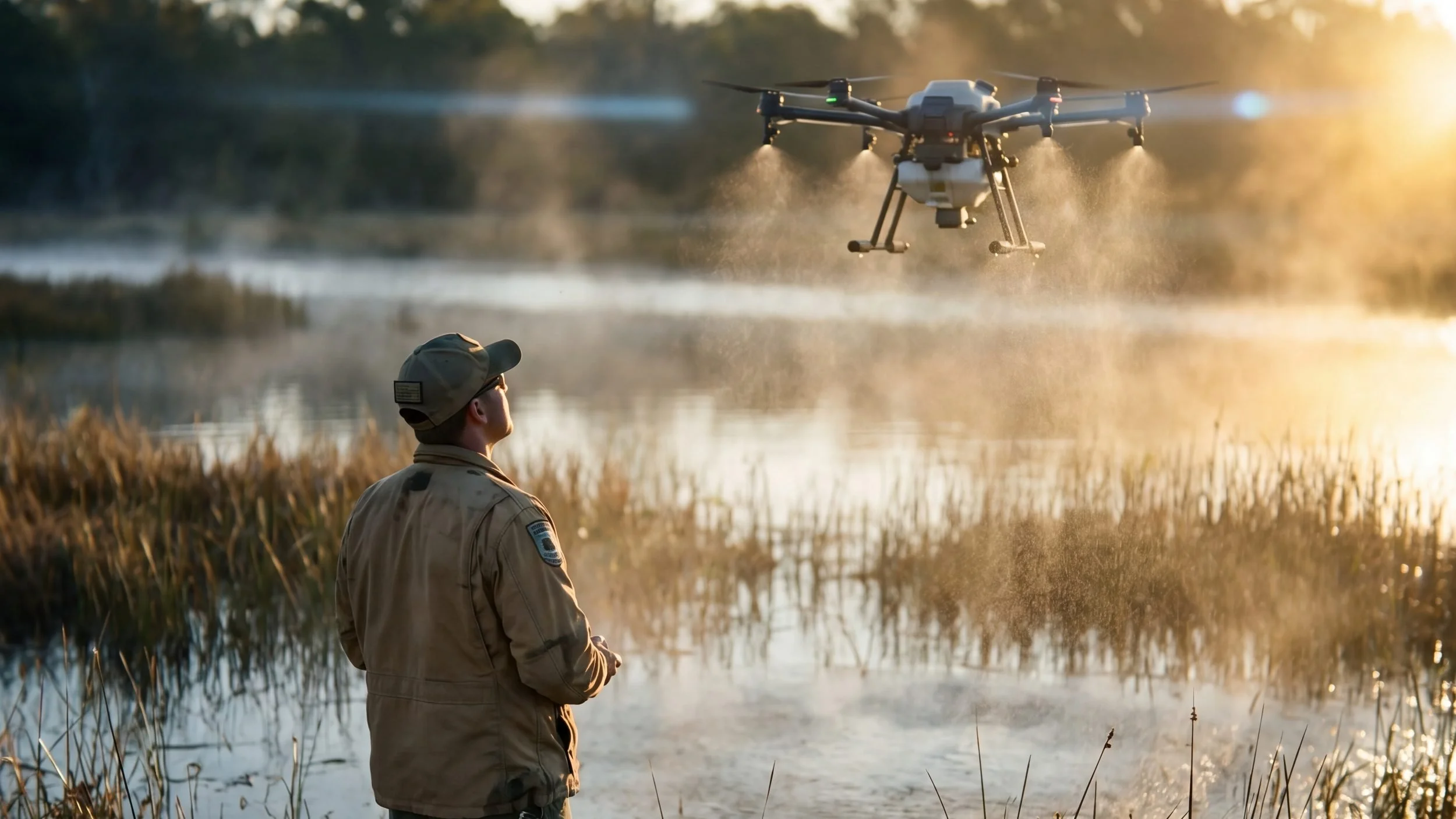
Not every story this week came from the FAA or the FCC. One of the most instructive ones came from a mosquito control district in Florida.
The South Walton Mosquito Control District deployed drones to conduct aerial surveillance of standing water—the breeding grounds where mosquitoes lay eggs and multiply—and to apply larvicide treatments in areas that would otherwise require ground crews with backpack sprayers, or far more expensive helicopter operations.
What makes this story worth highlighting isn’t the technology. It’s the scale. South Walton is a modest local government agency serving a specific geographic area. They’re not a major metropolitan fire department with a dedicated aviation unit and a seven-figure equipment budget. They’re a specialized district solving a well-defined operational problem with commercially available drone technology.
This is what sustainable, replicable drone program adoption looks like at the local government level: identify a specific use case, quantify the operational advantage, get your pilots certified, deploy.
The Part 107 certificate—the FAA license required for any commercial drone operation—is the entry point for every program like this. It covers airspace, weather, regulations, and emergency procedures. It’s a written knowledge exam, not a flight test. For a government agency standing up a drone program from scratch, it’s the first practical step.
If your organization is looking to build a similar program, read our complete guide: How to Build a Public Safety Drone Program.
Red Raven’s Take: This is the blueprint for any local government agency that’s been watching the drone industry from the sidelines waiting for the “right time.” South Walton didn’t wait for the perfect equipment or a seven-figure budget—they identified a specific mission problem, got their operators Part 107 certified, and deployed. That sequence works every time. The Part 107 exam is the entry point. If your agency is ready to take that step, our online course walks every student through the full process from registration to exam day, including a Pass Guarantee.
AirData Joins the Commercial Drone Alliance Ahead of Part 108
AirData is a fleet management platform used by commercial drone operators to log flights, track aircraft maintenance schedules, manage regulatory compliance records, and analyze operational data. If you’re managing more than a handful of drones professionally, you’ve probably encountered it.
This week, AirData joined the Commercial Drone Alliance—an industry advocacy organization that engages directly with the FAA, FCC, and members of Congress on drone policy. The timing is not coincidental: this membership comes as the industry waits on the formal rulemaking process around Part 108, the BVLOS framework the FAA outlined in its normalization strategy this week.
The Commercial Drone Alliance has been one of the most consistent industry voices pushing the FAA to accelerate the BVLOS pathway. AirData’s membership signals that the software and data infrastructure layer—the platforms that track, manage, and report on drone operations—is organizing around the policy conversation ahead of rulemaking.
Why does this matter for operators and enterprise program managers? Because Part 108 won’t just regulate the aircraft—it will regulate the data. Expect requirements around standardized flight logging, anomaly reporting, and potentially real-time data sharing with FAA systems. The companies building flight management software are positioning their platforms now, before the final rule forces everyone to adapt.
If you’re building an enterprise or government drone program, your data management strategy deserves as much attention as your hardware selection. The compliance infrastructure you build today will either make the Part 108 transition straightforward or painful.
Red Raven’s Take: If you’re managing more than a handful of drones operationally, your data infrastructure deserves the same investment as your hardware. The time to implement a flight logging and compliance tracking system is now—not after Part 108 drops and you’re scrambling to retroactively document what you’ve been doing. The programs that will have the easiest Part 108 transition are the ones with clean, consistent operational records from the start. Build that discipline into your SOP today.
Read more: GPS World Source
What This Week Means for Your Drone Program
Three concurrent threads ran through this week’s news—and they’re not separate stories. They’re the same story told from different angles.
The FAA is drawing hard lines (critical infrastructure restrictions) while simultaneously building the framework to expand what’s legally possible (the BVLOS road map and Part 108). The FCC is managing what equipment can be purchased with federal funds (DJI Covered List). The wireless and software industries are positioning their infrastructure ahead of the rules. And a small Florida government agency is demonstrating what practical, mission-driven drone adoption looks like when you get the basics right.
This is the operating environment in 2026. It’s more complex than it was two years ago—and the pace isn’t slowing down.
The practical takeaway: compliance fundamentals matter more than ever. Part 107 certification for every commercial pilot. Documentation practices that can withstand regulatory scrutiny. Hardware and software vendors that can operate within an evolving landscape. A clear, written SOP (standard operating procedure) for every type of mission your program executes.
If you’re not yet Part 107 certified, there’s no better moment to start. Our course covers everything the FAA tests—airspace, weather, regulations, emergency operations—and includes a Pass Guarantee. Start your Part 107 certification here.
And if you’re building or scaling a drone program at the enterprise or government level, our program development services are built around exactly the kind of regulatory environment this week’s news describes.
-
What are the FAA’s proposed critical infrastructure airspace restrictions?
The FAA has proposed a process that would allow eligible critical infrastructure operators to request Unmanned Aircraft Flight Restrictions, or UAFRs, around fixed-site facilities. The proposal covers sectors such as energy, water and wastewater, chemical facilities, dams, transportation, communications, emergency services, government facilities, and defense industrial base sites. The agency is accepting public comments through July 6, 2026.
What is BVLOS and when will it be legal?
BVLOS stands for Beyond Visual Line of Sight—flying a drone so far away that the pilot can no longer see it directly. All current FAA Part 107 commercial flights must remain within visual line of sight. The FAA’s newly published drone normalization strategy and the anticipated Part 108 rulemaking lay out the official path toward BVLOS authorization, though no firm effective date has been announced for when the final rule will take effect.
What is Part 108 and how does it differ from Part 107?
Part 107 is the existing FAA framework governing commercial drone operations within visual line of sight. Part 108 is the anticipated new rule set governing BVLOS operations—where drones fly far beyond the pilot’s direct view. Part 108 is still in development, but the FAA’s normalization strategy published this week outlines the agency’s direction, including Standard Remote ID as an important compliance foundation.
What is the FCC Covered List and does it affect my organization?
The FCC Covered List identifies communications equipment and services that the agency determines pose national security risks. The current DJI proceeding, ET Docket No. 26-22, asks the FCC to reconsider a December 2025 action affecting foreign-made UAS equipment and critical components. The corrected reply deadline is May 11, 2026. Operators who rely on DJI equipment can file a public comment through the FCC’s ECFS system explaining how future restrictions would affect real missions, budgets, and replacement options.
How can a small government agency start a drone program?
The first step is FAA Part 107 certification for any pilot flying in an official or commercial capacity. From there, identify a specific operational use case where drones provide a measurable advantage, select appropriate hardware, and build your documentation and standard operating procedures. Red Raven UAS specializes in end-to-end drone program development for government agencies, municipalities, utilities, and public safety organizations.
What is Remote ID and do I need it?
Remote ID is a federal requirement that drones broadcast their registration number, location, altitude, speed, and direction in real time—essentially a digital license plate for aircraft. Most commercially purchased drones manufactured after September 2023 already have Remote ID built in. It is a foundational compliance layer for the anticipated Part 108 BVLOS framework.
Why does wireless spectrum access matter for drone operators?
Drones operating BVLOS need a reliable, always-on data connection back to the pilot for flight controls, video, and telemetry. Existing short-range radio links become unreliable at BVLOS distances. The wireless industry is pushing the FCC to allocate dedicated spectrum—specific radio frequencies reserved for drone command-and-control links—to improve reliability and reduce interference as BVLOS operations scale.
How do I get my FAA Part 107 certificate?
Part 107 is a written knowledge exam covering airspace, weather, federal regulations, radio communications, and emergency procedures. You study, schedule your exam online through PSI Services, and test at a nearby FAA-approved testing center. Red Raven UAS offers a complete Part 107 online course with unlimited practice exams, full FAA paperwork guidance, and a Pass Guarantee. Get started at redravenuas.com/part107.
Links & Resources
FAA Part 107 Certification Course: https://www.redravenuas.com/part107
UAS Program Development & Consulting: https://www.redravenuas.com/consulting
On-Site UAS Training: https://www.redravenuas.com/training
Red Raven UAS Blog: https://www.redravenuas.com/blog
Red Raven UAS News Feed: https://www.redravenuas.com/news
Red Raven UAS Podcast https://www.redravenuas.com/podcast
DJI Drone Ban Update: https://www.redravenuas.com/blog/drone-ban-update
How to Build a Public Safety Drone Program: https://www.redravenuas.com/blog/build-public-safety-drone-program
Drone as First Responder (DFR): https://www.redravenuas.com/blog/drone-first-responder-dfr
Understanding Airspace for Part 107: https://www.redravenuas.com/blog/part-107-airspace
About Red Raven UAS
Red Raven UAS helps public safety agencies, government teams, utility operators, energy companies, and infrastructure organizations build drone programs that actually work in the field.
We focus on the parts of a UAS program that matter after the aircraft comes out of the box: pilot training, FAA compliance, SOP development, mission workflows, data handoff, risk management, and long-term program strategy. No hardware sales. No manufacturer hype. No one-size-fits-all curriculum.
Our team brings together decades of real-world operational experience in public safety aviation, commercial drone operations, training, and UAS program development. From initial program planning through on-site instruction, program assessment, and workflow design, Red Raven gives teams the structure they need to deploy drones safely, legally, and effectively.
Explore More