Nobody Is Replacing DJI — And the Clock Is Running — UAS Weekly Briefing | April 10, 2026
The drone industry doesn't have a retirement ceremony. Platforms just quietly reach the end of the road while the world keeps moving.
This week, that quiet moment arrived for some of the most consequential drones ever built. DJI announced end-of-service dates for the Mavic 2 Pro, the Mavic 2 Enterprise, and the Matrice 600 Pro — platforms that genuinely changed what drones could do and who could use them. At the same time, a major investigation confirmed what many in the industry have been feeling: the ban on foreign-made drones has left a market void that nobody is ready to fill. And in a Dallas suburb, Amazon's delivery drone program ran into something no amount of engineering solves: community pushback.
Whether you fly commercially, run a public safety program, or you're just starting to explore what drones can do — this week's news connects directly to the world you're operating in. Here's the breakdown.
Prefer audio? Listen to the full podcast below or open the episode page.
Nobody Is Replacing DJI — And The Clock Is Running
The Verge published a major investigation this week asking the question that's been hanging over the U.S. drone industry since December 2025: with DJI effectively locked out of the American market, who steps in?
The honest answer, according to the investigation: nobody. Not yet — and not on a timeline that's going to save operators who depend on reliable, affordable, full-featured hardware.
Here's the backstory. In December 2025, the Federal Communications Commission — the FCC, the agency that approves all wireless devices sold in the United States — added foreign-made drones to its "Covered List." That's a national security designation that means new devices from those manufacturers can no longer receive the equipment authorization required to be legally sold in the U.S. DJI, the Chinese company that has dominated the global drone market for over a decade, is at the center of that list. DJI drones you already own and that were authorized before the deadline can still be operated — but new DJI models can't enter the U.S. market. DJI is challenging the ban in federal court, but that process takes time.
The companies that were supposed to fill the gap — Skydio, Autel, Parrot — have largely pivoted toward government defense contracts, where margins are better and competition is lower. That's good business. But it leaves the commercial and prosumer market, the photographers, inspectors, educators, and small agencies that made up the backbone of the drone economy, without a clear domestic option at the price points and product depth they've come to rely on.
DroneXL's Haye Kesteloo, quoted throughout the investigation, didn't sugarcoat it: "By end of 2026, the first rescue that fails because a department couldn't replace a crashed DJI drone will make national news."
Red Raven's Take: This story matters because it's honest in a way a lot of drone industry coverage isn't. The DJI ban was framed as an opportunity for American manufacturers. Eventually, it might be. But right now, in April 2026, the gap is real and the window before current exemptions expire on January 1, 2027 is closing fast. If your agency or organization is still running DJI hardware, you're not alone — and you don't need to panic. Equipment you're currently authorized to use can still fly. But you do need a transition plan, and you need it well before the deadline, not the week after. If you're not sure where to start, that's exactly the kind of planning conversation we have with agencies every day.
Read more: Nobody Is Replacing DJI, And Drones Are Now For War — DroneXL | The DJI-Shaped Hole — The Verge
The End of the Mavic 2 Era
Source: DJI
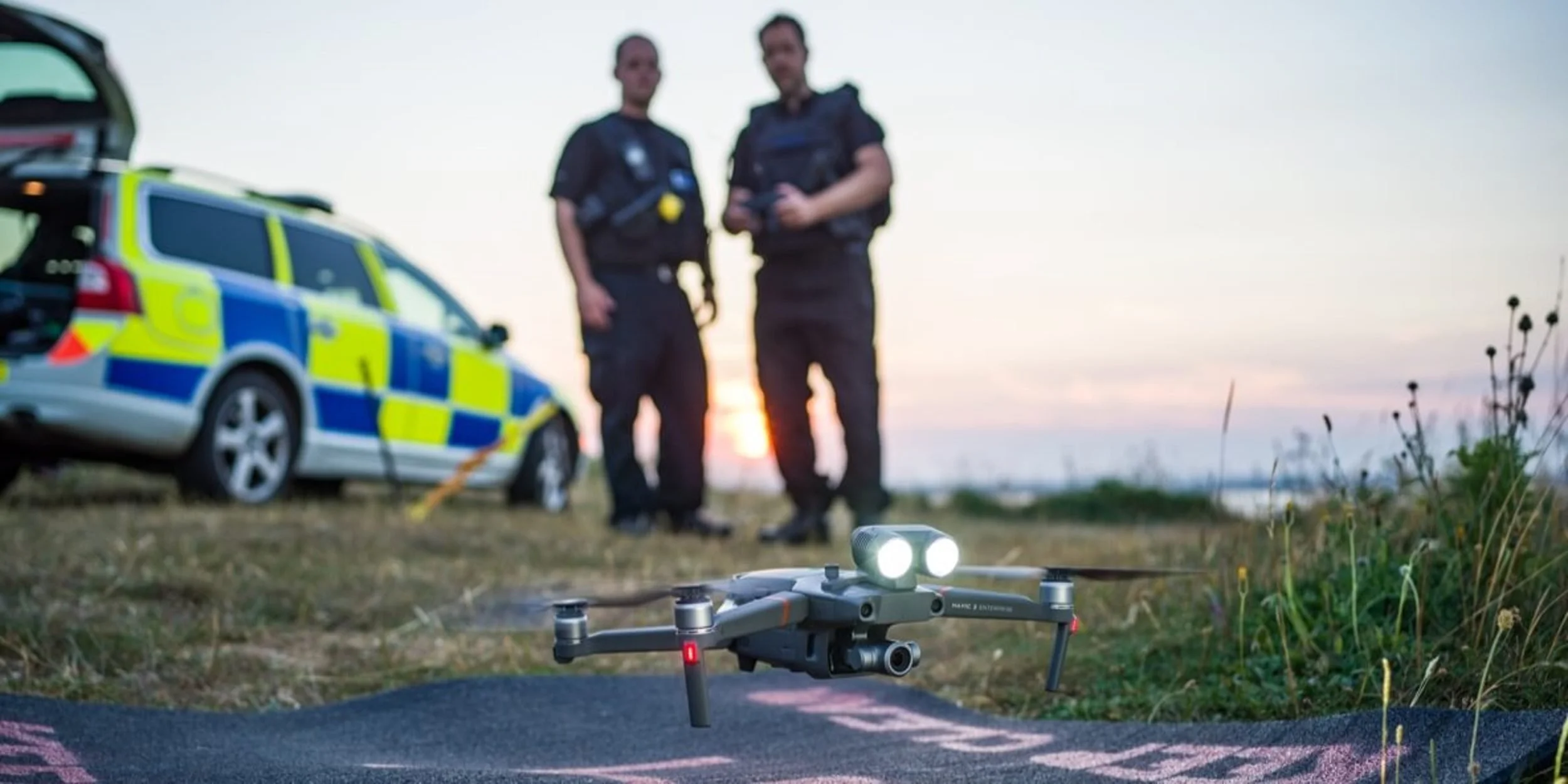
DJI announced this week that it will officially end service and support for some of the most important drones it has ever made. After these dates, DJI will no longer provide repairs, replacement parts, technical support, or any product-related assistance:
Mavic 2 Enterprise Zoom, Mavic 2 Enterprise Dual, Matrice 600 Pro: May 29, 2026
Mavic 2 Pro: August 31, 2026
If you're not already in the drone world, here's why this is significant. The Mavic 2 Pro — launched in 2018 — was the first truly compact, foldable drone to pair a Hasselblad camera and a 1-inch sensor in a form factor you could carry in a backpack. Before it existed, getting that quality of aerial image meant hauling a much larger, more expensive aircraft. The Mavic 2 Pro didn't just raise the bar — it changed who could afford to clear it. Real estate photographers, documentary filmmakers, journalists, and early commercial operators built entire workflows around this platform.
The Enterprise versions went further. The Mavic 2 Enterprise Zoom and Dual took that same portable body and added something new: modularity designed for professional missions. A 200-lumen spotlight. A 100dB speaker. A strobe beacon. And critically, a thermal sensor that let first responders see heat signatures — people in smoke-filled buildings, suspects hiding in brush at night, survivors in disaster zones. For law enforcement and fire departments that couldn't justify the cost of a full industrial drone system, the Mavic 2 Enterprise was the entry point that made building a real drone program possible.
The Matrice 600 Pro was a different animal entirely — a heavy-lift hexacopter built to carry cinema cameras and industrial payloads that no other platform in its class could handle. Hollywood used it. Infrastructure teams trusted it. Researchers pushed it to its limits.
Red Raven's Take: I directed the Mavic 2 Enterprise campaign at DJI. We were filming around the country with government agencies — law enforcement, fire departments, search and rescue teams — that had gotten early access to the platform. What struck me wasn't just that they were using it. It was that entire teams were embracing it and finding new applications we hadn't anticipated when we built the campaign. I remember talking to operators who were solving problems they'd been trying to crack for years — with helicopters, ladders, boots on the ground. You could see it in their faces: there was no going back to the way things were done before. That was the moment I understood this wasn't just a tech product. It was a technology that was going to change the face of our world. This week's announcement is worth pausing on. These platforms built the foundation that made modern commercial and public safety drone operations possible. For operators still running Mavic 2 Enterprise or Matrice 600 hardware: May 29 is closer than it sounds. Get your last service run in now. If you need guidance on what comes next, we're having that conversation with agencies every week.
Read more: DJI confirms end-of-support timeline for Mavic 2, Matrice 600 drones — DroneDJ | DJI to End Support for Mavic 2 Pro and Other Enterprise Drones — No Film School
Amazon Drone Delivery Is Working — And Communities Are Pushing Back
Source: Amazon
Amazon's Prime Air drone delivery program in Richardson, Texas — a suburb north of Dallas — ran into something this week that no amount of engineering can fully prepare for: community pushback.
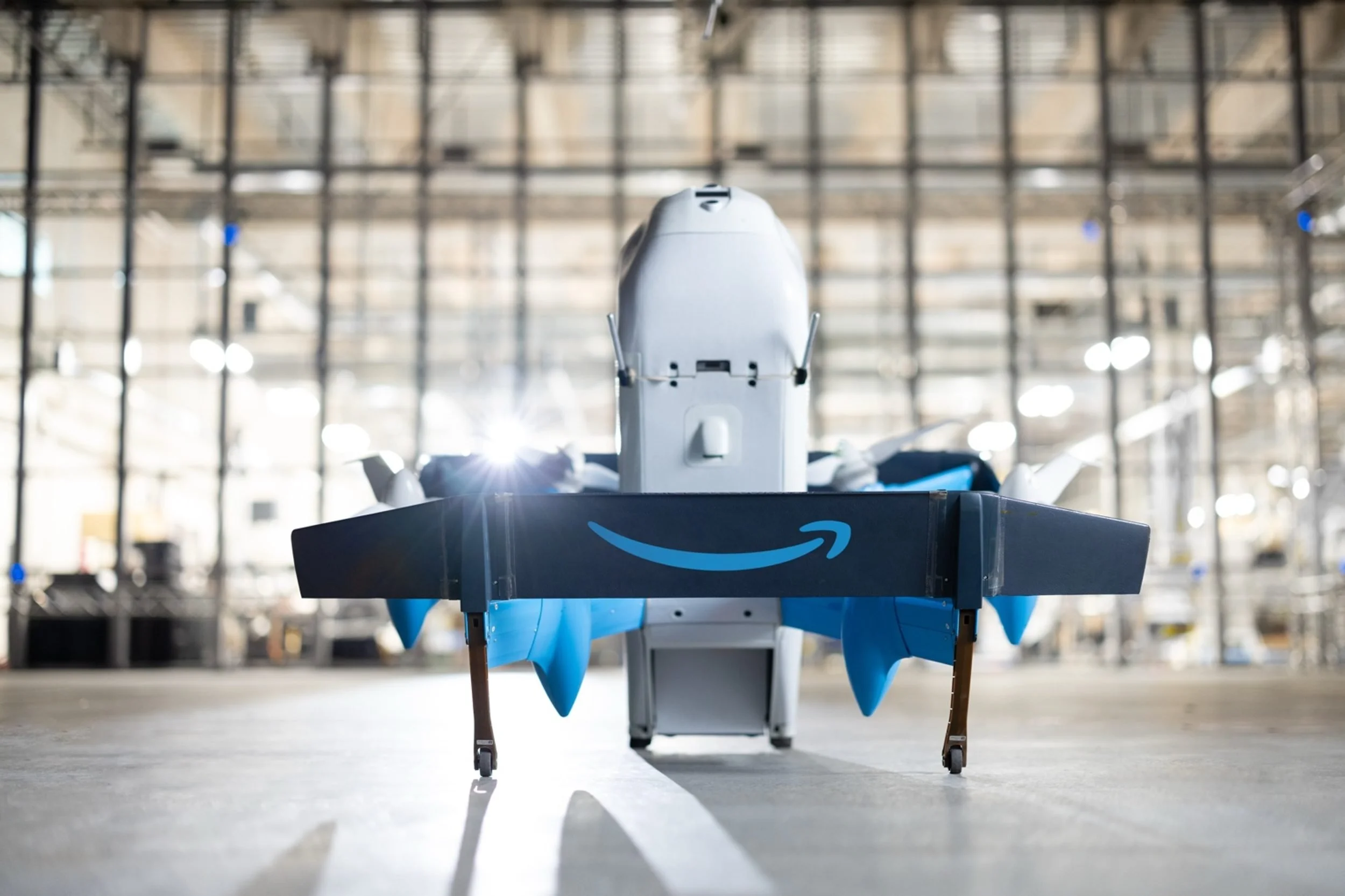
Here's the background. Richardson approved Amazon's drone delivery program in June 2025 in a close 4-to-3 city council vote, allowing delivery drones to operate within a 7.5-mile radius of Amazon's local facility. The program launched in December and has completed more than 13,000 deliveries. The drones — Amazon's MK30 model, designed specifically for low-altitude residential delivery — operate between 7 a.m. and 10 p.m. and are FAA-approved for up to 1,000 deliveries per day.
Then, in February, one of the drones struck an apartment building and fell to the ground. No one was injured, and Amazon cooperated with the FAA investigation. But the crash, combined with mounting noise complaints from residents who reported hearing drones "multiple times an hour," pushed the program to a breaking point.
At a City Council meeting in March, Amazon agreed to a series of changes: raising average flight altitude to 225 feet, rerouting flight paths to reduce time over residential areas, and committing to a new noise survey. The council made its leverage clear — a program approved by four votes can be reconsidered just as quickly. "We need to balance the needs of our citizens over and against the needs of corporations like Amazon," said the HOA president of one affected neighborhood. "We have yet to meet that balance here."
As of this week, Amazon is making approximately 150 deliveries per day — well below the 1,000 it's approved for, but more than enough to generate real friction in a suburban neighborhood.
Red Raven's Take: This story is a preview of what every drone delivery program in America is going to face as scale increases. The technology works. The FAA approval process works. What nobody fully planned for is the community dimension — real people living under flight paths who have opinions about noise, privacy, and what falls out of the sky. Richardson is the canary in the coal mine. Cities watching this story will either build community engagement into their planning from day one, or they'll find themselves in the same council chamber six months after launch. The same principle applies to public safety agencies and enterprise operators: the social license to operate is as important as the FAA certificate. You earn it before you launch, not after the complaints start. This is part of what we help clients think through when designing drone programs — because a program that works technically but fails politically doesn't work at all.
Read more: Amazon Prime Air Adjusts Course After Richardson Setbacks — DRONELIFE | Amazon introduces drone delivery changes after Richardson resident concerns — Community Impact
The FAA Is Staging Its Biggest Drone Safety Push Yet — Here's Why That Matters
Two weeks from today — Saturday, April 25 — the FAA is running Drone Safety Day 2026. Free events are confirmed across dozens of locations nationwide. This year's theme: "Fly RIGHT — Drones. Here for Good."
The three focus areas for this year's campaign: Education (drones in STEM programs and classrooms), Emergencies (public safety and first responder applications), and Environment (wildlife monitoring, conservation, reforestation). Events range from community fly-ins and FAA safety expert sessions to Remote ID testing stations and FPV racing demonstrations. The full list of registered events — and a tool to find one near you — is at the National Center for Autonomous Technologies website at ncatech.org.
But here's the real story. The FAA has run this campaign annually since 2022, but the scale and coordination this year is noticeably larger. That's not an accident. The number of registered drones in the U.S. has surpassed 865,000. Commercial drone operations grew 18 percent year over year in 2025. Drone delivery is expanding into suburban neighborhoods. DFR programs are spreading to county sheriff's offices. The airspace that used to be shared between commercial aviation and the occasional hobbyist drone is getting significantly more crowded — with more operators, more missions, and more ways things can go wrong.
The FAA's Drone Safety Day is their national signal: we need everyone in the air to understand the rules, not just the professionals. Airspace awareness isn't optional when 865,000 aircraft are sharing the sky.
Red Raven's Take: The FAA doesn't coordinate national campaigns without a reason. When they organize dozens of free events around a single safety message, the data is telling them something. More drones in the air means more near-misses with manned aircraft, more flights over restricted airspace, and more operators who have never looked at a sectional chart or understood what Remote ID means — Remote ID being the digital license plate system now built into most drones that broadcasts your aircraft's identity and location to the FAA and law enforcement. Drone Safety Day is the FAA getting ahead of that problem publicly. If you're a recreational flyer, find a free event near you at ncatech.org. If you're a commercial operator, this is a reminder that your Part 107 certification is the floor, not the ceiling. And if you're still flying without understanding the rules, now is the right time to start.
Read more: FAA Drone Safety Day 2026 is April 25 — The Drone Girl | Drone Safety Day 2026 — FAA Official Page
Oregon's New DFR Program Just Proved Its Value — With a Hit-and-Run Arrest
On April 2, Washington County, Oregon's brand-new Drone as First Responder program delivered one of its most compelling real-world results yet.
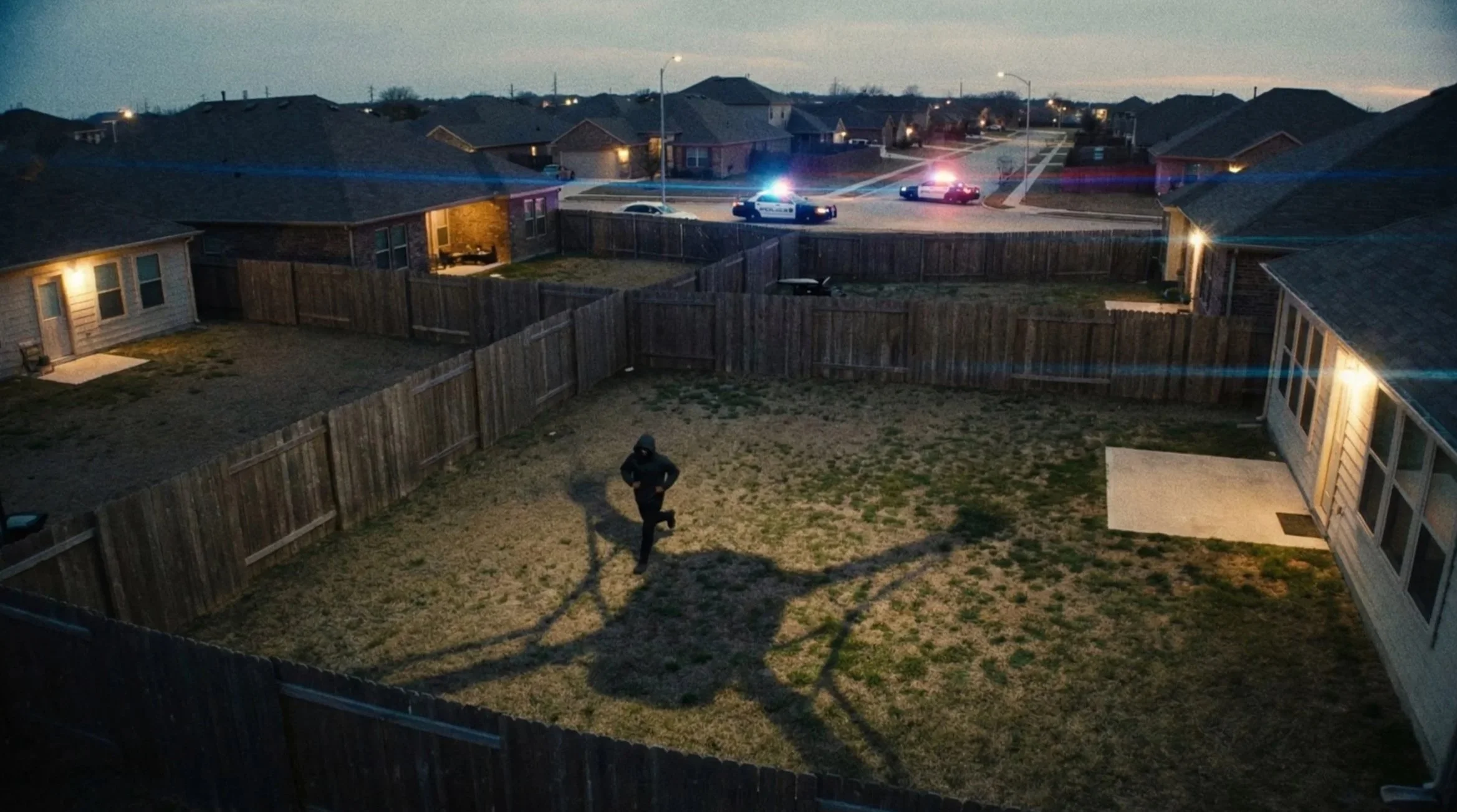
A Washington County Sheriff's deputy spotted a vehicle linked to a burglary and attempted a traffic stop. The driver fled. A pursuit started, then stopped within minutes — traffic congestion made it unsafe to continue. That's normally where this story ends without a result. Instead, the DFR program took over.
The program — launched February 20, 2026, using two Skydio X10 drones provided at no cost by the California manufacturer — deployed a drone overhead within seconds. The operator tracked the fleeing driver through residential backyards in real time, while relaying the suspect's location and movements to patrol units closing in on the ground. The drone launched a second unit to track the passenger, who had exited the vehicle separately. Both suspects were taken into custody. The driver, 32-year-old Jesus Cisneros-Vite of Beaverton, faces charges including two counts of hit-and-run, reckless driving, and a felony warrant.
In six weeks of operation, the Washington County program has responded to more than 90 calls for service. Average response time from dispatch to drone on scene: 45 to 120 seconds. The trial is set to wrap in mid-April, when the sheriff's office will evaluate whether to make the program permanent.
If you want to understand what a Drone as First Responder program actually does in the field, this week's arrest is the clearest possible demonstration.
Red Raven's Take: When an agency is making the case to their city council or county commissioners for a DFR program, this is exactly the kind of story that matters. Not a spec sheet. Not a press release. A real pursuit that had to be called off for safety reasons — and a real arrest that happened because a drone was overhead. The drone did what no police car could safely do: stay on the suspect without endangering anyone on the ground, and guide officers in from a safe distance. That's the DFR value proposition in one incident. If your agency is still in the evaluation stage on drone programs, this is a conversation worth having.
Read more: Drone Catches Fleeing Driver in Beaverton Backyards — DroneXL | New drone program helps nab hit-and-run suspect — KOIN
The Air Force Just Answered Barksdale — Skydio Deploys Autonomous Base Security in the Middle East
Two weeks ago, we covered one of the most alarming drone security stories of the year: a week-long incursion at Barksdale Air Force Base in Louisiana, where sophisticated drone swarms flew over nuclear bomber storage facilities for days and the base had no automated perimeter response to stop them. The Air Force couldn't track where they were coming from, couldn't jam them effectively, and could only document the threat as it happened.
On April 8 — just six days after that story finished dominating the news cycle — the U.S. Air Forces Central command, known as USAFCENT, announced a $9 million-plus order for Skydio Dock and X10 drone systems to secure U.S. airbases across the Middle East. It is described as one of the largest autonomous drone infrastructure deployments for international base security in Air Force history.
Here's what that actually means. A Skydio Dock is a robotic charging station that houses a drone in a weatherproof enclosure, positioned at strategic points around a base's perimeter. When a sensor triggers — a motion detector, a radar alert, a 911-style dispatch — the dock opens, launches a drone autonomously in under 20 seconds, and streams live video to the Base Defense Operations Center. A single operator can manage multiple drones simultaneously, maintaining real-time aerial coverage across the entire installation without putting anyone in a vehicle or on foot. When the threat is assessed, the drone returns to the dock, swaps its battery automatically, and is ready for the next deployment.
This is the first time Skydio's dock-based autonomous technology has been deployed for an overseas force protection mission by the Air Force. The Skydio X10D is already the most widely deployed small drone in USAF Security Forces — it's on bases domestically, in the hands of explosive ordnance disposal teams, and being carried by Tactical Air Control Party specialists. This order extends that footprint into a fixed, 24/7 infrastructure role in active operational theaters.
The connection to Barksdale isn't coincidental. Drone incursions at military installations — whether by adversaries testing defenses, surveillance operations, or disruptive actors — have gone from hypothetical to documented reality. The Barksdale swarms, which showed jamming resistance and coordinated entry-and-exit patterns, demonstrated exactly the kind of threat that a human patrol can't stop in time. An autonomous dock system that launches in 20 seconds and maintains visual contact does.
It's also worth reading this story alongside the week's lead story about nobody replacing DJI. Skydio is an American company, manufacturing every drone and docking system at their facility in Hayward, California. They supply all branches of the U.S. military and the armed forces of 29 allied nations. While the commercial and consumer market still has a gaping hole where DJI used to be, the defense and public safety side of the ledger is showing what a domestic drone industry can actually do when it's properly resourced and incentivized.
Red Raven's Take: Three weeks ago the Air Force documented sophisticated drone swarms over a nuclear bomber base. Now they're deploying autonomous perimeter systems overseas. That's how fast this is moving — and it's not just a military story. The same capability that the Air Force is deploying at scale in the Middle East is available to local and state public safety agencies through Skydio's DFR platform right now. The Washington County sheriff's office in Oregon just ran a six-week trial with two Skydio X10 drones and made arrests that traditional patrol couldn't close. The technology is the same. The scale is different. But the lesson is identical: when drones are in a fixed dock, ready to launch autonomously in seconds, they change the calculus of perimeter security and rapid response entirely. For agencies evaluating whether to build a drone program — this week is a good week to make that decision.
Read more: U.S. Air Forces Central selects Skydio Dock to secure U.S. airbases in the Middle East — sUAS News | USAFCENT selects Skydio Dock — Skydio Official
Critical Security Flaw Found in Widely Used Drone Software — CISA Issues Warning
If you or your organization operates drones running PX4 Autopilot software, this one requires immediate attention.
On April 7, New York-based aviation cybersecurity firm CYVIATION publicly disclosed a critical vulnerability in PX4 Autopilot — an open-source flight control system used in a range of commercial, research, and defense drone platforms. The U.S. Cybersecurity and Infrastructure Security Agency, known as CISA — the federal agency responsible for warning the public about serious digital threats — issued an official government advisory the same day.
The vulnerability (formally catalogued as CVE-2026-1579) carries a severity score of 9.8 out of a possible 10. The flaw: PX4's communication channel, called MAVLink, lacks authentication by default. Authentication is the digital "handshake" that verifies a command is coming from a legitimate source. Without it, an attacker on the same network could inject commands into the drone and take full control of the aircraft mid-flight — redirecting it, overriding the operator, or crashing it. CISA is urging all PX4 operators to update security settings immediately, isolate drone control systems from public internet networks, and use VPNs for any remote access.
It's worth noting: PX4 Autopilot is not the software used in DJI, Skydio, Autel, or most mainstream off-the-shelf commercial drone platforms. It's primarily found in custom-built drones, university research platforms, and some defense and industrial applications. No real-world hijacking has been publicly reported in connection with this vulnerability.
Red Raven's Take: If you're flying DJI, Skydio, Autel, or most standard commercial platforms, this specific vulnerability doesn't apply to your aircraft. But the broader principle does. As drone programs scale and integrate with dispatch systems, command software, and live data infrastructure — as the Washington County DFR story above shows is already happening — the cybersecurity surface area grows. A drone program that isn't thinking about network security and data protection from day one is building on a foundation that will need to be retrofitted later. That's a harder and more expensive problem than designing for it upfront. If you're building a public safety or enterprise drone program and haven't included a cybersecurity policy, let's talk.
Read more: Major PX4 drone software vulnerability raises hijacking concerns — DroneDJ | US warns of software vulnerability that could enable malicious actors to take over drones — Unmanned Airspace
What This Week Means for the Industry
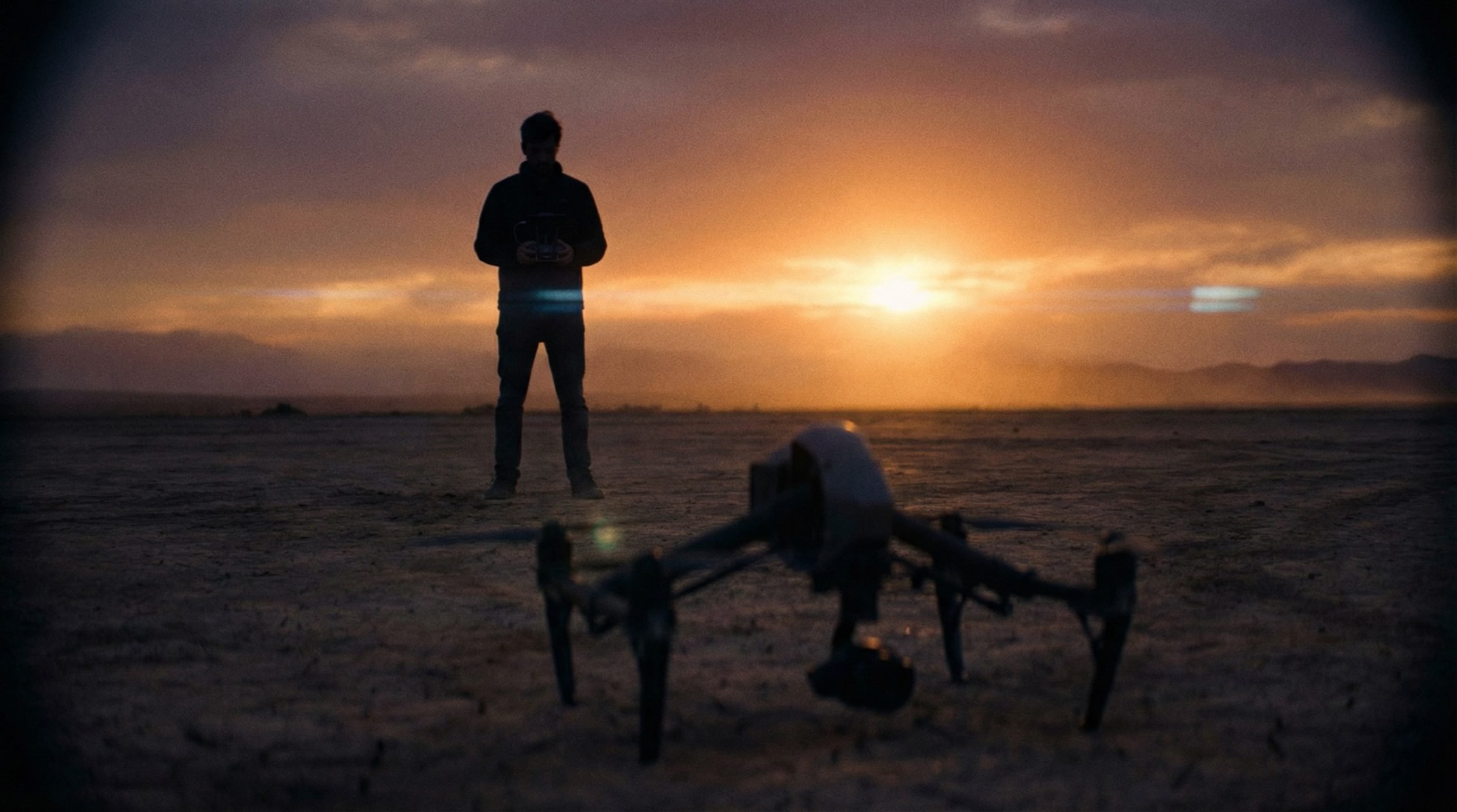
Look at this week's stories together. No domestic manufacturer is ready to replace DJI. The platforms that introduced a generation of operators to professional drones are being retired. Amazon's delivery expansion is hitting real-world community friction that engineering alone can't solve. The FAA is running its most coordinated national safety push yet because the airspace is getting genuinely crowded. A six-week-old Oregon DFR program made a hit-and-run arrest a patrol car chase couldn't close. And three weeks after sophisticated drone swarms penetrated a nuclear bomber base in Louisiana, the Air Force deployed autonomous perimeter systems to protect U.S. airbases in the Middle East.
The common thread: the drone industry is no longer emerging. It's here. Drone threats are real. Drone responses are being deployed at scale. And the organizations that planned ahead — that built programs designed for the world we're actually in — are the ones operating with confidence while everyone else scrambles to catch up.
For those building programs, the most important thing you can do right now is plan ahead. The operators and agencies who are doing this right aren't the ones with the best hardware. They're the ones who designed their programs for the world we're actually in, not the one they hoped would exist.
For breaking drone news as it happens — and our weekly debrief on what matters most — check out The Briefing Room.
Links & Resources
Part 107 Online Course: https://www.redravenuas.com/part107
Drone Program Consulting: https://www.redravenuas.com/consulting
On-Site Training: https://www.redravenuas.com/training
News & Briefing Room: https://www.redravenuas.com/news
Podcast: https://www.redravenuas.com/podcast
Services: https://www.redravenuas.com/services
FAA Drone Safety Day Events: https://ncatech.org/faa_events/
How to Build a Public Safety Drone Program: https://www.redravenuas.com/blog/build-public-safety-drone-program-guide
Drone as First Responder (DFR) Guide: https://www.redravenuas.com/podcast/drone-as-first-responder
Understanding Airspace for Part 107: https://www.redravenuas.com/blog/part-107-airspace
-
Why is nobody replacing DJI in the US market?
The domestic manufacturers most likely to fill the gap — Skydio, Autel, and Parrot — have largely shifted toward defense and government contracts, where margins are higher. That leaves the commercial and consumer market without a domestic option that matches DJI's product range and price points. The situation is expected to evolve, but the timeline is tight: current exemptions for existing authorized equipment expire January 1, 2027.
When does DJI end support for the Mavic 2 Pro?
DJI will end all service and support for the Mavic 2 Pro on August 31, 2026. The Mavic 2 Enterprise Zoom, Mavic 2 Enterprise Dual, and Matrice 600 Pro reach end-of-service on May 29, 2026. After these dates, DJI will no longer provide repairs, parts, or technical assistance for these models.
What happened with Amazon Prime Air in Richardson, Texas?
After a February 2026 crash in which a Prime Air MK30 drone struck an apartment building and noise complaints from residents, Amazon agreed to raise average flight altitude to 225 feet, reroute flight paths, and conduct a new noise survey. The Richardson City Council has signaled it may revisit the program if community concerns aren't addressed. The program has completed more than 13,000 deliveries since launching in December 2025.
What is FAA Drone Safety Day 2026?
FAA Drone Safety Day is an annual national campaign to promote safe and responsible drone operations. In 2026, it falls on Saturday, April 25, with free events across the country. The theme is "Fly RIGHT — Drones. Here for Good," with focus areas in education, emergencies, and environment. Find events near you at ncatech.org.
What is the Skydio USAFCENT contract and why does it matter?
On April 8, 2026, U.S. Air Forces Central placed a $9M+ order for Skydio Dock and X10 drone systems to autonomously secure U.S. airbases across the Middle East. It is one of the largest autonomous drone infrastructure deployments for overseas base security in Air Force history, and the first time Skydio's dock-based technology has been used for an international force protection mission. The docks launch drones in under 20 seconds when threats are detected, with one operator managing multiple drones across an entire installation.
What is the connection between Barksdale AFB and the Skydio deployment?
Three weeks before the Skydio contract announcement, sophisticated drone swarms penetrated Barksdale Air Force Base in Louisiana — home to B-52 bombers and nuclear storage — for a full week, and the base had no automated response capability. The USAFCENT Skydio order is the Air Force's direct answer to that vulnerability: autonomous perimeter systems that detect and respond to drone threats without requiring human patrol units to reach the scene first.
What is a Skydio Dock?
A Skydio Dock is a weatherproof robotic charging station that houses a drone at a fixed position on a base or facility perimeter. When sensors detect a threat or an operator dispatches a mission, the dock opens and launches the drone autonomously in under 20 seconds. The drone streams live video, assesses the threat, and returns to the dock for automatic battery swapping — ready for the next deployment within minutes, 24 hours a day.
What is PX4 Autopilot and do I need to worry about the security flaw?
PX4 Autopilot is open-source flight control software used primarily in custom-built, research, and some defense drone platforms. It is not used in DJI, Skydio, Autel, or most mainstream commercial drones. If you operate a standard off-the-shelf platform, this vulnerability does not directly affect your aircraft. If you operate custom or research drones running PX4, update your security settings immediately per CISA's advisory.
What is a Drone as First Responder program?
A Drone as First Responder (DFR) program deploys drones autonomously or semi-autonomously to 911 calls, typically arriving on scene in under two minutes — before human responders. The drone provides live video to dispatchers and officers, enabling faster situational awareness and safer responses. Washington County, Oregon's program responded to more than 90 calls in its first six weeks of operation.
Can I still fly my DJI drone?
Yes. The FCC's action prevents new DJI models from receiving equipment authorization to be sold in the U.S. — it does not prohibit the operation of drones you already own that were lawfully authorized. Existing DJI hardware that received FCC authorization before December 2025 can still be legally flown. DJI is also challenging the ban in federal court.
Is Red Raven UAS vendor-neutral when recommending drone platforms?
Yes. Red Raven UAS does not sell hardware. Our consulting and training services are vendor-neutral — we help agencies and enterprise teams evaluate platforms based on their specific mission requirements, compliance needs, and operational context. That independence is one of the things our clients value most when navigating a market in transition.
About Red Raven UAS
Red Raven UAS was founded by public safety and drone industry veterans who understood the gap between having drones and knowing how to deploy them effectively. Our team brings together decades of real-world operational experience — including building one of the nation's first major public safety drone programs — and deep expertise in the commercial UAS sector across energy, utilities, and infrastructure.
We work with utility operators, energy companies, and infrastructure organizations to build drone inspection programs designed around their specific assets, workflows, and operational requirements — not a generic course deck. No hardware sales. No one-size-fits-all curriculum. Just field-tested instruction and independent program development guidance from people who have actually built and operated UAS programs at scale.
From initial program assessment and ROI modeling through pilot training, SOP development, and data workflow design, Red Raven delivers the full program infrastructure utilities need to deploy drones effectively — and keep them performing.
Explore More