UAS Weekly Briefing — April 17, 2026: Foreign Drones Out. Military Drones In.
Every layer of the drone ecosystem moved this week. Here's what you need to know.
DJI just announced four new products this month. Despite being effectively locked out of the American market, they're not slowing down. One of those products — a drone called the LITO — may be the last DJI drone Americans ever get to buy brand new. Meanwhile, on the American side: a startup raised $15 million to build the chip that could replace DJI's silicon. The Air Force committed $270 million to solar-powered drones built on Ukraine combat data. Counter-drone spending hit $29 billion in a single quarter. And Part 107 test volumes hit an all-time high while pass rates dropped to an all-time low.
Prefer audio? Listen to the full podcast below or open the episode page.
DJI Drops Four New Products — But Only Three Can Reach American Buyers
DJI is launching four products in April 2026, and the rollout tells you everything you need to know about the state of the American drone market right now.
Source: DJI
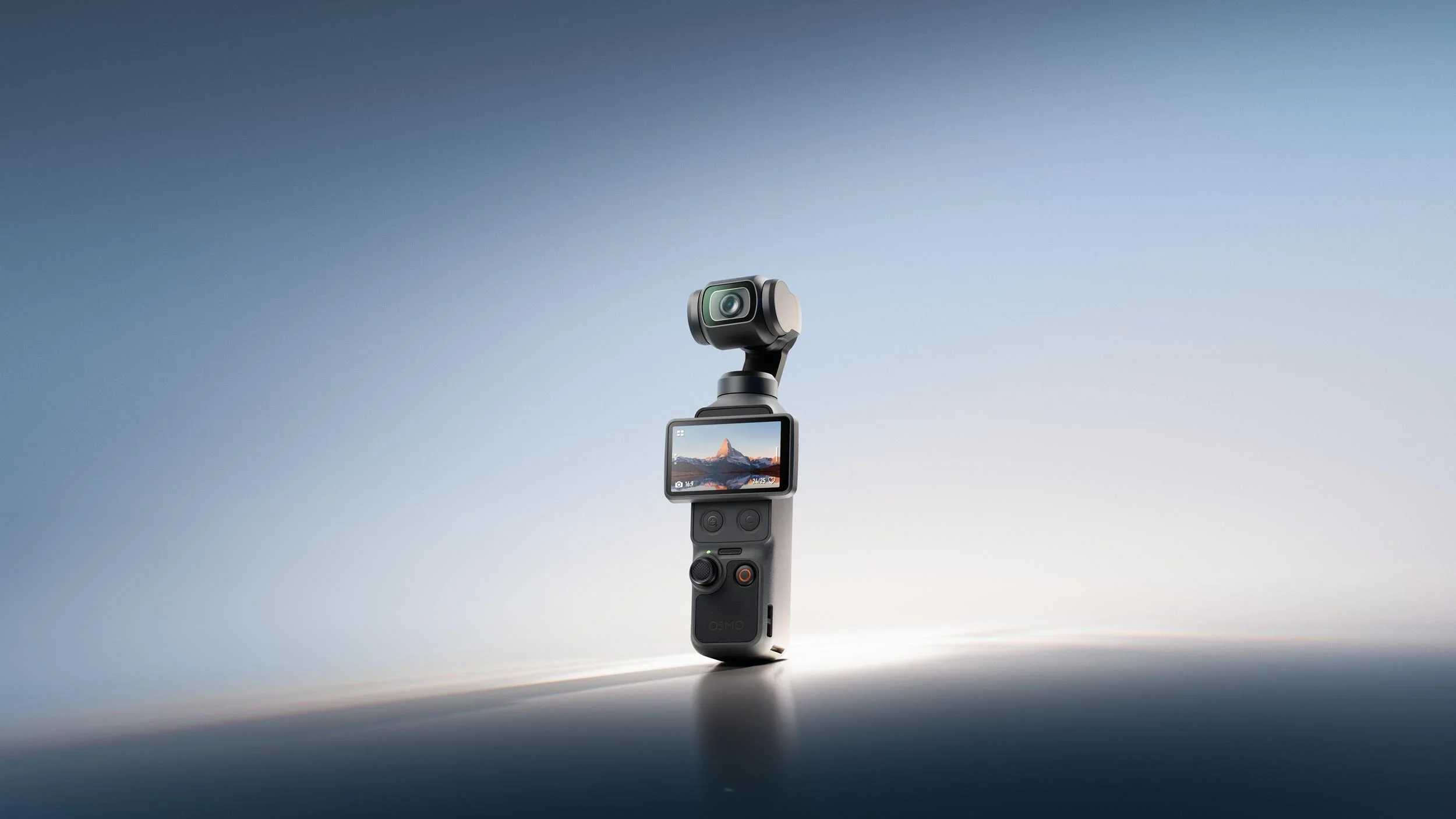
First, the DJI Osmo Pocket 4 (April 16) — a handheld gimbal camera with a 1-inch sensor capable of shooting 4K at 240 frames per second and 6K at 30 frames per second. Professional filmmaking gear, priced around $499 to $599. But here's the catch: it's not available in the United States. The FCC — the Federal Communications Commission, the federal agency that regulates wireless devices — hasn't authorized it, and may never.
Second, the DJI Power 1000 Mini (April 20) — a portable power station with 1,008 watt-hours of capacity. This one is available in the U.S., because it received FCC authorization before the ban took effect. Third, the DJI LITO drone(April 23) — available in two models, the Lito 1 and Lito X1. Both are under 250 grams (about 0.55 pounds), feature a 48-megapixel camera, fly for 30 to 50 minutes, and include LiDAR obstacle avoidance — a sensor system that uses laser light to detect objects and help the drone avoid them automatically. Starting price is around €339. Both LITO models are available in the United States. Fourth, the DJI Mic Mini 2 and 2S (April 28) — a wireless microphone system for content creators. Also available in the U.S.
Here's why some are available and others aren't. In December 2025, the FCC added DJI and other foreign drone manufacturers to its "Covered List" — a national security designation that prevents new products from those companies from getting wireless equipment authorization, which is legally required to sell wireless devices in the United States. Products that received FCC approval before December 22, 2025 are grandfathered in. The LITO squeaked through just days before the cutoff. The Osmo Pocket 4 didn't.
Even though the Osmo Pocket 4 isn't a drone, it still needs FCC authorization because it has wireless components. DJI as a company is on the Covered List, so all new DJI wireless products are affected — cameras, gimbals, microphones, everything.
The LITO's sub-250-gram weight is significant for American buyers. In the United States, drones under 250 grams don't require FAA (Federal Aviation Administration) registration for recreational use — meaning hobbyists can fly one without registering it with the government. That weight threshold exists because lighter drones pose less risk if something goes wrong in the air.
Red Raven's Take: DJI globally isn't going anywhere — they remain the world's largest drone manufacturer and they're continuing to innovate at a scale no competitor can match. But for American buyers, each new product launch is now a question mark: did it get FCC approval before the December cutoff? The LITO appears to be grandfathered in, making it potentially the last new DJI drone Americans can purchase at retail. For agencies and operators still running DJI hardware, this reinforces what we've said before: you need a transition plan, and you need it finalized well before January 1, 2027, when current exemptions expire. Read our full breakdown: DJI Drone Ban Update.
Read more: Tom's Guide | PetaPixel | Newsshooter | DroneXL
Hyfix Raises $15 Million to Build the Chip That Could Replace DJI
You can't build a domestic drone industry on imported silicon. A startup called Hyfix Spatial Intelligence just raised $15 million in seed funding — led by Craft Ventures — to solve that problem at the most fundamental layer.
Hyfix is building an integrated flight control, positioning, and compute chip — essentially, the "brain" of a drone packaged into a single piece of silicon. A flight controller is the component that keeps a drone stable in the air, navigates it where it needs to go, and processes data from its sensors. Right now, many drone manufacturers — even American ones — rely on components that trace back to Chinese supply chains. Hyfix is trying to build that entire capability domestically, from the silicon up.
Red Raven's Take: This is a seed-stage company, which means it's early. But the fact that it's backed by Craft Ventures — the same firm behind other major defense-technology investments — signals serious institutional commitment. The signal is clear: major venture investors see a real market for American-made flight control silicon. This is a long game, not a quick fix, but it's exactly the foundational work the domestic drone industry needs.
Read more: Fortune

FCC “Drone Dominance” — The May 1 Comment Deadline Is Two Weeks Away
We covered this story two weeks ago, but the deadline bears repeating because it directly affects your operational future.
The FCC opened a formal proceeding in early April asking the public to weigh in on how to reduce regulatory barriers, expand access to radio spectrum — the wireless frequencies drones use to communicate — and support domestic drone manufacturing. The proceeding is called "Drone Dominance," and it's designed to create the regulatory environment where companies like Hyfix can succeed. The public comment deadline is May 1, 2026. Reply comments are due May 18.
Red Raven's Take: May 1 is two weeks from today. If you're a drone operator, manufacturer, or program manager and you have opinions about what regulations are holding the industry back — whether it's spectrum access, flight authorization processes, or interstate operations — this is your window. Public comments shape federal policy. The FCC reads them. Submit through the FCC's Electronic Comment Filing System at fcc.gov.
Read more: DroneXL | FCC Public Notice

AeroVironment Launches MAYHEM 10 — A Drone That Does Everything
AeroVironment — one of the largest American defense drone manufacturers and the company behind the Switchblade loitering munition that became well-known during the Ukraine conflict — debuted the MAYHEM 10 on April 15.
A loitering munition is a type of drone that flies to a target area, circles overhead waiting for the right moment, and then engages the target. Think of it as a weapon system with built-in surveillance — it watches, waits, and strikes when the time is right. The MAYHEM 10 carries a 10-pound payload and has a 62-mile range. But what makes it significant is its versatility: it's not a single-purpose weapon.
The MAYHEM 10 can perform ISR (Intelligence, Surveillance, and Reconnaissance — gathering real-time information about what's happening on the ground), electronic warfare (disrupting enemy communications and control signals), strike missions (engaging targets directly), and communications relay (acting as a flying antenna to extend radio coverage for friendly forces). It's the first in a new MAYHEM product line, building on years of combat-proven Switchblade development.
Red Raven's Take: The significance isn't just another military drone — it's a single American-made platform that can switch between intelligence gathering, electronic warfare, communications relay, and strike missions depending on what the operation demands. AeroVironment built its reputation on the Switchblade in Ukraine. The MAYHEM 10 represents the next evolution, and it's being manufactured entirely in the United States.
Read more: Military Times | DefenseScoop
Air Force Awards $270 Million for Solar-Powered Drones Built on Ukraine Combat Data
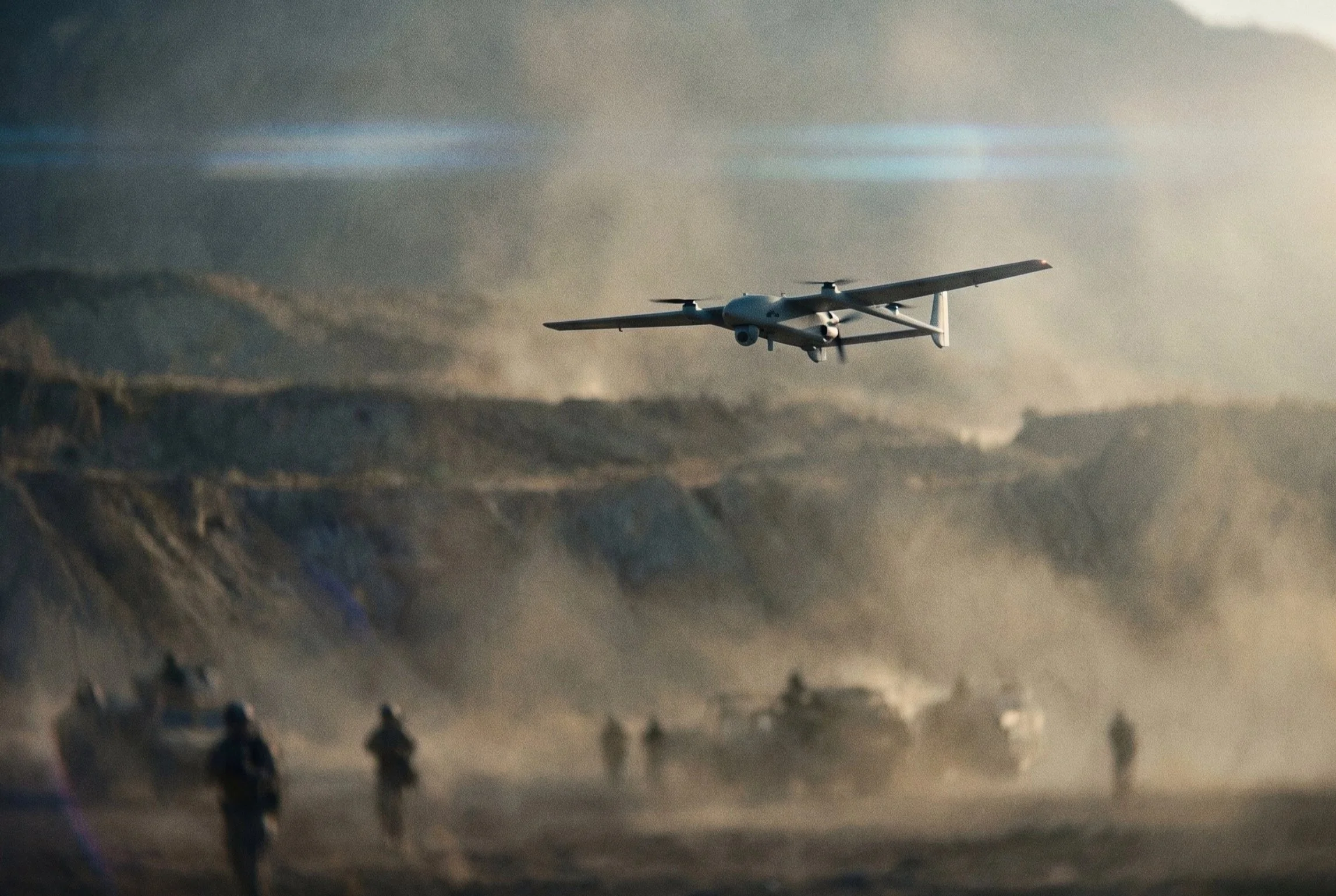
On April 14, the U.S. Air Force awarded a $270 million contract for lightweight, solar-powered drones designed using lessons learned directly from the Ukraine-Russia conflict.
Solar-powered aircraft can stay airborne far longer than battery-powered or fuel-powered alternatives. When the sun powers the engines, flight time isn't limited by battery charge or fuel capacity — meaning continuous surveillance missions that would be impossible with conventional drones. But the real story is the feedback loop: real combat experience from an active war is being translated into American military procurement decisions within months, not years.
Red Raven's Take: This contract shows how fast the military drone innovation cycle has accelerated. Combat data from Ukraine is being incorporated into Air Force procurement in real time. For the broader industry, this signals that the defense side of American drone manufacturing is being resourced at a scale that will inevitably drive technology into commercial applications — the same way GPS and night-vision moved from military to civilian use.
Read more: Stars and Stripes

Ukraine and Germany Strike Drone Production Partnership
On April 14, Ukraine and Germany announced a strategic defense partnership that includes formal cooperation on drone production and technology transfer.
This brings together the nation with the most active drone combat experience in the world and one of Europe's largest industrial economies. It signals that Europe is building its own domestic drone manufacturing capacity — partly to reduce dependency on both U.S. and Chinese systems.
Red Raven's Take: The U.S. isn't the only country racing to build domestic drone capacity. Ukraine has developed more real-world drone combat expertise than any other nation on earth. Germany just formalized a deal to access that knowledge. For American manufacturers, this is both validation — drone capability is a global strategic imperative — and competition. The global drone industrial base is diversifying fast.
Read more: Al Jazeera
The $29 Billion Problem — Counter-Drone Spending Explodes
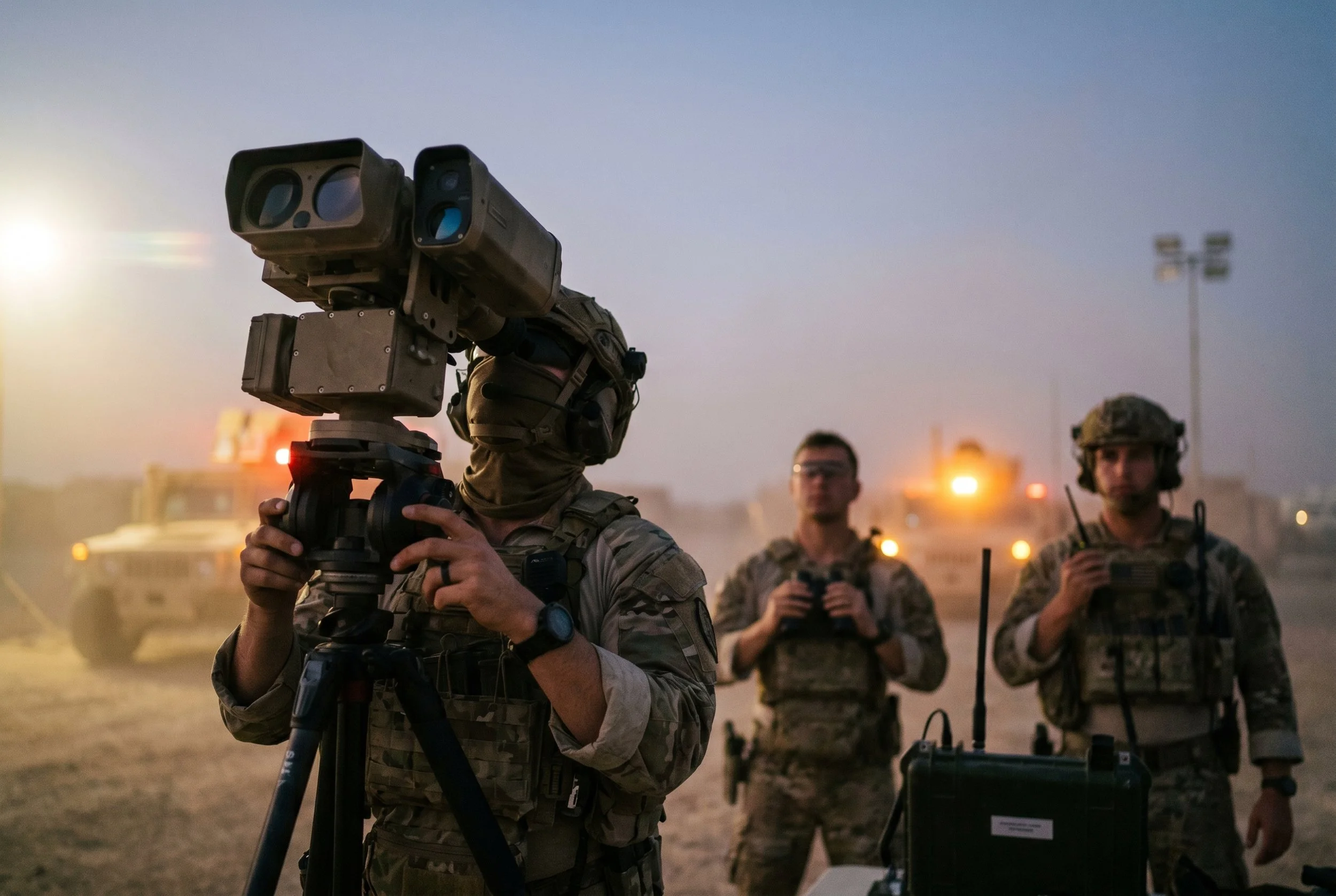
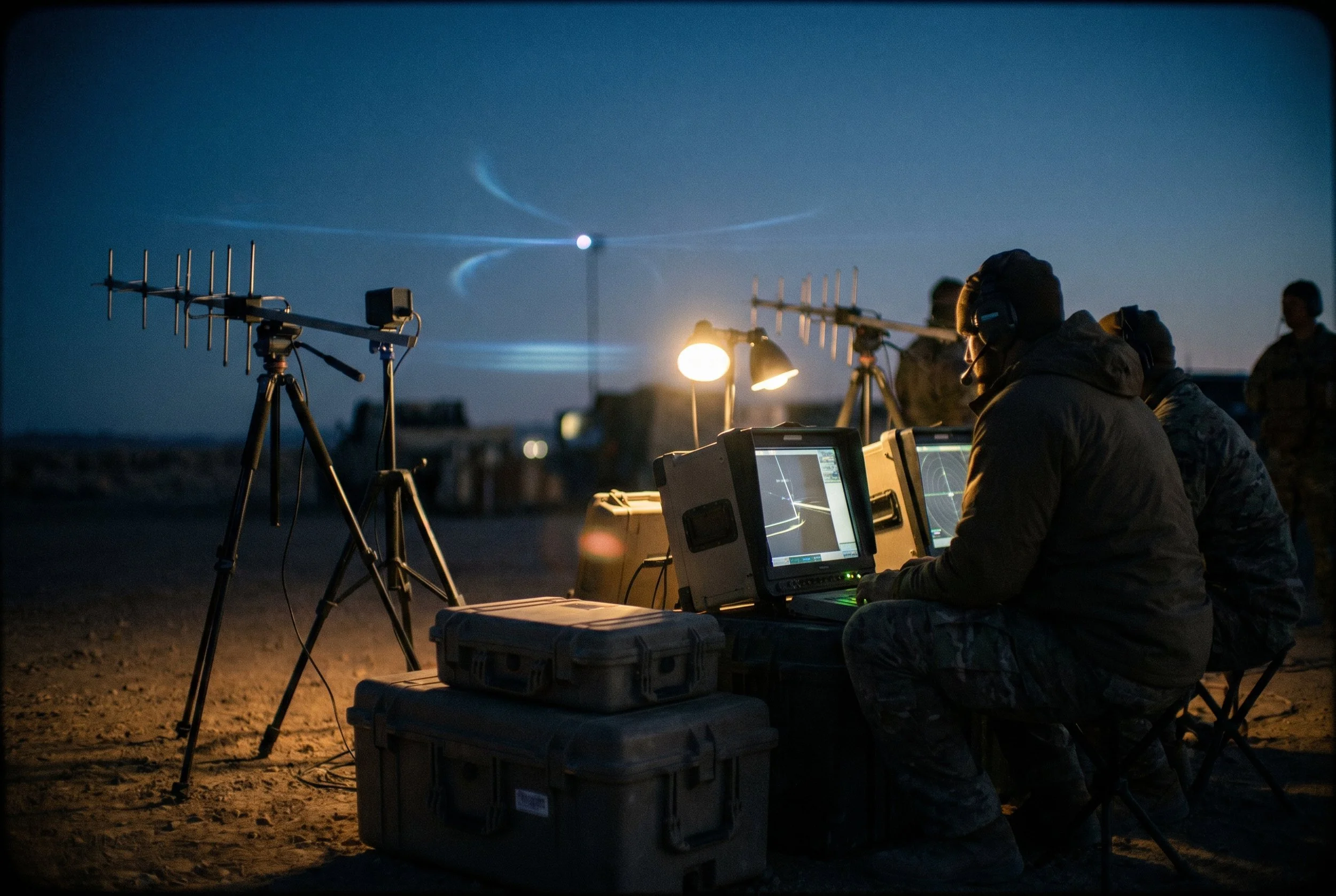
Everything above was about building drones. Everything here is about stopping them. Counter-UAS — short for Counter-Unmanned Aircraft Systems — refers to technologies designed to detect, track, and neutralize unauthorized or hostile drones. That can mean radar that spots incoming threats, jammers that disable control signals, or direct-action systems that physically destroy them. This week, the counter-drone sector proved it's no longer niche — it's mainstream.
Global government counter-UAS spending hits $29 billion in Q1 2026. According to Unmanned Airspace, global government spending on counter-drone technology hit $29 billion in the first quarter of 2026 alone. For context: five years ago, the counter-drone market was barely a $1 billion industry. The pace of growth reflects a global consensus that drone threats are real and require massive investment.
FAA and DOD approve high-energy lasers at the southern border. On April 10, the FAA and Department of Defense agreed to allow high-energy laser counter-drone systems at the U.S. southern border. A high-energy laser is a focused beam of light powerful enough to disable or destroy a drone in flight — without bullets or explosives. This is a landmark policy shift, moving advanced counter-drone technology from testing environments into real-world operational deployment.
Czechoslovak Group launches counter-drone ammunition for standard rifles. On April 16, the Czechoslovak Group (CSG) introduced specialized ammunition that enables soldiers to neutralize drone threats using their standard-issue rifles — no specialist equipment needed. CSG is expanding the product to additional calibers, meaning infantry units worldwide will be able to engage drones with ammunition that fits weapons they already carry.
Marines deploy smart scope optics for drone defense. The 11th Marine Expeditionary Unit equipped approximately 2,500 Marines with smart scope optics mounted on M4 carbines — advanced targeting systems designed to help troops track and engage drones. The unit is operationally deployed in the Middle East right now.
Red Raven's Take: The counter-drone market is no longer niche — $29 billion in a single quarter makes it one of the fastest-growing defense segments in the world. What's striking is the range of approaches: infrastructure-scale laser systems at the border, specialized rifle ammunition, and smart optics for individual Marines. There's no single winning solution. Militaries are building layered defenses — from border infrastructure down to the individual rifleman. For public safety agencies, the takeaway is clear: drone threats are real, the tools to address them are multiplying, and understanding this landscape is increasingly part of operating responsibly.
Read more: Unmanned Airspace | CNN | GlobeNewswire | Task & Purpose
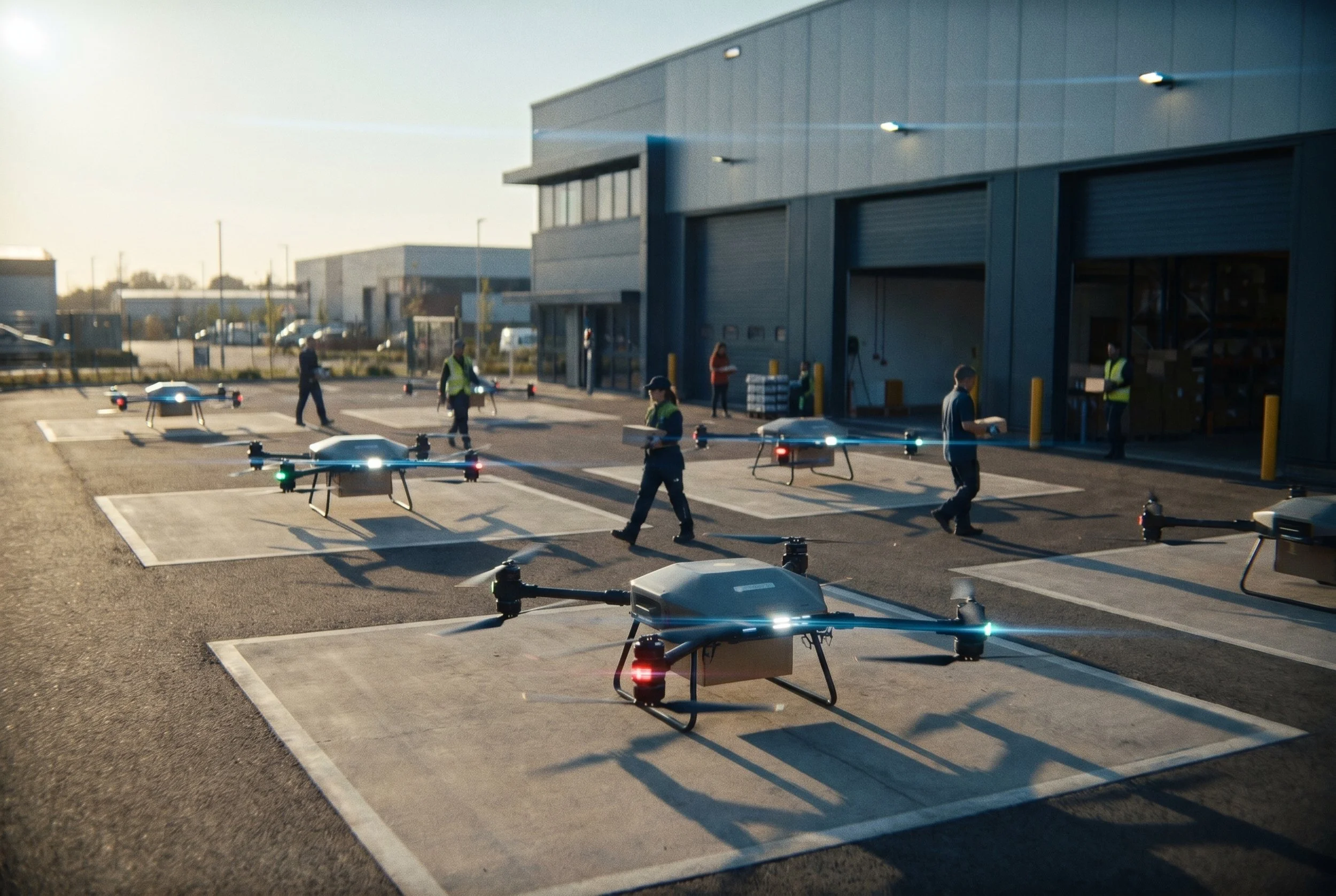
Drone Delivery Keeps Scaling — Friction and All
Last week we covered Amazon Prime Air's community friction in Richardson, Texas — noise complaints, a crash, and a city council threatening to pull the plug. This week, Amazon announced it's not slowing down. They're accelerating.
Amazon Prime Air targets 30 million customers by year-end. Amazon CEO Andy Jassy announced an aggressive initiative to move beyond same-day delivery to same-hour delivery using drones. New facilities are opening in the south Chicago suburbs, each equipped with 12 to 20 drones, with service launching by late spring or early summer 2026.
DoorDash launches drone delivery in Atlanta. On April 8, DoorDash — the third-party delivery giant — launched drone delivery operations in parts of metro Atlanta. This signals that drone delivery is no longer just Amazon, Wing, and Zipline territory. Traditional delivery platforms are entering the market.
Red Raven's Take: Amazon is facing community friction in one city and responding by expanding to 30 million customers. DoorDash just entered Atlanta. The delivery companies aren't slowing down — they're accelerating. The operators who succeed will be the ones who build community engagement into their programs from day one. Social license to operate is as important as the FAA certificate. That principle applies to any organization deploying drones in populated areas — delivery companies, law enforcement agencies, and enterprise operators alike.

Part 107 Pass Rates Drop to Record Lows — While Test Volume Hits an All-Time High
Part 107 is the FAA certification required to fly drones commercially in the United States. If you want to fly a drone for any business purpose — photography, inspections, deliveries, public safety — you need this certificate. It's a legal requirement, not a suggestion.
The FAA Part 107 exam — officially called the "Remote Pilot Knowledge Test" — saw 73,914 test attempts in 2025. That's the highest volume ever recorded. But the pass rate dropped to 82.96% — an all-time low. That means roughly 12,600 people failed the exam last year. More people are entering the pipeline than ever before, but preparation quality is slipping.
Red Raven's Take: This is the human side of everything else in this briefing. The industry is building chips, airframes, countermeasures, delivery networks, and regulatory frameworks at historic speed — but none of it works without qualified pilots. Record test volume means demand is growing. A declining pass rate means too many people are showing up underprepared. The Part 107 exam covers airspace, weather, regulations, and operations that directly affect safety. If you're preparing, invest in structured instruction that teaches the material — not just a question bank. Our Part 107 course is built to get you through on your first attempt. Read our full guide to passing the Part 107 exam.
Read more: The Drone Girl
What This Week Means
Every layer of the drone ecosystem moved simultaneously. From silicon (Hyfix raising $15M for American-made flight control chips) to airframes (MAYHEM 10 multi-role military drones, DJI LITO consumer drones) to procurement ($270 million Air Force contract for solar-powered platforms) to countermeasures ($29 billion in government counter-drone spending, border lasers, rifle-mounted solutions) to delivery infrastructure (Amazon scaling to 30 million customers, DoorDash entering Atlanta) to regulation (FCC May 1 comment deadline) to workforce (Part 107 test volume at record highs, pass rates at record lows).
The organizations building programs now — not waiting for clarity, not studying the market, but actually moving — are the ones that will be ready when January 1, 2027 arrives and exemptions expire. The ones waiting will be scrambling.
For breaking drone news as it happens — and our weekly debrief on what matters most — check out The Briefing Room.
-
Will the DJI LITO be available in the United States?
Yes. Both the LITO 1 and LITO X1 received FCC approval in late November and early December 2025, before the December 22 cutoff date. They're grandfathered in under the Covered List rules and can be legally sold in the U.S. This makes the LITO potentially the last new DJI drone Americans can purchase at retail.
What is the FCC Covered List and how does it affect DJI products?
The Covered List is a national security designation that prevents companies on the list from getting new wireless equipment authorizations in the United States. DJI was added in December 2025. Products approved before December 22, 2025 are grandfathered in. New products cannot get authorization and cannot be legally sold in the U.S. — even non-drone products like cameras that have wireless components.
Can I still buy DJI products in the United States?
Yes, with caveats. Products authorized before December 22, 2025 — including existing DJI drones, the LITO, the Mic Mini 2/2S, and the Power 1000 Mini — can be sold. New products pending authorization, like the Osmo Pocket 4, cannot. Current exemptions expire January 1, 2027.
What is the AeroVironment MAYHEM 10?
The MAYHEM 10 is a multi-role military drone that can perform intelligence gathering, electronic warfare, communications relay, and strike missions. It carries a 10-pound payload, has a 62-mile range, and is the first in AeroVironment's new MAYHEM product line building on the combat-proven Switchblade family.
Why did the Air Force award $270 million for solar-powered drones?
Solar-powered drones can stay airborne far longer than battery or fuel-powered alternatives, enabling persistent surveillance. The contract incorporates lessons learned from the Ukraine conflict, showing how active combat data now directly shapes American military procurement.
How much are governments spending on counter-drone technology?
Global government counter-UAS spending hit $29 billion in Q1 2026 alone — from a market that was under $1 billion just five years ago. This includes detection systems, jamming technology, lasers, and specialized ammunition designed to address drone threats at every level.
What are the latest Part 107 test pass rates?
In 2025, 73,914 people attempted the FAA Part 107 Remote Pilot Knowledge Test — an all-time record. But the pass rate dropped to 82.96%, also a record low. Roughly 12,600 people failed, suggesting many are showing up underprepared despite growing demand.
Is Amazon still expanding drone delivery despite community pushback?
Yes. Despite community friction in Richardson, Texas, Amazon announced plans to reach 30 million customers with Prime Air drone delivery by year-end 2026. DoorDash also launched drone delivery in Atlanta in April 2026.
Links & Resources
Part 107 Online Course: https://www.redravenuas.com/part107
DJI Drone Ban Update: https://www.redravenuas.com/podcast/weekly-briefing-2026-04-17
How to Pass the FAA Part 107 Exam: https://www.redravenuas.com/blog/pass-part-107-exam-2026
How to Build a Public Safety Drone Program: https://www.redravenuas.com/blog/build-public-safety-drone-program-guide
Drones in Law Enforcement: https://www.redravenuas.com/blog/drones-law-enforcement
News & Briefing Room: https://www.redravenuas.com/news
Services: https://www.redravenuas.com/services
Contact: https://www.redravenuas.com/contact
About Red Raven UAS
Red Raven UAS was founded by public safety and drone industry veterans who understood the gap between having drones and knowing how to deploy them effectively. Our team brings together decades of real-world operational experience — including building one of the nation's first major public safety drone programs — and deep expertise in the commercial UAS sector across energy, utilities, and infrastructure.
We work with utility operators, energy companies, and infrastructure organizations to build drone inspection programs designed around their specific assets, workflows, and operational requirements — not a generic course deck. No hardware sales. No one-size-fits-all curriculum. Just field-tested instruction and independent program development guidance from people who have actually built and operated UAS programs at scale.
From initial program assessment and ROI modeling through pilot training, SOP development, and data workflow design, Red Raven delivers the full program infrastructure utilities need to deploy drones effectively — and keep them performing.
Explore More