UAS Weekly Briefing — June 5, 2026: FAA Cargo Drone Reviews, Motorola’s $1.5B Counter-Drone Bet, and the World Cup TFR Trap
A cargo drone that just cleared an important FAA review step. A $1.5 billion bet that counter-drone technology is moving into the public safety mainstream. A million packages delivered by drone. And a web of easy-to-miss World Cup airspace restrictions that could ground new pilots this summer.
This is your weekly briefing. Six stories. What happened, what it means, and what you should do about it.
Blueflite’s Cargo Drone Joins the FAA Section 44807 Approved UAS List
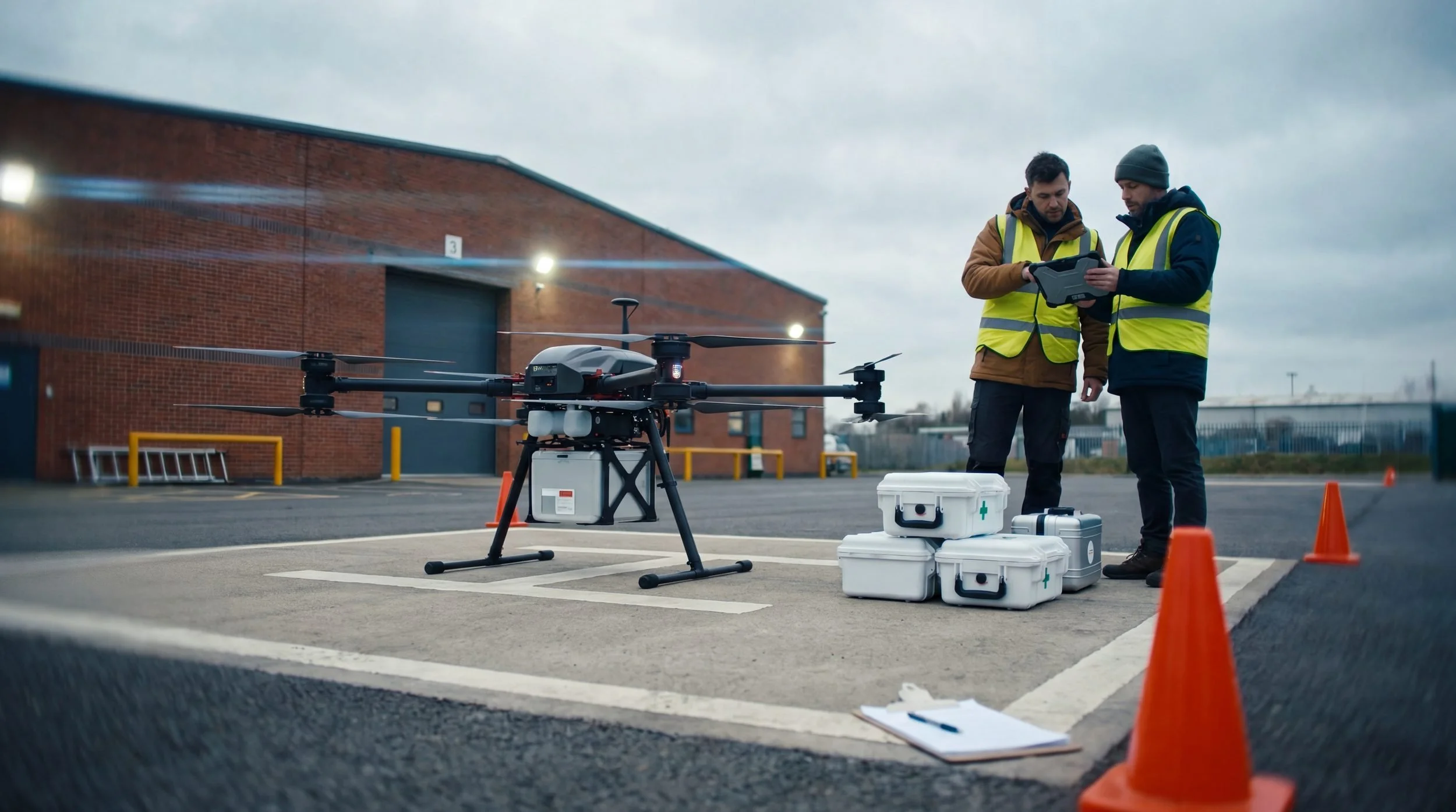
DroneLife reported on June 4 that Michigan-based blueflite’s Cobalt 461 cargo drone has been added to the FAA’s Section 44807 Approved UAS List. That sounds technical, but it matters for anyone watching drone logistics, medical delivery, public safety resupply, or heavier commercial operations.
Section 44807 is the FAA pathway used for certain advanced or non-standard drone operations that do not fit neatly inside normal Part 107 rules. The important detail: blueflite’s Cobalt 461 appearing in the FAA’s Specific Application Approved UAS appendix does not mean every operator can fly it tomorrow. Operators still need their own operational approvals. It is also not the same thing as type certification.
What it does mean is that the aircraft itself has already gone through FAA review for this category of application. That can reduce uncertainty for future operators because they are not starting the aircraft review from zero. DroneLife also noted that the Cobalt 461 has a maximum takeoff weight of 54.98 pounds, putting it just under the 55-pound threshold that separates standard small UAS rules from heavier-aircraft requirements.
For organizations trying to move real cargo by drone, that is the story: not “blanket approval,” but one more piece of the regulatory path getting clearer.
Red Raven’s Take
If your agency, utility, hospital system, or logistics team is evaluating cargo drones, do not treat aircraft announcements as operational approval. Ask two separate questions: has the aircraft been reviewed by the FAA, and does your specific operation have approval to fly? Blueflite’s update is encouraging because it may make future applications easier, but the operator still owns the safety case, procedures, training, and paperwork.
Read more: Blueflite Added to FAA Section 44807 Approved UAS List — DroneLife and Section 44807 — FAA
Motorola Bets $1.5 Billion on Counter-Drone Security
Motorola Solutions — the company behind radio, dispatch, and video systems used by many police and fire departments — announced on June 1 that it will acquire D-Fend Solutions for $1.5 billion. D-Fend specializes in non-kinetic counter-drone technology. Instead of physically shooting a rogue drone out of the sky, D-Fend’s system uses RF cyber-takeover methods to identify, take control of, and safely redirect unauthorized drones where that type of mitigation is legally permitted.
D-Fend already has deployments in more than 30 countries, primarily for military and high-security events. Motorola’s acquisition signals something bigger: counter-drone capability is moving out of the military and special-event niche and into the everyday public safety and enterprise technology stack.
For agencies that already run Motorola command-and-control, dispatch, or surveillance systems, drone detection may eventually become part of the same operational picture. The mitigation side is more legally sensitive, but the market signal is clear: airspace security is becoming part of the public safety technology stack.
For the broader drone industry, this is also a compliance signal. As counter-drone detection becomes more common at venues, campuses, critical infrastructure sites, and government facilities, legitimate drone operators will need to be even more disciplined about airspace authorizations, documentation, Remote ID, and flight planning.
Red Raven’s Take
If you manage a public safety drone program or enterprise security operation, this acquisition is your cue to start asking how drone detection will fit into your broader command picture. If you fly commercially, the takeaway is simpler: unauthorized flights will be easier to spot. Make sure your pilots are trained on airspace compliance and that every flight includes a documented pre-flight airspace check.
Read more: Motorola Solutions to Acquire D-Fend Solutions — Motorola Solutions
Walmart Passes 1 Million Drone Deliveries
Walmart announced it has now completed more than one million drone deliveries across 66 stores in four states. The company works with delivery providers including Wing (owned by Google’s parent company Alphabet) and Zipline, and says that 40 percent of those deliveries happened in just the first quarter of this fiscal year alone. Average delivery time: 23 minutes from order to doorstep.
This is not a pilot program anymore. One million deliveries — with acceleration — is an operating network. And the model is surprisingly simple: short-range flights carrying small, urgent convenience items (think medicine, snacks, phone chargers) from stores that are already close to the customer.
For aspiring drone pilots and people exploring the commercial drone business, this story answers a question that gets asked constantly: where is drone delivery actually working? The answer is not cross-country cargo flights or rural medical supply drops (those are still in earlier stages). It is suburban convenience delivery tied to retail locations that already exist.
For the industry, the bigger signal is volume. Once a drone delivery network crosses one million deliveries, it produces safety data, operational patterns, and a regulatory track record that can help shape how routine drone delivery is evaluated. Walmart’s numbers help the entire ecosystem without guaranteeing any automatic rule change.
Red Raven’s Take
If you are considering a career in commercial drones, delivery operations are creating real jobs — not just pilot seats, but maintenance, logistics, and ground operations roles. Start with your Part 107 certification to make yourself eligible, and keep an eye on delivery operators like Wing and Zipline who are actively hiring in their expansion markets.
Read more: Walmart Celebrates 1 Million Drone Deliveries — Walmart Corporate
World Cup Drone TFRs Are a New Pilot Trap
If you fly a drone — for fun or for work — this is the story you need to read most carefully this week.
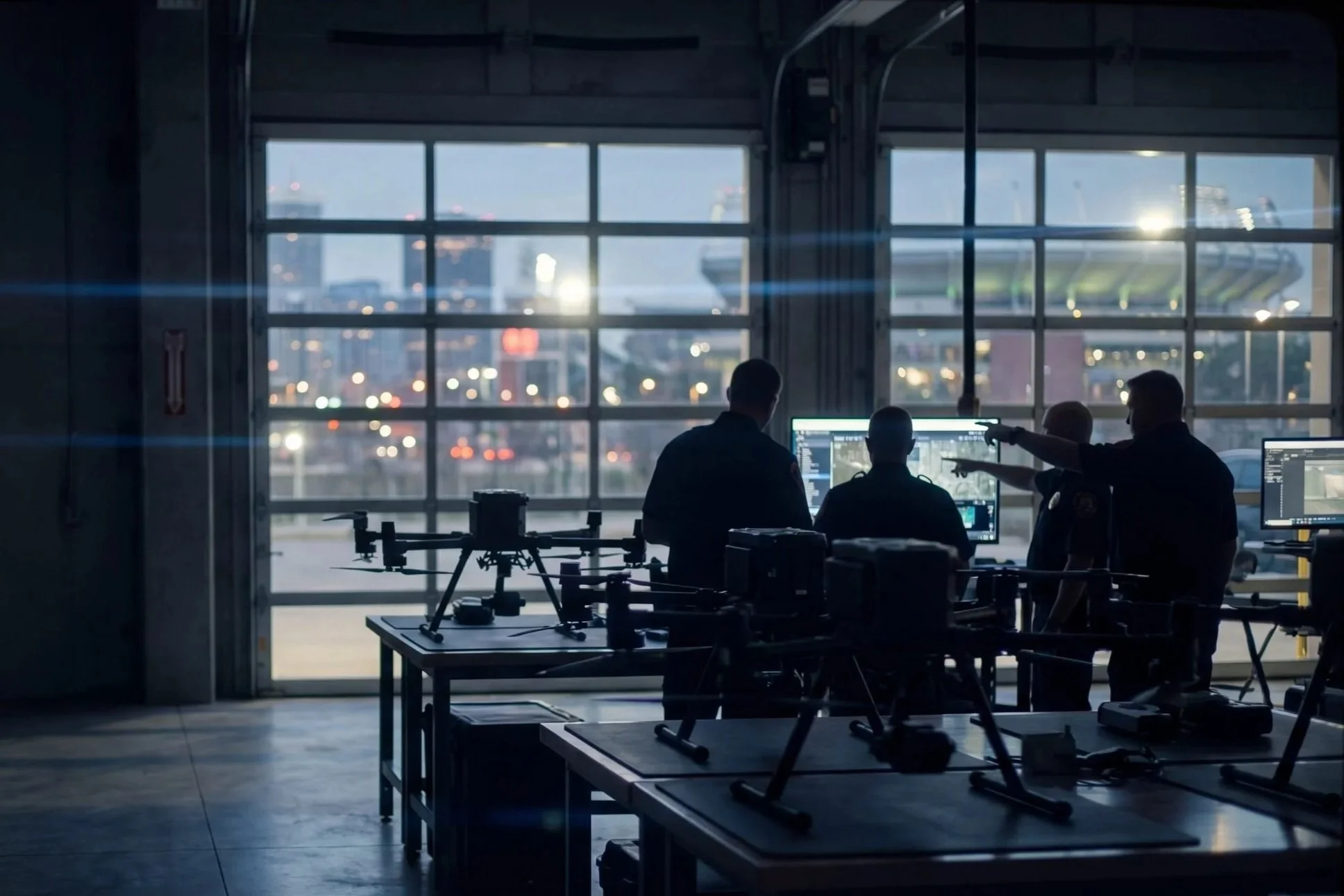
The 2026 FIFA World Cup is being hosted across North America, with major events in the United States, and the FAA has established Temporary Flight Restrictions, or TFRs, around U.S. event sites. A TFR is a temporary FAA restriction on specific airspace. Drone operations inside those areas are prohibited unless specifically authorized, and violations can bring serious civil penalties, certificate action, or criminal exposure.
Here is where it gets tricky: the World Cup TFRs do not just cover stadiums and fan zones. DroneXL reported that there are now more than 100 drone-only TFRs covering team hotels and training camps — locations that are miles away from any host stadium. Some of these restrictions run continuously from June 1 all the way through July 21, with a 1-nautical-mile ring from the surface up to 400 feet above ground level.
That means you could be in a completely residential area, nowhere near a soccer match, and still be inside a World Cup TFR. A beginning pilot who does not check airspace restrictions before every flight could launch, have a perfectly normal flight, and not realize they just committed a federal violation.
The practical takeaway is as simple as it gets: before every single flight this summer, check B4UFLY or the FAA’s TFR page for active restrictions. Do this even if you are flying in a spot you have flown a hundred times before. These TFRs are new, widespread, and temporary — which means your usual flying spot might be restricted today and clear next month.
If you are studying for Part 107, this is a perfect real-world example of why airspace knowledge matters. Understanding how to read TFRs and NOTAMs (Notices to Air Missions — official FAA alerts about temporary airspace changes) is not just a test topic. It is the difference between a safe, legal flight and a federal problem.
Red Raven’s Take
This is the new-pilot story of the week. Check airspace before every flight from now through the end of July, even when you are flying somewhere familiar. If you are still learning, take 10 minutes to review our airspace guide and practice checking TFRs before your next launch.
Read more: World Cup Drone TFRs Extend Far Beyond Host Cities — DroneXL
Westmag Raises $11M to Build American Drone Motors
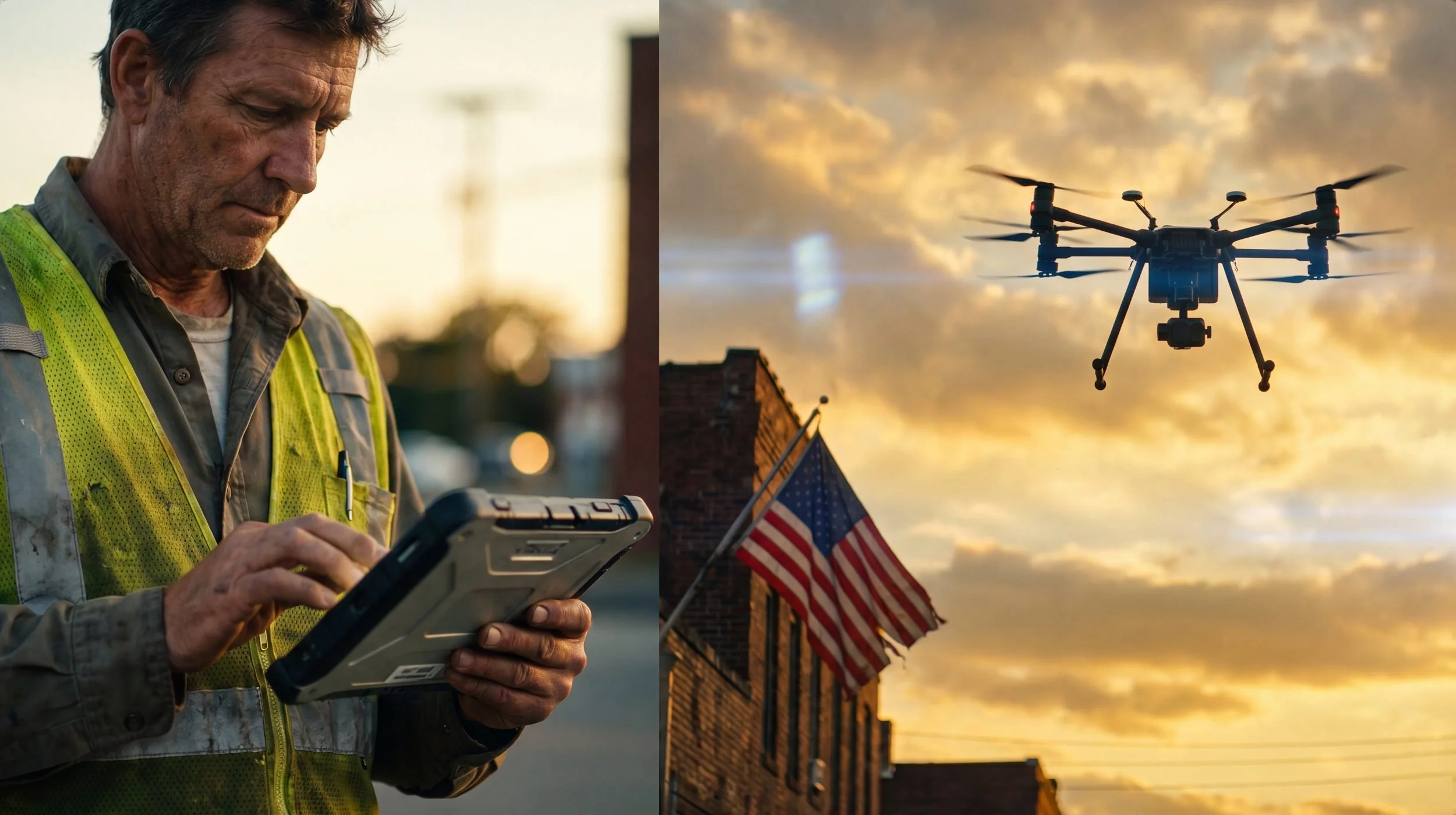
A company called Westmag just emerged from stealth — meaning it has been operating quietly without public announcements — with $11 million in seed funding. Their mission: build drone motors and robot actuators (the mechanical components that make a drone’s parts move) right here in the United States, at a factory in South San Francisco.
Why does this matter? Because the U.S. drone supply-chain debate is not really about who assembles the final drone. It is about who makes the components inside it. Motors, magnets, and actuators — the parts that actually make drones fly — have historically depended heavily on manufacturing in China. When the U.S. government talks about banning certain drones for national security reasons, the underlying concern is about these core components and where they come from.
Westmag is targeting that exact gap. If FCC restrictions and national-security rules keep reshaping which drones can be sold and operated in the United States, having a domestic source for critical components like motors becomes essential. You cannot build an “American-made drone” if the motor inside it still comes from a restricted supply chain.
For drone manufacturers and program managers evaluating their fleet options, this is a supply-chain story worth tracking. The availability of domestically sourced components directly affects which platforms will be considered compliant under evolving federal procurement rules.
Red Raven’s Take
If you manage a drone program for a government agency, utility, or enterprise — especially one subject to NDAA compliance requirements — start asking your drone vendors about their component supply chains now. “Assembled in America” is not the same as “made with American components.” Companies like Westmag represent where the supply chain is heading, and understanding that trajectory helps you make smarter procurement decisions today.
Read more: Westmag Raises $11M for American-Made Drone Motors — DroneXL
Amazon Pitches a 176-Square-Mile Prime Air Drone Zone in Central New York
Amazon held a June 2 community event in Clay, New York, as it works toward launching Prime Air drone delivery from its existing Morgan Road facility near Syracuse. The proposal would create a delivery zone of roughly 176 square miles, serving customers within about 7.5 miles of the facility if Amazon clears both FAA and local approvals.
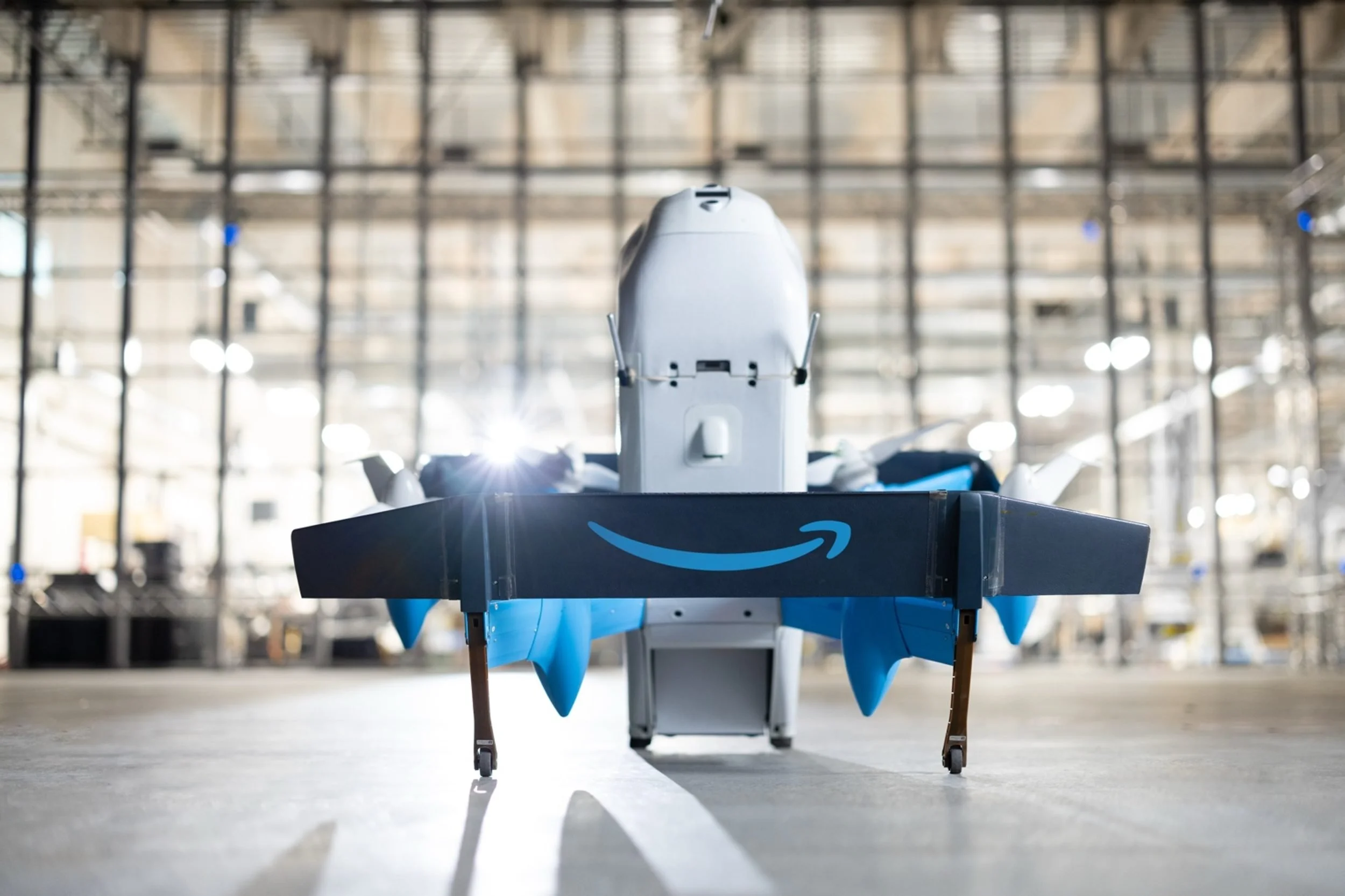
Source: Amazon
This is not approved yet, and that distinction matters. The FAA controls the airspace side of the operation. The local planning process controls whether Amazon can add the launch infrastructure and operate from that site. Drone delivery is increasingly about both: aviation approval and community acceptance.
The consumer angle is obvious. Amazon is trying to make drone delivery feel normal: small packages, short flights, local launch sites, and delivery speed measured in minutes or hours instead of days. But the operational story is just as important. As delivery zones expand, communities will be asking practical questions about noise, privacy, wildlife, weather, and what happens when commercial drone routes overlap with recreational flying areas.
For new pilots, this is also a glimpse of where the jobs are. The future of drone delivery is not just one person flying one drone with a controller. It is operations, maintenance, fleet monitoring, safety procedures, airspace coordination, ground logistics, and public communication.
Red Raven’s Take
If you are a new pilot, watch delivery expansion for the career path, not just the novelty. Part 107 is still the baseline, but delivery networks need people who understand airspace, checklists, maintenance discipline, safety culture, and how drone operations affect the public on the ground. If you are an agency or city leader, Amazon’s Clay proposal is a reminder that the hard part is not only the aircraft. It is earning trust before the aircraft launches.
Read more: Amazon Prime Air Drone Delivery Community Event — Town of Clay and Amazon Eyes a 176-Square-Mile Drone Zone in N.Y. — DroneXL
-
What is FAA Section 44807 and why does the Blueflite update matter?
Section 44807 is an FAA pathway for certain drone operations that do not fit neatly under standard Part 107 rules. Blueflite’s Cobalt 461 appearing in the FAA’s Specific Application Approved UAS appendix means the aircraft has already been reviewed for that category of application. It does not give operators blanket permission to fly; they still need their own operational approvals.
What is a TFR and how do I check for one before flying?
A TFR is a Temporary Flight Restriction — a temporary FAA restriction on specific airspace. Drone operations inside a TFR are prohibited unless specifically authorized. You can check for active TFRs using B4UFLY, approved airspace tools, or the FAA’s TFR page online. You should check before every flight, even in locations you have flown before.
How do the World Cup drone restrictions affect recreational pilots?
The FAA has established more than 100 drone-specific TFRs for the 2026 FIFA World Cup, covering not just stadiums and fan zones but also team hotels and training camps. Some of these are in residential areas miles from any match. If you fly a drone — even as a hobbyist — you need to check B4UFLY before every flight this summer through the end of July.
What is counter-drone technology and why is Motorola investing in it?
Counter-drone technology detects, tracks, and in some cases takes control of unauthorized drones. Motorola’s $1.5 billion acquisition of D-Fend Solutions signals that drone detection is moving from military-only use into the everyday public safety technology stack — potentially becoming part of the same systems police and fire departments already use for dispatch and video surveillance.
Do I need a Part 107 license to fly a drone commercially?
Yes. The FAA requires anyone flying a drone for commercial purposes — meaning any flight connected to a business or for compensation — to hold a Part 107 Remote Pilot Certificate. This applies whether you are doing drone deliveries, aerial photography, inspections, or any other paid work. Red Raven’s Part 107 courseis the fastest way to prepare for the exam.
What does NDAA-compliant mean for drones?
NDAA stands for the National Defense Authorization Act. In drone procurement, “NDAA-compliant” generally refers to platforms and components that meet certain federal restrictions around prohibited manufacturers, countries of origin, and supply-chain security. The exact requirement depends on the buyer and mission, so agencies should ask vendors for written compliance documentation rather than relying on a marketing label.
Where is drone delivery actually working right now?
Walmart’s million-delivery milestone shows that drone delivery is currently scaling in suburban areas, covering short distances from retail stores to nearby customers. The model is small, urgent convenience items — not large packages or long-distance cargo. Wing and Zipline are two of the major delivery providers operating these networks.
Why is Amazon’s Clay, New York Prime Air proposal important?
Amazon’s Clay proposal shows how consumer drone delivery is expanding through local launch sites, short delivery radii, and community approval processes. The operation is not approved yet; Amazon still needs the required FAA and local permissions. For new pilots, the story is useful because it shows that delivery-drone careers involve operations, maintenance, safety systems, airspace coordination, and public trust — not just stick time.
Links & Resources
- Part 107 Online Course: https://www.redravenuas.com/part107
- On-Site Drone Training: https://www.redravenuas.com/training
- Drone Program Development & Consulting: https://www.redravenuas.com/consulting
- Industry News & Briefings: https://www.redravenuas.com/news
- Red Raven Podcast: https://www.redravenuas.com/podcast
- Drones in Law Enforcement: https://www.redravenuas.com/blog/drones-law-enforcement
- Drone as First Responder (DFR): https://www.redravenuas.com/blog/drone-first-responder-dfr
- How to Build a Public Safety Drone Program: https://www.redravenuas.com/blog/build-public-safety-drone-program-guide
- Drone Inspection Programs for Utilities & Energy: https://www.redravenuas.com/blog/utility-drone-inspection-program
- FCC Drone Ban Update: https://www.redravenuas.com/blog/fcc-drone-ban-update
- Part 107 Complete Study Guide: https://www.redravenuas.com/blog/pass-part-107-exam-2026
About Red Raven UAS
Red Raven UAS was founded by public safety and drone industry veterans who understood the gap between having drones and knowing how to deploy them effectively. Our team brings together decades of real-world operational experience — including building one of the nation's first major public safety drone programs — and deep expertise in the commercial UAS sector across energy, utilities, and infrastructure.
We work with utility operators, energy companies, and infrastructure organizations to build drone inspection programs designed around their specific assets, workflows, and operational requirements — not a generic course deck. No hardware sales. No one-size-fits-all curriculum. Just field-tested instruction and independent program development guidance from people who have actually built and operated UAS programs at scale.
From initial program assessment and ROI modeling through pilot training, SOP development, and data workflow design, Red Raven delivers the full program infrastructure utilities need to deploy drones effectively — and keep them performing.
Explore More