UAS Weekly Briefing — May 29, 2026: The U.S. Drone Industrial Base Surge, the DJI Ban Narrative Cracks, and Matternet Goes Public
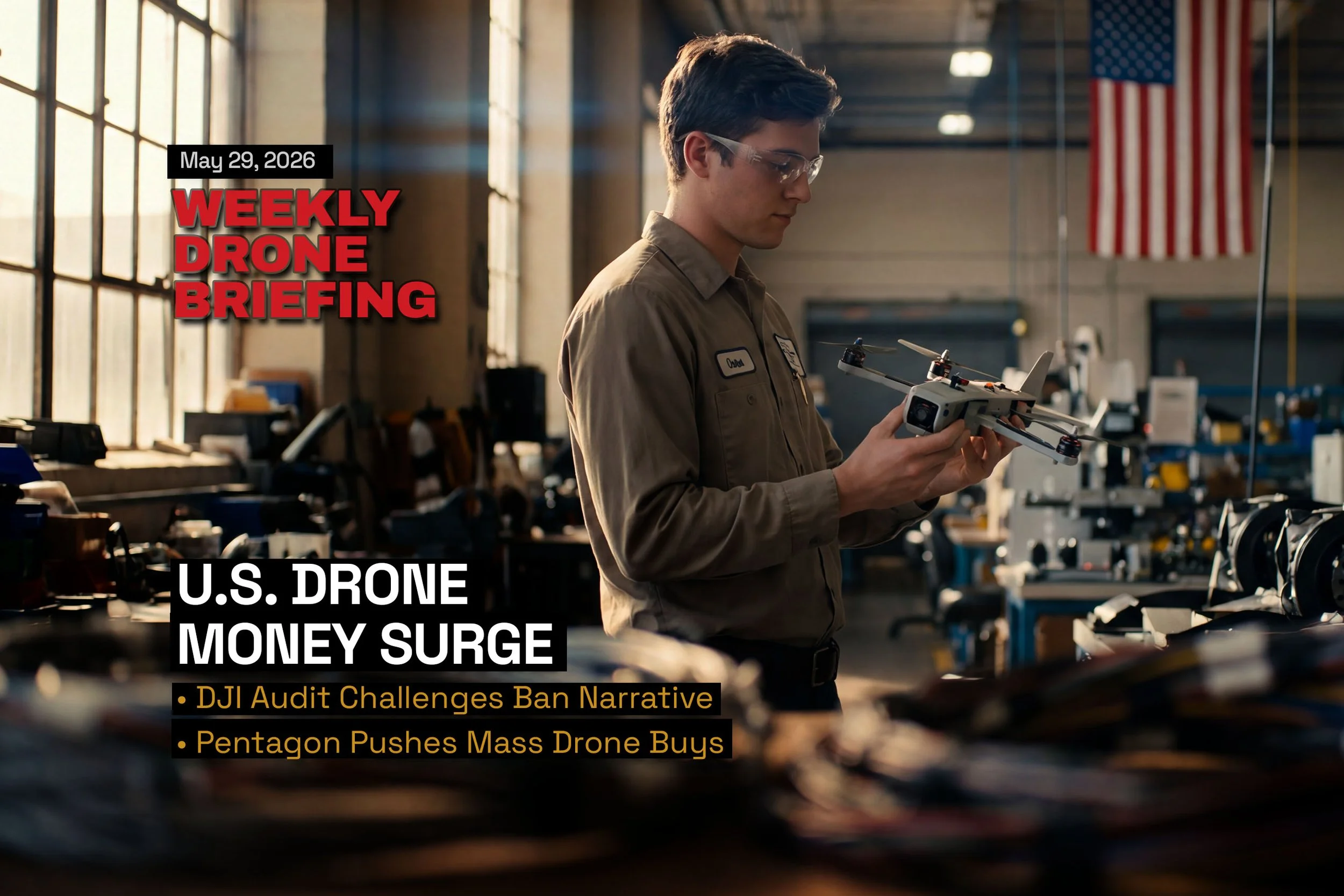
The big shift this week wasn't in any single regulation — it was in the gravity of where money and momentum are pulling the industry. Washington started moving from talking about a domestic drone base to actually trying to fund it. DJI released an independent security audit on the same day public comments showed how many American operators still depend on Chinese and foreign-made aircraft. A drone delivery company with FAA type certification raised $33 million as part of a go-public transaction. A Louisiana district attorney quietly built one of the most interesting small-agency public safety funding models we've seen. And a brand-new market report says the drone services industry is on track for major growth over the next decade.
If you're flying for a job, building a program, or just trying to figure out which aircraft will still be sold in the U.S. next year — five storylines this week deserve your attention. Here's what happened, who it affects, and what to do about it.
Prefer audio? Listen to the full podcast below or open the episode page.
The U.S. Drone Industrial Base Surge — Funding Talks, Pentagon Mass Buys, and Three New FCC Approvals
Two big stories this week pulled in the same direction: the U.S. government is moving from talking about building a domestic drone industry to actually paying for it.
Bloomberg and CNBC reported that the Trump administration is exploring direct funding deals with American drone manufacturers and suppliers to scale production and push prices down. The stock market reacted immediately. Shares of Unusual Machines — a small Florida company that makes drone components — closed up 57% on May 28. Red Cat Holdings, which builds drones for the U.S. military, jumped 33%. AeroVironment (the company behind the Switchblade loitering munition and the Puma reconnaissance drone) rose 18%. Defense contractor Kratos gained 14%. That's the market saying it believes federal money is about to land somewhere in the domestic drone supply chain.
Meanwhile, NBC News reported the Pentagon ran a competition at Fort Benning, Georgia designed around buying very large quantities of low-cost drones. Military pilots tested explosive drones head-to-head. The Pentagon's stated goal is to be able to purchase 300,000 drones — a number that would have sounded absurd two years ago. The competition format itself is the news. Instead of running one multi-year procurement contract, the Pentagon is essentially holding tryouts to figure out which American-built drones are good enough to mass-produce.
Both stories sit alongside a quieter but related FCC action. DroneLife reported the FCC added three more companies to its conditional approval list: Blueflite (a Michigan-based delivery drone maker), Verity AG (a Swiss company that makes autonomous indoor inventory drones), and Air VEV (an Israeli aircraft developer). The conditional approval pathway is a temporary, case-by-case lane for specific systems and components that have cleared the required review while the broader regulatory process plays out.
In plain English: the FCC keeps something called a “Covered List.” Drones and critical components affected by that framework can be blocked from receiving new equipment authorizations in the U.S., which effectively limits what can be newly imported or sold. The conditional approval list is the opposite — it's a narrow lane for specific manufacturers that have passed the review process. The three companies added this week aren't household names, but the pathway matters more than the names. It signals that the U.S. regulatory system is not trying to wipe out every non-American drone — it's trying to build a vetted supply chain alongside the restrictions.

Red Raven's Take
For procurement teams at utilities, public safety agencies, and enterprise drone programs — pay attention to the conditional approval list, not just the headlines. If the aircraft you've been waiting on is on that list, your purchasing timeline may have changed. If your fleet decisions are still pinned to DJI or Autel, build a parallel evaluation track now for two or three viable alternatives so you're not scrambling later. The federal money will land somewhere — your job is to know which aircraft will be available, supported, and affordable when it does.
Read more: U.S. government reportedly set to invest in drone industry — CNBC • Pentagon’s 300,000-Drone Competition at Fort Benning — NBC News • FCC Adds Blueflite, Verity, and Air VEV to Approval List — DroneLife
The DJI Ban Narrative Hits Real-World Friction
Two stories this week made the DJI ban debate harder to argue in absolute terms — and a third one showed how far the ban's reach actually extends.
First, DJI released an independent security assessment of its Air 3S consumer drone and Matrice 4E enterprise drone, conducted by an outside cybersecurity firm called OnDefend. The audit reported no critical, high, or medium-risk findings. That's a notable result. The U.S. government case for banning DJI has leaned heavily on the argument that DJI aircraft pose national security risks because of how they handle data. An independent audit reporting no significant security issues doesn't end that debate — but it adds a counterweight that DJI's critics now have to address on technical grounds rather than political ones.
Second, DroneDJ reported that more than 3,000 public comments have been filed in the FCC's DJI proceeding. The comments aren't just from drone industry lobbyists. They're from public safety agencies that fly DJI aircraft on search and rescue missions. From real estate photographers who built businesses around the Mavic line. From utility inspectors and bridge inspectors whose workflows depend on Autel sensors. From recreational pilots. From small businesses with three or four aircraft in their fleet. The common theme: comparable U.S.-made replacements either don't exist or cost two to four times more, and a forced switchover would gut budgets and operational capability across multiple industries.
Then there's the consumer side. HoverAir — a brand that makes pocket-sized self-flying camera drones — launched its newest model, the AQUA, on May 28 in more than 50 countries. The AQUA is a waterproof self-flying camera drone designed for surfers, kayakers, swimmers, and travel content creators. It's not a DJI product. It's not even on the FCC Covered List. But Americans can't buy it. HoverAir told reporters the U.S. launch is blocked because the company did not secure FCC equipment authorization for the AQUA before the December 22, 2025 FCC action changed the pathway for new foreign-produced UAS equipment authorizations.
In plain English: even drones that aren't on the banned list can't be sold in the U.S. if they didn't complete FCC paperwork before the deadline. That's not how anyone outside of the regulatory system expected this to play out. It means the ban's real-world impact extends well beyond DJI and Autel — it's reshaping which consumer and prosumer drones reach American buyers at all.

Red Raven's Take
For commercial operators still flying DJI or Autel, the security audit and the volume of public comments are useful context for explaining why current fleets still matter — but they are not a substitute for a transition plan. Inventory every aircraft in your fleet by model, age, and FCC authorization status this week. For consumers and content creators, the HoverAir story is the cautionary tale: don't assume any new foreign-made drone will be available in the U.S. just because it isn't on the banned list. Check FCC authorization before you put a deposit down.
Read more: DJI Security Findings Could Complicate the Ban — DroneDJ • FCC Swamped with Comments Over DJI and Autel Ban — DroneDJ • HoverAir AQUA Launches Globally; U.S. Locked Out — DroneXL
Matternet Raises $33M and Goes Public — Drone Delivery Quietly Grows Up
Matternet is one of the few drone companies the FAA has issued a Type Certificate to. That detail matters more than the funding news.
A Type Certificate is the same kind of FAA airworthiness approval used in crewed aviation — Cessna gets one for the 172, Boeing gets one for the 737, and Matternet has one for its M2 delivery drone. For a drone delivery aircraft, Type Certification means the FAA has approved the aircraft design against the airworthiness criteria established for that aircraft, with documented safety performance and an approved maintenance approach. It's one of the highest regulatory bars in commercial drone delivery, and Matternet is currently the only drone delivery platform with this designation.
This week, the company announced a $33 million private placement as part of a reverse merger that moved it into the public markets. A reverse merger is a transaction where a private company combines with a publicly listed company and effectively becomes public through that structure. It's a faster, cheaper alternative to a traditional initial public offering, and it's been a common path for drone and defense companies over the past two years.
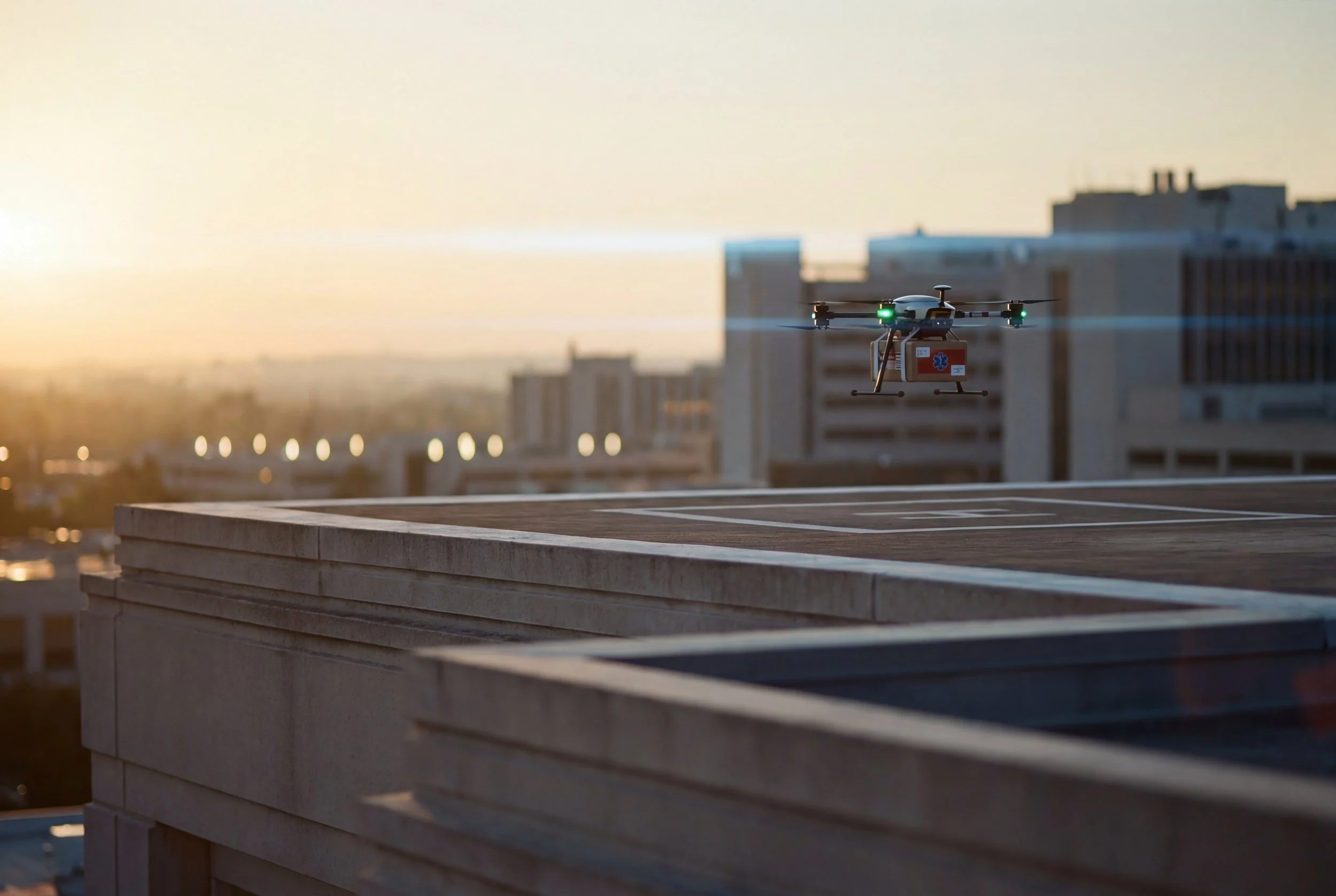
Matternet's business model is different from most drone delivery operations in the news. The company focuses on regulated medical and logistics delivery — moving lab samples between hospitals, delivering prescriptions to home patients, transporting time-sensitive cargo between healthcare facilities. It's slower, less flashy, and far more sustainable than burrito-delivery demos. Hospitals and healthcare systems are repeat customers because the drones replace courier drivers, save real operating money, and reduce sample turnaround times.
The $33 million isn't a huge raise by venture capital standards. But it tells you something important about where serious drone delivery investment is going: into regulated, type-certified, infrastructure-anchored operations — not consumer pizza delivery. For anyone tracking the long arc of where commercial drones land, that's a meaningful signal.
Red Raven's Take
For business owners and program managers tracking drone delivery as a real revenue line, the Matternet story is more useful than another consumer-delivery demo. Type-certified operations are the kinds of operations regulators, healthcare systems, and insurance partners can evaluate seriously. If you're pitching internal stakeholders on a delivery program, point to Matternet's healthcare model — not consumer demos — and your business case gets a lot easier to defend.
Read more: Matternet Raises $33M and Goes Public in Reverse Merger — DroneLife
Louisiana DA Funds a Drone + Robot Program for Two Parish Sheriffs — And the Funding Model Is the Real Story
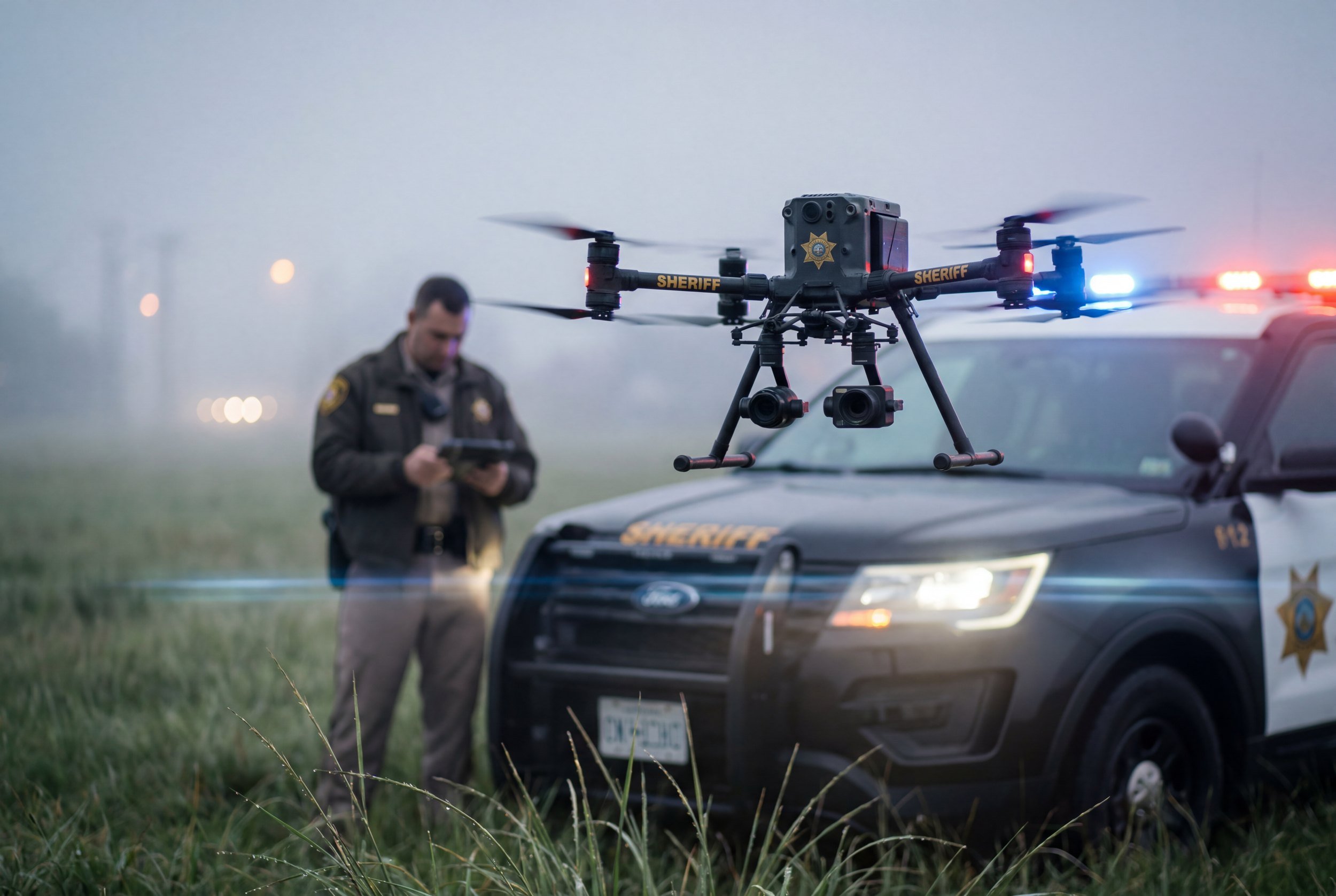
A Louisiana district attorney is funding a three-year program that gives BRINC drones, Skydio drones, and a quadruped robot dog to two parish sheriff's offices: Iberville Parish and Pointe Coupee Parish. The DA's office is paying for the equipment, the training, and the multi-year support contracts. Iberville Parish is adding three BRINC drones — one of which will be a dedicated Drone as First Responder aircraft housed in a hangar near Plaquemine and dispatched directly to active 911 calls.
Drone as First Responder, or DFR, is a program model where a drone is launched the moment a 911 call comes in. The drone arrives at the scene before the patrol car and gives dispatchers and responding officers a live overhead view of what they're walking into. Major departments like Chula Vista PD pioneered the concept, and dozens of cities have followed. Until now, DFR has mostly been a big-city story because building a DFR program requires expensive drones, dedicated hangar infrastructure, FAA waiver authority, and trained pilots — costs that small parish or rural agencies can rarely cover on their own.
That's why the Louisiana funding model deserves attention. A district attorney's office — not a sheriff's department, not a city, and not a federal grant — is paying for two sheriff's offices to share a program. The DA framed it as a community safety investment. Practically, it's a workaround for a real problem: most small agencies want a drone program but can't fund one out of their own operating budgets.
For agencies that have been told there's no money for drones — this is a model worth borrowing. Drone programs can be funded by a parent county, by a regional public safety district, by a DA's office, by a port authority, by an economic development office, or by a state homeland security grant. The aircraft don't have to come out of your patrol or fire operating budget.
Red Raven's Take
For small departments that have been told “we don't have the budget” — the answer is rarely that simple. Map every public funding source in your region that touches public safety: the DA, the parish or county, regional grants, port authorities, state homeland security funds, and federal Byrne JAG grants. If you've never run a structured drone program assessment to figure out what aircraft, training, and policies you actually need, that's the document that turns “we don't have the budget” into a fundable proposal. That's exactly the kind of work we do every week — get in touch if you want help building one.
Read more: Skydio, BRINC, and a Robot Dog Join Louisiana Patrols — DroneXL
Drone Services Market Projected to Hit $256 Billion by 2034
A new market report this week pegs the global drone services industry at $32.72 billion today and projects it to grow to $256.09 billion by 2034 — a compound annual growth rate of 25.69%.
Market projections are always a little squishy. Different analysts use different definitions, and the headline number depends heavily on what's counted. This report counts the full commercial and industrial drone services stack: aerial surveying, infrastructure inspection, agriculture monitoring, logistics, surveillance, and the data processing and analytics services attached to all of them.
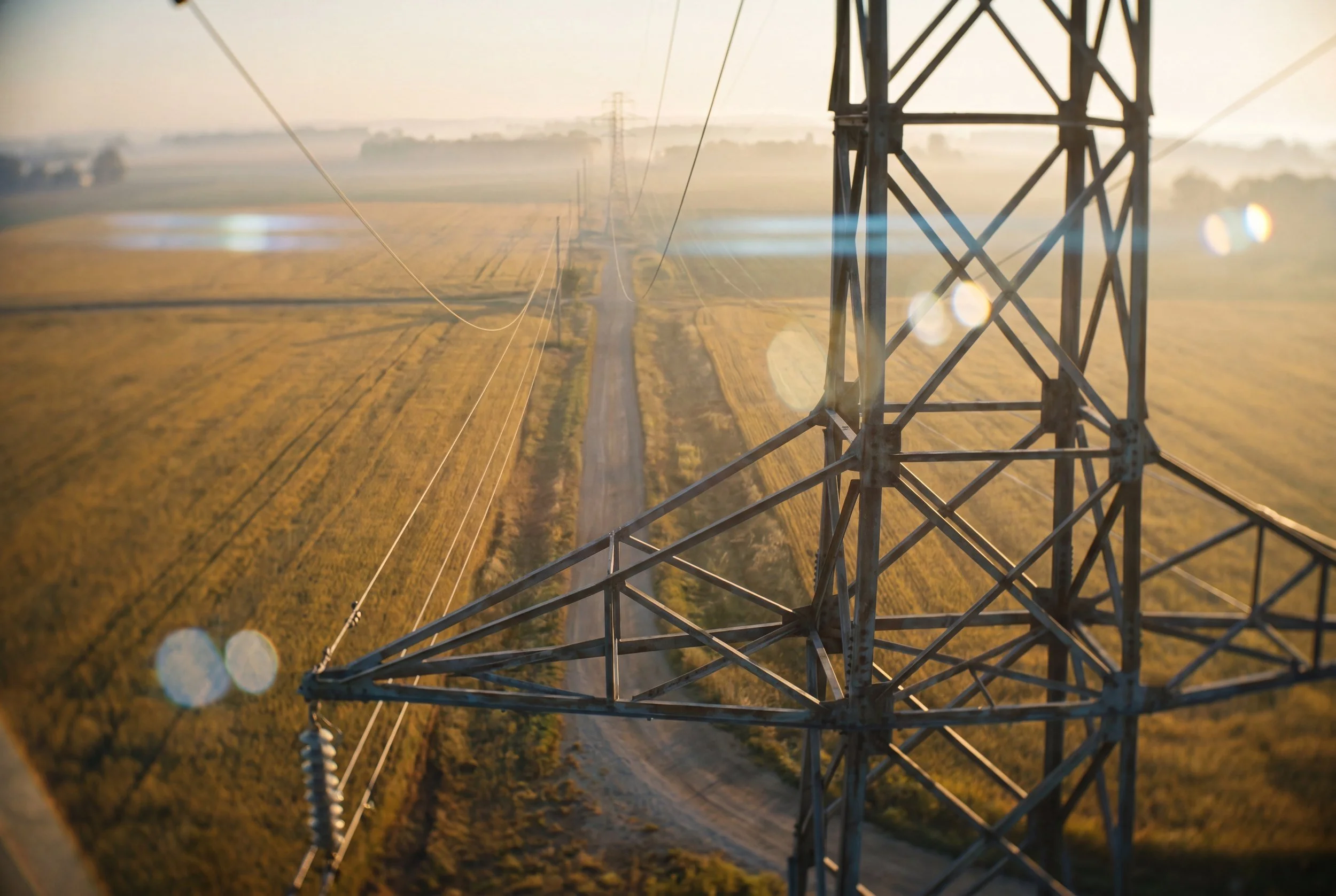
The number itself isn't the most useful part of the report — it's the growth driver list. Surveying. Infrastructure inspection. Agriculture monitoring. Logistics. Surveillance and security. These are exactly the industries where drones are no longer experimental — they're embedded operational tools. Utility companies are pulling inspection work in-house with autonomous docking systems. Agricultural operators are running swarms of spray drones across fields a single helicopter could never cover economically. Construction firms are replacing weekly site walks with documented drone flyovers stored in shared dashboards. None of that is futuristic — it's already happening at scale.
What the projection tells you is the rate of adoption, not just the size of the eventual market. A 25%+ growth rate suggests demand for drone pilots, drone program managers, drone data analysts, and drone-aware inspectors could grow very quickly over the next several years. Anyone trying to build a career or scale a program is operating inside a window where labor supply has not caught up with operational demand.
Red Raven's Take
If you've been thinking about getting Part 107 certified to do this work professionally — the market math says now is the right time. Aspiring drone pilots are entering an industry where the demand for qualified, trained operators is outrunning the supply, and that's true across nearly every commercial sector. For enterprise teams, this is the projection to put in front of your CFO when you ask for a program budget. Real growth, real adoption, real services revenue — not hype.
Read more: Drone Service Market Expected to Reach $256B by 2034 — Globe Newswire
-
What is the FCC Covered List, and why does it matter for drone buyers?
The FCC Covered List is an official list of companies whose communications equipment is considered a national security risk by the U.S. government. Drones from companies on the list — like DJI and Autel — can't receive new equipment authorizations in the U.S., which effectively stops new models from being sold legally. If you're buying a drone, check whether the manufacturer is on the Covered List before you put money down.
What is the FCC's conditional approval list?
It's a temporary green-light pathway for specific drones and components from manufacturers that have cleared a security review. The FCC isn't fully certifying these products, but it's allowing them through while broader regulations are finalized. This week the FCC added Blueflite, Verity AG, and Air VEV to that list.
Why does it matter that Matternet has an FAA Type Certificate?
A Type Certificate is the same kind of FAA airworthiness approval used in crewed aviation. For a drone delivery aircraft, it means the FAA has approved the aircraft design against the airworthiness criteria established for that aircraft. Matternet is currently the only drone delivery platform with this designation, which is why its operations are worth watching closely.
What is Drone as First Responder (DFR)?
DFR is a public safety program model where a drone launches the moment a 911 call comes in and arrives at the scene before the patrol car. The drone gives dispatchers and responding officers a live overhead view of what they're walking into — helping with situational awareness, suspect tracking, and resource decisions before officers ever step out of the vehicle.
How can small agencies fund a drone program when they don't have the budget?
Look beyond your operating budget. Drone programs can be funded by a parent county or parish, a district attorney's office, a port authority, a regional public safety district, state homeland security grants, federal Byrne JAG grants, or economic development boards. The Louisiana DA-funded BRINC and Skydio program for two parish sheriffs is a current example.
Do I need Part 107 certification to fly a drone for commercial work?
Yes. Any flight conducted for a business purpose, paid client, or commercial benefit requires an FAA Remote Pilot Certificate under Part 107. That includes real estate photography, inspections, mapping, public safety operations, and content creation. The exam is taken in person at an FAA-approved testing center and costs $175 per attempt.
Are DJI drones still legal to fly in the United States?
Yes — for now. Existing DJI drones that already received FCC equipment authorization can still be flown in the U.S. The FCC action targets new equipment authorizations and the future sales pipeline, not aircraft already in service. Operators should still track firmware, support, replacement parts, and future purchasing risk carefully.
What's the difference between Part 107 and the proposed Part 108 rules?
Part 107 is the current FAA rule for commercial drone work flown within visual line of sight (you can see the drone with your own eyes). Part 108 is the proposed new rule that would allow Beyond Visual Line of Sight, or BVLOS — flying the drone miles away from the pilot, out of direct view. Part 108 is expected to unlock delivery, infrastructure inspection at scale, and other large-area operations.
Links & Resources
- Part 107 Online Course: https://www.redravenuas.com/part107
- On-Site Drone Training: https://www.redravenuas.com/training
- Drone Program Development & Consulting: https://www.redravenuas.com/consulting
- Industry News & Briefings: https://www.redravenuas.com/news
- Red Raven Podcast: https://www.redravenuas.com/podcast
- Drones in Law Enforcement: https://www.redravenuas.com/blog/drones-law-enforcement
- Drone as First Responder (DFR): https://www.redravenuas.com/blog/drone-first-responder-dfr
- How to Build a Public Safety Drone Program: https://www.redravenuas.com/blog/build-public-safety-drone-program-guide
- Drone Inspection Programs for Utilities & Energy: https://www.redravenuas.com/blog/utility-drone-inspection-program
- FCC Drone Ban Update: https://www.redravenuas.com/blog/fcc-drone-ban-update
- Part 107 Complete Study Guide: https://www.redravenuas.com/blog/pass-part-107-exam-2026
About Red Raven UAS
Red Raven UAS was founded by public safety and drone industry veterans who understood the gap between having drones and knowing how to deploy them effectively. Our team brings together decades of real-world operational experience — including building one of the nation's first major public safety drone programs — and deep expertise in the commercial UAS sector across energy, utilities, and infrastructure.
We work with utility operators, energy companies, and infrastructure organizations to build drone inspection programs designed around their specific assets, workflows, and operational requirements — not a generic course deck. No hardware sales. No one-size-fits-all curriculum. Just field-tested instruction and independent program development guidance from people who have actually built and operated UAS programs at scale.
From initial program assessment and ROI modeling through pilot training, SOP development, and data workflow design, Red Raven delivers the full program infrastructure utilities need to deploy drones effectively — and keep them performing.
Explore More